John/Togs Tognolini

John/Togs Tognolini
March for Humanity August 3 2025. On the Sydney Harbour Bridge with 300,000 other people protesting against Israel's Genocide against the Palestinians in Gaza.

Blog Archive

Popular Posts

Pageviews last month

Showing posts with label Burning Times 2. Show all posts

Thursday, December 20, 2007

Climate movement convergence: Melbourne, February 9

Over the past few years, we have seen the emergence of a new social change movement, driven by an inspiring new wave of grassroots community activism. Around the country there are literally dozens of new groups, campaigning for effective action on climate change.

As yet, this new movement has not been able to gather in the one place. The climate movement convergence seeks to create this space in a one day forum, aiming to bring together the remarkably diverse climate change community we have here in Victoria, including local climate action groups, peak green groups, thinkers and strategists, and progressive businesses.

We will aim to provide an inspiring day of workshops, open space, an overview of the latest climate science, ideas on building a strong and vibrant movement, and the opportunity to ponder what opportunities are now present with a change in federal government.

We would welcome your involvement.


The convergence is being organised by the Sustainable Living Foundation (SLF), Friends of the Earth (FoE), the Greenleap Strategic Institute and Sustainable Business Practises and is supported by a range of climate groups including Beyond Zero Emissions (BZE), Carbon Equity, Central Victorian Greenhouse Alliance, Environment Victoria, Futureye, Greenpeace, Moreland Energy Foundation, Western Region Environment Centre and Zero Emissions Now (ZEN).


Details will soon be available on the Friends of the Earth website and also at: http://sustainabilityconvergence.org.au/

Guns Beat Green: The Market Has Spoken by Naomi Klein

Naomi Klein came to speak to Vancouver library workers, in support of their strike action for pay equity. Klein poses with CUPE 391 members Craig Searle and Todd Wong. It was Searle who had invited Klein to speak at Library Square.
photo Beth Lowther


Anyone tired of lousy news from the markets should talk to Douglas Lloyd, director of Venture Business Research, a company that tracks trends in venture capitalism. "I expect investment activity in this sector to remain buoyant," he said recently. His bouncy mood was inspired by the money gushing into private security and defense companies. He added, "I also see this as a more attractive sector, as many do, than clean energy."

Got that? If you are looking for a sure bet in a new growth market, sell solar, buy surveillance; forget wind, buy weapons.

This observation--coming from an executive trusted by such clients as Goldman Sachs and Marsh & McLennan--deserves particular attention in the run-up to the United Nations Climate Change Conference in Bali at the beginning of December. There, world environment ministers are supposed to come up with the global pact that will replace Kyoto.


The Bush Administration, still roadblocking firm caps on emissions, wants to let the market solve the crisis. "We're on the threshold of dramatic technological breakthroughs," Bush assured the world last January, adding, "We'll leave it to the market to decide the mix of fuels that most effectively and efficiently meet this goal."

The idea that capitalism can save us from climate catastrophe has powerful appeal. It gives politicians an excuse to subsidize corporations rather than regulate them, and it neatly avoids a discussion about how the core market logic of endless growth landed us here in the first place.

The market, however, appears to have other ideas about how to meet the challenges of an increasingly disaster-prone world. According to Lloyd, despite all the government incentives, the really big money is turning away from clean energy technologies and banking instead on gadgets promising to seal wealthy countries and individuals into high-tech fortresses. Key growth areas in venture capitalism are private security firms selling surveillance gear and privatized emergency response. Put simply, in the world of venture capitalism, there has been a race going on between greens on the one hand and guns and garrisons on the other--and the guns are winning.

According to Venture Business Research, in 2006 North American and European companies developing green technology and those focused on "homeland security" and weaponry were neck and neck in the contest for new investment: green tech received $3.5 billion, and so did the guns and garrisons sector. But this year garrisons have suddenly leapt ahead. The greens have received $4.2 billion, while the garrisons have nearly doubled their money, collecting $6 billion in new investment funds. And 2007 isn't over yet.

This trend has nothing to do with real supply and demand, since the demand for clean energy technology could not be higher. With oil reaching $100 a barrel, it is clear that we badly need green alternatives, both as consumers and as a species. The latest report from the Nobel Prize-winning UN Intergovernmental Panel on Climate Change was characterized by Time magazine as "a final warning to humanity," while a new Oxfam report makes it clear that the recent wave of natural disasters is no fluke: over the past two decades, the number of extreme weather events has quadrupled. Conversely, 2007 has seen no major terrorist events in North America or Europe, there are hints of a US troop drawdown in Iraq and, despite the relentless propaganda, there is no imminent threat from Iran.

So why is "homeland security," not green energy, the hot new sector? Perhaps because there are two distinct business models that can respond to our climate and energy crisis. We can develop policies and technologies to get us off this disastrous course. Or we can develop policies and technologies to protect us from those we have enraged through resource wars and displaced through climate change, while simultaneously shielding ourselves from the worst of both war and weather. (The ultimate expression of this second option is Hummer's new TV ads: the gas-guzzler is seen carrying its cargo to safety in various disaster zones, followed by the slogan "HOPE: Hummer Owners Prepared for Emergencies." It's a bit like the Marlboro man doing grief counseling in a cancer ward.) In short, we can choose to fix, or we can choose to fortress. Environmental activists and scientists have been yelling for the fix. The homeland security sector, on the other hand, believes the future lies in fortresses.

Though 9/11 launched this new economy, many of the original counterterrorism technologies are being retrofitted as privatized emergency response during natural disasters--Blackwater pitching itself as the new Red Cross, firefighters working for insurance giants (see my last column, "Rapture Rescue 911"). By far the biggest market is the fortressing of Europe and North America--Halliburton's contract to build detention centers for an unspecified immigration influx, Boeing's "virtual" border fence, biometric ID cards. The primary target for these technologies is not terrorists but immigrants, an increasing number of whom have been displaced by extreme weather events like the recent floods in Tabasco, Mexico, or the cyclone in Bangladesh. As climate change creates more landlessness, the market in fortresses will increase dramatically.

Of course, there is still money to be made from going green; but there is much more green--at least in the short term--to be made from selling escape and protection. As Lloyd explains, "The failure rate of security businesses is much lower than clean-tech ones and, as important, the capital investment required to build a successful security business is also much lower." In other words, solving real problems is hard, but turning a profit from those problems is easy.

Bush wants to leave our climate crisis to the ingenuity of the market. Well, the market has spoken: it will not take us off this disastrous course. In fact, the smart money is betting that we will stay on it.

Monday, December 17, 2007

UN climate conference: prepare for a 'bluewash' by Renfrey Clarke

Delegates from more than 180 countries began meeting on the Indonesian island of Bali on December 3 at the United Nations Climate Change Conference. The gathering is meant to begin the process of negotiating an agreement on climate change for the period after 2012, when the first commitment period of the Kyoto Protocol expires.


But don’t expect swift progress towards an accord that really addresses the world’s climate crisis. The Bali conference will merely begin a drawn-out process of negotiation that is unlikely to conclude before the end of 2009.

Not only will the world’s worst carbon gluttons — including, prominently, the US and Australia — be dragging their feet on emissions cuts: The whole Bali process can be expected to focus on targets that are gravely inadequate.

The discussions over the coming months and years will rest heavily on the Fourth Assessment Report of the United Nations Intergovernmental Panel on Climate Change (IPCC). The final version of this document was released on November 17 as part of the lead-up to the Bali meeting.

Based on the work of some 800 contributing authors and more than 2500 reviewers, the IPCC’s report is supposed to represent the conclusive verdict of the world’s climate experts on questions of global warming. But in the months since initial drafts of the report were published, the document has drawn sharp criticism for its failure to incorporate new research which paints an increasingly grim picture of the dangers ahead.

Using out-of-date evidence, and subject to special-interest pressures, the Bali conference and the negotiations that follow are unlikely to amount to more than “bluewash” — the process through which self-interested actions and policies of wealthy countries are legitimised by being passed through organs of the United Nations.

It would be wrong to suggest that the authors of the IPCC report chose to deliberately mislead the world’s climate-threatened populations. The shortcomings of the document they produced stem to a large degree from the politico-scientific task they evidently set themselves.

In compiling their report, the IPCC’s scientists were clearly determined to banish “climate scepticism” to the realm of crankery, alongside “creation science” and holocaust denial. The new report is much more categorical than its 2001 predecessor in stating that the world is getting hotter, and that human actions are primarily to blame.

Aiming to be completely irrefutable, the authors cited only evidence they regarded as exhaustively proven, and voiced their conclusions in studiously guarded language. The result is a conservative document that, while crushing to the greenhouse deniers, often seems curiously out of touch.

From deniers to foot-draggers

The truth is that it has been some time now since the basic facts of climate change were widely disputed. Even the Bush administration in the US now admits that global warming is real, and that the main cause is the burning of fossil fuels.

The debate has moved on. The key questions now concern the pace and extent of climate change, and the measures needed to combat it. Yesterday’s greenhouse deniers have become today’s foot-draggers.

The new studies that have appeared in recent years have indicated that the processes of climate change are not always linear and incremental, as was often assumed in the past. Instead, it has emerged, gradual human-induced warming is liable to bring natural systems to “tipping points” where numerous positive feedback mechanisms start to operate. Warming then produces further warming, in a self-accelerating spiral.

While a rise of 2ºC above pre-industrial global temperatures is often cited as the point beyond which the danger of runaway global warming becomes acute, certain positive feedbacks appear to be operating already, at a world temperature currently 0.7ºC above pre-industrial levels.

In this increasingly perilous situation, massive, rapid cuts in greenhouse emissions are needed to avoid climate disaster. These cuts will not be cheap, and if the main corporate polluters are forced to pay the price, the impact on their profits will be severe. While formally acknowledging climate change, and even while cultivating a “green” image, capitalist governments and the wealthy elites they represent can be expected to work persistently to thwart changes of the scope required.

The tragedy of the IPCC is that its latest report will do as much to undermine the struggle against global warming as to advance it. On the whole, the report’s conservative findings are rooted in the earlier, “linear” phase of climate change science. At various points, the authors acknowledge that more recent, less rigorously quantified research suggests graver dangers. But instead of being presented as blunt, prominent warnings, these caveats have the quality of afterthoughts.

Meanwhile, it will not be the caveats that form the working data of the Bali negotiators. The latter will focus firmly on the IPCC’s substantive figures, computed on the basis of unrealistic “linear” assumptions.

Albedo flip

The mechanisms now feeding “bluewash” are best illustrated by describing some of the main positive feedbacks threatening the Earth’s climate, and by considering how the IPCC’s report deals with them. First will be the “albedo flip” now underway in polar regions.

As sea ice melts in response to global warming, the dark open water absorbs far more heat from the sun than the earlier ice floes. Temperatures rise, the ice retreats still further, and the cycle repeats itself. The albedo — that is, propensity to reflect the sun’s rays back into space — of huge areas may be transformed within a few decades or even years, with temperatures rising far more dramatically than the general global figure.

This is the process already underway in the Arctic Ocean. Taking into account both geographic extent and thickness, summer Arctic sea ice was recently calculated to have lost more than 80% of its volume in four decades. The effects do not stop at the Arctic coasts. The sharply higher local temperatures also make their effects felt on the Greenland icecap, and in the permafrost regions of Siberia and North America.

On ice sheets such as those of Greenland and West Antarctica, surface meltwater now accumulates during summer. Darker than the surrounding ice, it retains more of the sun’s heat, and steadily melts the ice beneath it. The result in various places has been huge sink-holes into which meltwater cascades in Niagara-like quantities. Forming extensive lakes between the land surface and the ice, the water has the effect of lubricating ice flow. Outcomes already include a doubling of the rate at which two of Greenland’s largest glaciers are dumping ice into the sea.

If all of Greenland’s ice were to slide into the ocean, global sea levels would rise by about seven metres. West Antarctica would add a further five.

Melting on this scale is thought unlikely to occur over less than a millennium. We may be so lucky, but nature has many surprises. As British science writer George Monbiot relates in his book Heat, “In the Antarctic, scientists watched stupefied in 2002 as the Larsen B ice shelf collapsed into the sea”.

What are the forecasts for sea level rises that the IPCC has presented to the Bali negotiators? Global average sea level, the report states, rose by 17 centimetres during the 20th century. For the 21st century, the IPCC predicts rises under various scenarios of between 18 and 59cm.

Then comes the following rider: “Dynamical processes related to ice flow not included in current models but suggested by recent observations could increase the vulnerability of the ice sheets to warming, increasing future sea level rises.”

Might it be cheaper to pay the price of bringing global warming to a halt, rather than to risk allowing large districts of the world’s coastal cities — not to speak of countries such as Holland and Bangladesh — to vanish underwater? Undoubtedly so, but it will not be the prospect of wide-scale inundation that informs the discussions in Bali.

There, the maximum sea level rise that is contemplated will be the one specified by the IPCC: 59cm. Governments around the world will cite this level as scientifically demonstrated, and as endorsed by the UN. Anything higher will be “alarmist”.

Methane

On land in the Arctic regions of western Siberia, temperatures have risen over the past 40 years by some 3ºC, the highest increase observed anywhere on earth. This rise, it appears, is now setting off another positive feedback, this one far more dangerous.

Probably for over 100,000 years, the frozen peat soils of the permafrost areas of western Siberia have held bubbles of the gas methane, produced originally by the rotting of vegetation in oxygen-poor conditions. Though persisting in the atmosphere for only a few decades, methane is a potent greenhouse agent. Over the first 20 years after it is released, its “global warming potential” is 62 times that of carbon dioxide.

The permafrost region of western Siberia is the size of France and Germany combined. In the past few years, the permafrost has begun to melt. From the resulting mud and swamps, methane has started bubbling in large quantities.

In an August 11, 2005, article, the British Guardian cited calculations showing that if the western Siberian permafrost took 100 years to melt, the methane released each year “would effectively double atmospheric levels of the gas, leading to a 10% to 25% increase in global warming”.

Horrifying though this prospect is, the Guardian may have understated it. Last September, a research team from the University of Alaska reported its findings from an extended study of methane emissions from Siberian permafrost. “We show that methane flux from thaw lakes in our study region may be five times greater than previously estimated”, BBC News quoted a team spokesperson as saying.

Astonishingly, the IPCC’s chapter on polar regions devotes only a single brief sentence to methane emissions from permafrost. The phenomenon is not mentioned in the report’s “Summaries for Policymakers”, from which the Bali negotiators will mainly work.

Vanishing sinks

No less threatening than “albedo flip” and the release of methane from Arctic wetlands are the feedbacks that prevent natural systems from absorbing atmospheric carbon at previous rates. As tropical forests grow warmer, they can become susceptible to fire. Burning releases vast quantities of carbon dioxide, raising temperatures still further. Changes in temperature, soils and water availability then often prevent the forests from regenerating. Now savannah scrub and grassland, the former forest areas retain little of their once-huge potential as a “sink” for atmospheric carbon.

When soils become warmer, the metabolism of soil microorganisms speeds up, and soil carbon is oxidised more rapidly. Instead of being a carbon sink, soils become a carbon source. Monbiot notes in Heat that by 2005, decades earlier than expected, soils in England and Wales were emitting more carbon than they took up.

In a warming world, the seas are also less able to absorb carbon. In part, this is for the familiar reason that gases dissolve less readily in warmer water. But now, scientists have pinpointed a further mechanism lowering the ability of the oceans to mop up the carbon spewed out as a result of human activity.

The Southern Ocean was previously one of the Earth’s largest carbon sinks, absorbing about 15% of carbon dioxide emissions. As explained in a May New Scientist article, the gas dissolves into the ocean’s surface waters and is stored at cool depths. But over the past 50 years, rising air temperatures have made the Southern Ocean windier. Increased churning of the ocean now brings cool, carbon-laden water to the surface, where its gas returns to the atmosphere.

As a result, the ability of the Southern Ocean to absorb extra carbon dioxide has dwindled effectively to nothing. Over the past 24 years, the amount of carbon in the Southern Ocean has remained near-constant, even though carbon dioxide emissions have increased over this period by 40%.

According to a British Meteorological Office study quoted by Monbiot, the total capacity of the biosphere to absorb carbon will diminish from 4 billion tonnes a year to 2.7 billion by 2030. That figure, it appears, was calculated before the effective carbon saturation of the Southern Ocean became known.

Targets

As prominent scientists, the authors of the IPCC report are unquestionably aware of the disturbing new studies that are now regularly appearing, and of the urgent note that now pervades climate change debates. Perhaps reluctant to detract from this urgency, the authors do not single out any specific figure from their calculations as an emissions target that the world should strive towards.

Nevertheless, figures that can serve this purpose are to be found in the report. A table buried deep in its pages makes the following predictions: a 30-60% reduction in global carbon dioxide emissions by 2050, relative to 2000 levels, would be likely to result in carbon dioxide-equivalent levels of 490-535 parts per million, and a global average temperature increase above pre-industrial levels of 2.4-2.8ºC.

To people who have followed climate change debates closely, these figures will seem familiar. They correspond to the Australian Labor Party’s “60% reduction by 2050” emissions target, and also to a November 15 European Parliament resolution that is to be submitted to the Bali conference.

But if governments care for their populations, the IPCC’s authors would seem to indicate, they will reject targets such as the above. In a footnote to their table, the authors warn: “The emission reductions to meet a particular stabilization level … might be underestimated due to missing carbon cycle feedbacks.”

In other words, the IPCC scientists admit their figures are primitive, out of date, quite probably too low and, we are left to conclude, potentially dangerous.

Attempts to calculate responsible targets, that take the recent science into account, point to the need for much more stringent cuts. Monbiot argues for a reduction in global carbon emissions of 60% by 2030 — a far more difficult and expensive undertaking. For the most developed countries, he suggests, the cuts by 2030 should be in the region of 90%.

There is no reason to suppose that the targets the Bali conference urges on the world will be based on the up-to-date science. Almost certainly, these targets will be worked out on the basis of the “60 by 2050” formula — endorsed, we will be assured, by the IPCC.

When the final conference resolutions are released, the world may well find itself presented with the makings of a global environmental cataclysm — tied up in sky-blue tape, and stamped with the logo of the United Nations.

From: Comment & Analysis, Green Left Weekly issue #735 12 December 2007.

Tuesday, November 20, 2007

Dr Karl: 'Keep trying on all fronts' by Zane Alcorn


The Climate Change Coalition is a new political party. Green Left Weekly’s Zane Alcorn spoke to CCC candidate Dr Karl Kruszelnicki, who is running for the Senate in New South Wales.

What motivated you to become involved in politics?

I got sick of yelling at TV shows. The politicians kept saying stuff that was openly wrong. For instance, a politician was claiming that buses in dedicated bus lanes could replace trains. If you can load dozens of buses completely full — and they can have a fairly unobstructed path across the city, with not too many traffic lights or intersections — then maybe they are nearly equal to trains. That is, if you can load them with 120 people in 15 seconds and have them take off again so that the bus behind can load up … That was what really did it for me … being told that buses in dedicated bus lanes can replace trains.

Why did you decide to run with the Climate Change Coalition rather than as an independent or with another political party?

Either you vote above the line — for a party — or you vote below the line, which is the only way to vote for independents. Only about 2-3% of Australians vote below the line … and one mistake out of the 79 numbers and your vote is void.

So I didn’t want to run as an independent because then you are only looking at 2-3% of the vote. All parties are doing something [about climate change], but the Climate Change Coalition is a single issue party. People may deride the usefulness of single issue parties, but they should consider the example of the British anti-slavery party of 1823-39. They said “this is our one main issue”, they focused on issues of slavery and child slavery, and they succeeded, and in 1839 slavery was abolished.

We have a position on other issues but climate change is our main focus.

How does the climate coalition work out its preferences?

Preferences are tricky. In 1918 in Britain, there were two main political parties. They came up with the preference voting system whereby a vote is actually worth two votes — one for the party you vote for, and another for if your party or candidate does not get in, which flows to other parties.

The fundamental thing about preferences is it is an incredibly bent and crooked system [designed] to allow two parties to maintain their position …

[It’s] a duopoly, and parties who receive less votes than another party can get in due to preferences. It’s very crooked.

Because you are working in a crooked system you have to do whatever works, not whatever is “nice”. You have to do dirty deals to get in in a crooked system.

How does the climate coalition work out its emission reduction targets — is there any chance you may make your targets more radical?

We’ve been thinking about that and we’re almost headed towards getting rid of all this targets bullshit. Were looking more towards just saying we need to have zero carbon dioxide emissions from electricity generation in 20 or maybe 25 years from now.

So 20 years from now, we would be harnessing wind, wave, the power of the sun and the tides, and getting our power from clean sources like this.

Would you support the provision of free or highly subsidised solar panels?

I would make it compulsory. The coal companies get a subsidy of $400 million a year for diesel for their trucks … the thing about coal is we know where it is, we know how to dig it up, and we know that other countries will buy it. Why should it be subsidised when there is no risk in that industry? Those subsidies should be going to developing clean energy. When is the last time you heard of a coal company having a lamington stall to raise money to mine more coal?

You came out recently comparing “clean coal” to Nazi propaganda and then shortly after you clarified a point you had made in that statement about the logistics of making that clean coal technology work.

I made a mistake in the math. I [have since] checked the figure and two professors in physics checked it. From this we got the final corrected figures. The promotion of clean coal is still consistent with the logic of Goebbels who said “if you are going to tell a lie, tell a big one”.

I see geosequestration as a useful short-term thing. In 10 years we will probably still be burning coal so the question is whether we catch the emissions or just release them. But you can’t keep doing that forever.

What alternatives are there to dirty coal?

We could get all of our baseload from hot dry [rocks] and supplement that with the renewable energy from wind, wave, solar and tidal.

We can inject water into giant beds of hot granite in South Australia which have horizontal fractures in them — the water travels through the fractures and turns to steam and this runs a generator. The beds will generate steam for 35-70 years.

Do you think nuclear power is part of the solution to climate change?

Yes and no, depending on how you are asking the question.

I reckon we do need one small reactor on each continent to provide isotopes for diagnostics, but there are three main problems with conventional nuclear power: there’s the risk of meltdown; the problem of radioactive waste … and reactors produce [nuclear] weapons fuel.

I’m in favour of some types of nuclear power which don’t have these problems. Unfortunately political leaders aren’t interested in [these alternative designs, i.e. thorium] because they want the nuclear weapons.

Do you think that trade unions have an important role to play in ensuring the transition to a sustainable future?

We all do. Our obligation is to learn as much as we can about the situation and what needs to be done. All different groups and bodies have a part to play.

Were you at the Walk Against Warming? How important do you think mass action is to create change?

Yes I was there, and I think everything we do is [important to create change]. There’s an old saying in the advertising industry that “half of your budget gets wasted, and you don’t know what half it is”. You just have to keep trying on all fronts.

From: Comment & Analysis, Green Left Weekly issue #732 21 November 2007.

Tuesday, November 06, 2007

Climate Wars Threaten BillionsMore Than 100 Countries face Political Chaos and Mass Migration in Global Warming Catastrophe by Robin McKie


A total of 46 nations and 2.7 billion people are now at high risk of being overwhelmed by armed conflict and war because of climate change. A further 56 countries face political destabilization, affecting another 1.2 billion individuals.

This stark warning will be outlined by the peace group International Alert in a report, A Climate of Conflict, this week. Much of Africa, Asia and South America will suffer outbreaks of war and social disruption as climate change erodes land, raises seas, melts glaciers and increases storms, it concludes. Even Europe is at risk.

‘Climate change will compound the propensity for violent conflict, which in turn will leave communities poorer and less able to cope with the consequences of climate change,’ the report states.

The worst threats involve nations lacking resources and stability to deal with global warming, added the agency’s secretary-general, Dan Smith. ‘Holland will be affected by rising sea levels, but no one expects war or strife,’ he told The Observer. ‘It has the resources and political structure to act effectively. But other countries that suffer loss of land and water and be buffeted by increasingly fierce storms will have no effective government to ensure corrective measures are taken. People will form defensive groups and battles will break out.’
Consider Peru, said Smith. Its fresh water comes mostly from glacier meltwater. But by 2015 nearly all Peru’s glaciers will have been removed by global warming and its 27 million people will nearly all lack fresh water. If Peru took action now, it could offset the impending crisis, he added. But the country has little experience of effective democracy, suffers occasional outbreaks of insurgency, and has border disputes with Chile and Ecuador. The result is likely to be ‘chaos, conflict and mass migration’.

A different situation affects Bangladesh. Here climate-linked migration is already triggering violent conflict, says International Alert. Droughts in summer combined with worsening flooding in coastal zones, triggered by increasingly severe cyclones, are destroying farmland. Millions have already migrated to India, causing increasingly serious conflicts that are destined to worsen.

In Africa, rivers such as the Niger and Monu are key freshwater resources passing through many nations. As droughts worsen and more water is extracted from them conflicts will be inevitable.

In Europe, most countries are currently considered stable enough to cope with global warming, apart from the Balkans; wars have left countries such as Serbia and Montenegro politically weakened. As temperatures rise and farmland is reduced, population pressures will trigger violence that authorities will be unable to contain.

Some nations on the risk map, such as Russia, may cause surprise. ‘Moscow’s control of Russia as a whole will not be undermined by global warming,’ said Smith. ‘But loss of farmland in some regions will lead to local rebellions like those already triggered in Chechnya.’

Conflict triggered by climate change is not a vague threat for coming years, he added. ‘It is already upon us.’

Published on Monday, November 5, 2007 by The Guardian/UK

Monday, October 01, 2007

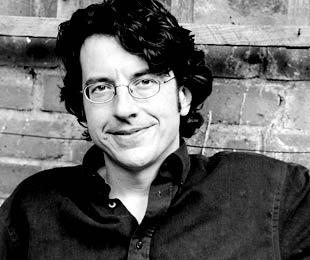
George Monbiot Supports Nukes and Clean Coal by John/Togs Tognolini

George Monbiot

‘’I am less hostile to nuclear power than I used to be. I no longer believe

that uranium is about to run out or that the safe disposal of nuclear waste

is impossible.’’

George Monbiot

new left review 45, may june 2007

I was some what taken aback when I come across this statement by Monbiot.

He led into this statement by saying

‘’ .. Like other environmentalists, I would be happiest if all the electricity

on the grid were supplied by means of renewable energy. But the wind

does not blow, the waves do not rise and the sun does not shine on

demand. In the uk, for example, electricity demand peaks between 5pm

and 7pm on winter evenings. Those who advocate turning the uk into

a solar economy would do well to take note of this. If we switched our

entire electricity-generating network over to variable sources of renewable

power, there would be a power cut whenever the wind or waves

dropped. There are a few ‘non-variable’ renewable sources, such as

biomass and geothermal energy, but their supply is limited (except in

Iceland)....if electricity users are not to be subject to repeated blackouts and equipment failure

(which would make our proposals politically unfeasible), the question must be answered.

Unless we discover a magical new source of fuel, it comes down to an

unfortunate choice between nuclear power and burning fossil fuel with

capture and storage.’’

His argument against a limit of the potential of renewable sources supplying a full power grid seems unduly pessimistic. He might have a point about the sun in Britain, but when do the waves drop in the North and Irish Seas and the Atlantic Ocean? And there’s some pretty windy areas in Britain as there is here in Australia.

Maybe George should take a look at David Bradbury’s film Hard Rain which demolishes any argument about nuclear power and uranium mining. Monbiot has written some excellent material about climate change but in posing nuclear power as an answer for energy needs, means that he’s really asking the wrong questions. A flaw with Monbiot’s work is that he never puts forward any argument for nationalising the polluters and having a massive public works campaign to develop renewable energy sources.


Sunday, June 24, 2007

Global warming and the NSW floods by Peter Robson

Coal Carrier Sea Confidence beached On Newcastle's Nobby's Beach.

The recent storms that devastated much of the NSW Central Coast and the Hunter Valley were described by some as a mini cyclone. The fierce gales led to dramatic floods — the most severe since the 1970s, the deaths of several people and the beaching of a coal freighter on a Newcastle reef.

In Maitland, residents were evacuated from their homes for fear that rising flood waters would breach the levies. The floods cut electricity for thousands of Hunter Valley residents and 11 people lost their lives, including a family whose car came off the road when a section of the Old Pacific Highway at Somersby was washed away.

The coal freighter Pasha Bulker was one of many ships that line up outside the harbour. At any time, day or night, you can see at least five of these massive vessels from the Newcastle beach. They line up because the harbour is quite narrow and only two specialised coal loaders are available for use.

They also line up because Newcastle is the biggest coal port in the world. More coal is transported through this port — both local coal and that from mines across Australia — than any other port in the world. But the storm has halted all coal loading, causing an estimated 2 million tonnes of lost exports, according to a June 14 News Limited report. The June 13 Sydney Morning Herald estimated that the cost to the coal industry in exports would be $115 million.

The 40,000-tonne Pasha Bulker was buffeted by the strong winds and driven onto the beach while waiting to load up coal for export. Its break up could cause a marine disaster.

The storm arose from the shift from the El Nino to the La Nina weather pattern. This shift was a lot fiercer than previous shifts.

A July 2006 article titled “Droughts and Flooding Rain” on the ABC Scribbly Gum science website analysed the effects of climate change on global weather patterns. It said that the impacts of the enhanced greenhouse effect on El Nino are not likely to be straightforward and will depend on how fast, and by how much, the Earth warms.

Dr David Jones, head of climate analysis at the Australian Bureau of Meteorology, predicted in the article that El Nino droughts will be hotter and La Nina rains heavier. Cyclones may increase in intensity and spread further south. He also said it is likely that fire regimes will also change, although to what extent is unknown.

“Essentially the [climate] response to climate change is quite uncertain”, he warned. “If you nudge a system you cannot always predict the consequences. A small nudge may lead to a small change in the behaviour of El Nino, while a bigger nudge may well change the nature of El Nino altogether.” The 2006 report implies that an event of this magnitude was likely to occur when the La Nina cycle began. But no-one seems to have restated this fact since the storm.

While this doesn’t make climate change directly responsible for the damage wreaked in NSW by the storms, it does mean that climate change may have made the weather shift more sudden than it would have been otherwise, and it may make the next storm even more severe.

While governments and corporations continue to pursue coal profits despite overwhelming evidence that carbon emissions contribute to runaway climate change, we can expect more such violent weather events.

It’s more than a little ironic that this latest episode of wild weather ensued a day or so after the NSW government announced it would approve the contentious Anvil Hill coalmine. The mining and burning of coal is responsible for 40% of Australia’s greenhouse gas emissions. NSW Greens MLC Lee Rhiannon estimates that the Anvil Hill mine will add more than 500 million tonnes of CO2 to the atmosphere during its operational life.

While scientists are not linking the storm directly to carbon emissions, climate scientists do agree that emitting more CO2 into the atmosphere will increase the chances of extreme weather events — another reason to move to renewable energy.

Monday, June 04, 2007

Global Warming ‘Is Three Times Faster Than Worst Predictions’ by Geoffrey Lean

http://weblog.greenpeace.org/makingwaves/_mg_3712_climate_change_cos.jpg

Global warming is accelerating three times more quickly than feared, a series of startling, authoritative studies has revealed.They have found that emissions of carbon dioxide have been rising at thrice the rate in the 1990s. The Arctic ice cap is melting three times as fast - and the seas are rising twice as rapidly - as had been predicted.

News of the studies - which are bound to lead to calls for even tougher anti-pollution measures than have yet been contemplated - comes as the leaders of the world’s most powerful nations prepare for the most crucial meeting yet on tackling climate change.

The issue will be top of the agenda of the G8 summit which opens in the German Baltic resort of Heiligendamm on Wednesday, placing unprecedented pressure on President George Bush finally to agree to international measures.

Tony Blair flies to Berlin today to prepare for the summit with its host, Angela Merkel, the German chancellor. They will discuss how to tackle President Bush, who last week called for action to deal with climate change, which his critics suggested was instead a way of delaying international agreements.

Yesterday, there were violent clashes in the city harbour of Rostock between police and demonstrators, during a largely peaceful march of tens of thousands of people protesting against the summit.

The study, published by the US National Academy of Sciences, shows that carbon dioxide emissions have been increasing by about 3 per cent a year during this decade, compared with 1.1 per cent a year in the 1990s.

The significance is that this is much faster than even the highest scenario outlined in this year’s massive reports by the Intergovernmental Panel on Climate Change (IPCC) - and suggests that their dire forecasts of devastating harvests, dwindling water supplies, melting ice and loss of species are likely to be understating the threat facing the world.

The study found that nearly three-quarters of the growth in emissions came from developing countries, with a particularly rapid rise in China. The country, however, will resist being blamed for the problem, pointing out that its people on average still contribute only about a sixth of the carbon dioxide emitted by each American. And, the study shows, developed countries, with less than a sixth of the world’s people, still contribute more than two-thirds of total emissions of the greenhouse gas.

On the ground, a study by the University of California’s National Snow and Ice Data Center shows that Arctic ice has declined by 7.8 per cent a decade over the past 50 years, compared with an average estimate by IPCC computer models of 2.5 per cent.

In yesterday’s clashes, masked protesters hurled flagpoles, stones and bottles and attacked with sticks forcing police to retreat. The police said they were suffering “massive assaults” and that the situation was “very chaotic”. They put the size of the demonstration at 25,000; organizers said it was 80,000.

© 2007 Independent News and Media Limited

from Common Dreams

Sunday, June 03, 2007

Ignorance of Global Warming by Derrick Z. Jackson


If Rachel Carson were alive and writing 45 years after “Silent Spring,” her new book would be “Stagnant Summer.”Among her subjects would be NASA administrator Michael Griffin. His own top climate scientists reaffirmed in a study last month that “global temperature is nearing the level of dangerous climate effects.” The study concluded that “little time remains to achieve the international cooperation needed to avoid widespread undesirable consequences.”

This week, National Public Radio asked Griffin whether climate change was a problem mankind should “wrestle with.”

Griffin responded as if one of NASA’s deep-space probes had dropped him off on Pluto. “I have no doubt that a trend of global warming exists,” he said. “I am not sure that it is fair to say that it is a problem we must wrestle with.”

Digging his toes deeper into his mouth, Griffin said, “I guess I would ask which human beings — where and when — are to be accorded the privilege of deciding that this particular climate that we have right here today, right now, is the best climate for all other human beings. I think that’s a rather arrogant position to take. . . . Nowhere in NASA’s authorization . . . is there anything at all telling us that we should take actions to affect climate change. . . . NASA is not an agency chartered to, quote, ‘Battle climate change.’ ”

Berrien Moore, director of the Institute for the Study of Earths, Oceans, and Space at the University of New Hampshire, said Griffin’s comments were “bizarre,” “baffling,” and “mind-boggling.”

“It is such a strong statement based on such a high level of ignorance,” Berrien said yesterday in a phone interview. He has been a lead author in past reports from the Intergovernmental Panel on Climate Change. “It indicates he doesn’t have any knowledge on the topic he’s talking about. Even a cursory reading [of the research] would not support what he said.”

Griffin came off as the newest bad cop to remind people where the Bush administration stands on global warming. Griffin said this on the same day that President Bush, with his popularity among Americans dropping to its depths among Europeans, said he wants to commune with the planet on climate change. But in advance of next week’s G-8 summit, Bush has already rejected the call by Germany, Britain, and Japan to slash greenhouse gas emissions.

This is a modern version of what Carson, who would have been 100 years old this week, wrote about in 1962 when she woke up the world to the dangers of pesticides. “We are accustomed to look for the gross and immediate effect and to ignore all else,” she wrote. “Unless this appears promptly and in such obvious form that it cannot be ignored, we deny the existence of hazard.”

The day before Griffin denied the existence of hazard, I spent 90 minutes observing two mallard families at Mount Auburn Cemetery. One mother had four chicks. The other had 10. We take mallards for granted as our most common duck, with 7.3 million of them in the United States and Canada, according to the US Fish and Wildlife Service. But they did plummet from about 11 million birds to about 5 million between 1958 and 1965. The total number of ducks, 36 million today, was down to 25 million when Carson wrote “Silent Spring.”

In noting the pesticide residues building up in some wildlife refuges, she wrote, “such poisoning of waters set aside for conservation purposes could have consequences felt by every western duck hunter and by everyone to whom the sight and sound of drifting ribbons of waterfowl across an evening sky are precious.”

She would have warned us that climate change is the new poison. In his stagnation, Griffin last year oversaw the deletion of the words “to understand and protect our home planet” from NASA’s mission statement. Now he is asking which human beings should accord themselves the privilege of fighting climate change. Carson would have asked right back from “Silent Spring”:

“Who has made the decision that sets in motion these chains of poisonings, this ever-widening wave of death that spreads out, like ripples when a pebble is dropped into a still pond? . . . Who has decided — who has the right to decide — for the countless legions of people who were not consulted that the supreme value is a world without insects, even though it be also a sterile world ungraced by the curving wing of a bird in flight?”

Derrick Z. Jackson’s e-mail address is jackson@globe.com.

© Copyright 2007 The Boston Globe

Common Dreams


Monday, May 28, 2007

Greenpeace Posts Leaked US Objection to G8 Climate Statement

Greenpeace on Saturday published a leaked document showing the United States has raised serious new objections to a proposed global warming declaration for next month’s Group of Eight summit.

In the document, US officials representing the administration of President George W. Bush reject the declaration prepared by Germany.

“The United States still has serious, fundamental concerns about this draft statement,” the document states.

Washington rejects the idea of setting mandatory emissions targets, as well as language calling for G8 nations to raise overall energy efficiencies by 20 percent by 2020.

With less than two weeks remaining before the June 6-8 G8 summit, the climate document is the only unresolved issue in the statements the world leaders are expected to sign there, according to media reports.

Representatives from the world’s leading industrial nations met the past two days in Heiligendamm, Germany, to negotiate over German Chancellor Angela Merkel’s proposed climate statement.

It calls for limiting the worldwide temperature rise this century to 3.6 degrees Fahrenheit and cutting global greenhouse gas emissions to 50 percent below 1990 levels by 2050.

“The treatment of climate change runs counter to our overall position and crosses multiple ‘red lines’ in terms of what we simply cannot agree to,” according to the undated document released by Greenpeace.

“We have tried to ‘tread lightly’ but there is only so far we can go given our fundamental opposition to the German position,” it added.

According to reports in the Washington Post about the leaked document, the most recent draft, dated May 24, shows the two sides remain at odds.

While Germany has offered to alter language identifying a rise in global temperature of 3.6 degrees Fahrenheit as a dangerous tipping point and instead accept a Russian proposal that targets a range from 2.7 to 4.5 degrees, the United States has yet to accept the modified language.

According to the US document, such proposals “are fundamentally incompatible with the (US) president’s approach to climate change”.

It proposes more general language stating simply that the G8 “is committed to taking strong and early action to balance global carbon circulation”.

Washington further wants a statement that reads: “We acknowledge that the UN climate process is an appropriate forum for negotiating future global action on climate change” to be scrapped from the declaration.

On May 18, senior US lawmakers wrote to Bush expressing deep concern over reports that his administration was seeking to weaken a G8 declaration on climate change.

“US leadership is critical to tackling this global threat … But we need an executive branch that engages the rest of the world to solve this problem rather than stubbornly ignoring it,” the 15 heads of House committees wrote.

Copyright © 2007 AFP.

Common Dreams


Wednesday, May 16, 2007

A Million Road Deaths Every Year? It’s Just the Price of Doing Business by George Monbiot

Corporate social responsibility often resembles the adventures of The Good Soldier Svejk. In 1914, about to be conscripted into the Austro-Hungarian army, Svejk puts on his old uniform and a volunteer’s buttonhole and, waving his borrowed crutches and shouting “To Belgrade, to Belgrade!”, has his landlady push him to the recruiting office in a bath chair. Jaroslav Hasek’s marvellous creation is lauded by the newspapers for his extraordinary patriotism.

By this means Svejk attempts to persuade the authorities that he is doing everything he can to get to the front, even if, to his enormous regret, his rheumatism prevents him from having his brains blown out. By noisily volunteering to subject themselves to stricter standards, the corporations try to pre-empt the rules which might otherwise have been imposed on them. This, they hope, will allow them to participate only when and how they see fit.

In Svejk’s case it didn’t work. His patriotism was rewarded with enemas and emetics until his rheumatism was miraculously cured. The corporations, on the other hand, always seem to persuade the authorities of their undying commitment to the causes they espouse, which ensures that they can enter the war on their own terms. This seems to be the way that the global campaign for road safety is going.

Death and injury on the roads is the world’s most neglected public health issue. Almost as many people die in road accidents - 1.2 million a year - as are killed by malaria or tuberculosis. Around 50 million are injured. Some 85% of these accidents take place in developing countries. The poor get hurt much more often than the rich, as they walk or cycle or travel in overloaded buses. The highest death rate is among children walking on the roads.

The annual economic cost to developing countries, in lost productivity alone, is $65-$100bn, roughly the same as the amount they receive in foreign aid. I caught a glimpse of the human cost when I was hospitalised in northern Kenya. Some of the men on the ward had bullet or axe wounds inflicted in tribal wars, others were dying of HIV/Aids, but over half had been smashed up in road accidents. They could not afford good painkillers, and sobbed and screamed through the night. It looked like a scene from the first world war.

The problem is likely to become much worse. By 2020, according to the World Bank, deaths from road accidents are expected to fall by 28% in rich nations but to rise by 83% in poorer ones. By 2030, they will overtake the deaths caused by malaria. But while $1.9bn of foreign aid will be spent on tackling malaria over the next five years, the annual global aid budget for road safety is less than $10m. This issue has been neglected partly because it is something the rich inflict on the poor, and partly because it is widely perceived as an unavoidable price of doing business - as the global transportation industry expands, so must its human costs. Governments are just beginning to wake up to the problem. But the corporations got there first.

In 1999, at the invitation of the World Bank, the motor and oil companies joined something called the Global Road Safety Partnership. It was supposed to bring together “governments and governmental agencies, the private sector and civil society organisations”. But its executive committee contains no one from a civil society organisation and only two representatives of government. BP, Total, DaimlerChrysler, General Motors, Michelin and Volvo, however, are all represented.

Professor Ian Roberts at the London School of Hygiene and Tropical Medicine compared the prevalence of certain words in the partnership’s annual reports to their prevalence in a similar report written by the World Health Organisation. In the partnership’s reports, he found a pattern of systematic neglect of pedestrians and cyclists. In the WHO’s report, “speed limit” occurred 17 times in every 10,000 words; in the partnership’s reports, just once. “Pedestrian” was used 69 times by the WHO, and 15 times by the partnership; “buses” and “cyclists” were mentioned 13 and 32 times respectively by the WHO, and not once by the partnership. “Reclaiming the streets for walking and cycling,” he notes, “will not serve the interests of the car makers.”

Instead, the Global Road Safety Partnership emphasised better training for drivers and better safety education for children. These measures do not interfere with the commercial interests of the transport industry. Neither, according to peer-reviewed papers Prof Roberts cites, do they work.

The motor industry also appears to dominate the most prominent international body on road safety. Three weeks ago, the racing driver Michael Schumacher wrote a column - quite a good one - for these pages to mark Global Road Safety Week. He described himself as a member of the “independent Commission for Global Road Safety”. The commission launched the Make Roads Safe campaign, which is modelled on Make Poverty History. But how “independent” is it?

It was established by the Fédération Internationale de l’Automobile Foundation, which is run by motoring and motorsports associations. Of the eight commissioners, one is an executive of General Motors, one runs the Bridgestone Tyre Corporation, one is a trustee of the FIA Foundation, one is chairman of the FIA Foundation and a president of the Automobile Club of Italy and one is Michael Schumacher. The commission’s secretary is the director general of the FIA Foundation.

Its report is better than the material published by the Global Road Safety Partnership. There is more emphasis on speed limits, road design and traffic management. But there are some odd gaps and contradictions. It complains that “participation by middle- and low-income countries in the existing international road safety organisations … is low” and that there is a “lack of ownership” of road safety programmes by the governments and people of developing countries. So why do all its own members come from the G8 nations? The commission prescribes an “action plan” for global road safety, to be run by something called the Global Road Safety Facility. This - surprise, surprise - also turns out to have been launched and partly funded by the FIA Foundation.

Most importantly, it calls for the developing nations to follow the path taken by richer countries in reducing deaths and injuries. But at no point does it mention that much of this reduction was the result of cyclists and pedestrians being driven off the roads. This is a much bigger issue for poor nations - where the great majority of people who use roads do not own cars - than for rich ones. Is this the vision:that the space now used by pedestrians and cyclists and ox carts and rickshaws is surrendered to car drivers? If so, it might reduce fatalities, but it would also represent a classic act of enclosure, through which the rich are able to secure the resources of the poor.

Michael Schumacher is in danger of finding himself in the same position as Bob Geldof - a celebrity who claims to speak for the poor and weak but who is informed and guided by the powerful. We need a global campaign on road safety, but it must belong to the people on whose behalf it acts.

monbiot.com

Published on Tuesday, May 15, 2007 by the Guardian/UK

Guardian Unlimited © Guardian News and Media Limited 2007

From Common Dreams

Friday, April 20, 2007

World Needs to Axe Greenhouse Gases by 80 Pct: Report by Alister Doyle

OSLO - The world will have to axe greenhouse gas emissions by 80 percent by 2050, more deeply than planned, to have an even chance of curbing global warming in line with European Union goals, researchers said on Thursday.Even tough long-term curbs foreseen by the EU or California fall short of reductions needed to avert a 2 degrees Celsius (3.6 Fahrenheit) temperature rise over pre-industrial times, seen by the EU as a threshold for “dangerous change”, they said. 0419 05

“If we are to have a 50 percent chance of meeting a 2 Celsius target we would have to cut global emissions by 80 percent by 2050,” Nathan Rive of the Center for International Climate and Environmental Research in Oslo told Reuters.

“Any delay in implementing emissions reductions will make a 2 degree target practically unreachable,” he and colleague Steffen Kallbekken wrote of findings to be published in the journal Climatic Change.

The EU reckons that there would be dangerous disruptions to the climate such as ever more droughts, heatwaves, floods and rising seas beyond a 2 C ceiling. Temperatures already rose by about 0.7 Celsius in the 20th century.

An 80 percent global cut would mean rich nations, responsible for most heat-trapping emissions from fossil fuels burnt by power plants, factories and cars, would have to axe emissions by about 95 percent below 2000 levels by 2050.

Developing countries such as China, India, Brazil and Indonesia, where emissions are rising sharply in line with energy use to help lift millions from poverty, would have to take on less swinging reductions, they said.

CALIFORNIA

“Even the most ambitious proposals for emissions cuts in 2050, such as the UK draft climate bill which sets a cut of 60 percent, or the California target to reduce emissions by 80 percent by 2050, fall short,” they said.

A draft report by the U.N. climate panel due for release on May 4 in Bangkok also concludes that a maximum 2 C rise would be hard to achieve. Restraints on emissions consistent with the goal could cost up to 3 percent of world gross domestic product.

And Kalbekken and Rive said that global emissions would have to peak in 2025, with cuts in place by 2010, to achieve an 80 percent cut by mid-century. Any delays would sharply raise costs.

Under the U.N.’s Kyoto Protocol, 35 industrialized nations now have goals of cutting emissions by 5 percent below 1990 by 2008-12. The United States, which says the plan is too costly and wrongly excludes developing states, is the main outsider.

U.N. climate negotiations focused on widening Kyoto beyond 2012 are stalled. Developing nations say they cannot be expected to cap emissions when energy use has been a key to economic growth by rich states since the Industrial Revolution.