from Counterpunch
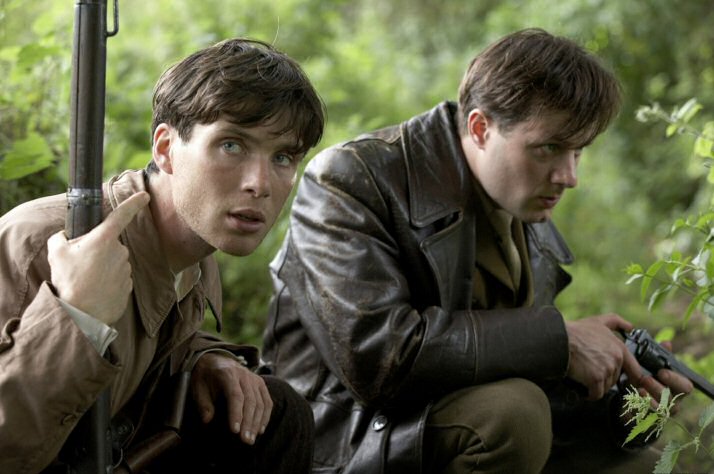
Ken Loach's 'The Wind that Shakes the Barley''The Wind that Shakes the Barley', currently enjoying huge success at the Irish box office and the winner of the 2006 Cannes Palm d'Or winner, continues to stir up strong passions. The film depicts the struggle between the IRA and British forces during the Irish War of Independence and the civil war that followed the Anglo Irish Treaty of 1922.
In Britain, The Sun called Loach's film "the most pro IRA ever". Ruth Dudley Edwards, an Irish historian, asked in the Daily Mail why the "Marxist" film director Ken Loach "loath[es] his country so much". Many critics of the film cited the work of one historian in particular, Peter Hart. I must declare an interest here. In the Irish Times letters pages in the summer of 2006, Hart claimed that I "misrepresent" his work, accusing him of stating that "ethnic cleansing" directed at Protestants was a feature of IRA actions. In fact I I did not state any such thing, though, had I done so, it would have been an accurate observation since Hart did use precisely that phraseology. The historian misrepresented himself and forgot his own history. Had he consulted his university department web site under "research", before putting pen to paper, he would have seen that he researches "ethnic conflict and cleansing" in Ireland. ( The correspondence is online at indymedia.ie.)
Indeed one strand in the criticism of Loach's film is that it does not deal with alleged IRA sectarianism toward Ireland's Protestant community. In writing a largely favourable review in History Ireland (Sept-Oct 2006), TCD historian Brian Hanley commented briefly on the absence of such a treatment in the film. Ireland's leading 'revisionist' historian, Professor Roy Foster of Oxford University, [a Waterford man who achieves the amazing feat in his standard history of Ireland of suggesting that the Great Famine of the mid-1840s somehow didn't really occur, Editors] invoked Peter Hart in his swipes at Loach. The relevant text here is Hart's The IRA and its Enemies (1998). Hart concluded that the IRA was sectarian and that the Irish War of Independence was a battle for 'ethnic supremacy'. Hart argued previously, (though he's now trying to haul his foot out of his mouth), that the headline-provoking phrase "ethnic cleansing" could be used to describe certain actions by republican forces. In disagreeing with cultural critic Luke Gibbons' rejection of the term, Foster agreed with Hart and, by way of example, cited the "murder" of the Protestant Pearson brothers in Offaly in 1921.
While giving one source for his view, Alan Stanley's I Met Murder on the Way, Foster omitted an alternative account by Offaly historian Patrick Heaney. Heaney indicated that the Pearson brothers were combatants who shot at and hit IRA members, were themselves sectarian in their Protestant ascendancy outlook, and contacted British authorities in Dublin Castle to inform on IRA activists. After the IRA weighed the evidence, they decided to execute the Pearsons and then did so. Heaney wrote on this subject some years ago, prior to Stanley's account, which itself fails to address Heaney's work. Heaney updated his account with corroborative material from the newly released files from the Bureau of Military History in early 2006. Pat Muldowney wrote on this subject in Church and State magazine (Winter & Spring 2006), and it was released also on the Internet, on Indymedia.ie. Perhaps Professor Foster was unaware of these sources of information, a consistent pattern of evasive behavior within 'revisionist' historiography, as we shall see. From his academic perch Foster dismisses those he deigns to term "local"--albeit unnamed -- historians, who presume to criticize Peter Hart, about whom there is in fact plenty to criticize. The historians Brian Murphy and Meda Ryan have charged him with bias and distortion. How, Ryan asks, can Hart claim to have interviewed an anonymous veteran of the famous November 1920 Kilmichael ambush in Cork six days after the last veteran died. She has not received an answer. Four of six issues of History Ireland in 2005 were devoted to coverage of the views of the antagonists. The BBC has covered the debate (BBC radio, BBC online and BBC history magazine), and the controversy has featured in Ireland's main newspapers. The History Ireland debate is online at historyireland.com and it has been given extensive coverage at indymedia.ie.
1918 Election
The debate in relation to what happened in West Cork during the 1916-21 period and the consequent overlapping with critical commentary on The Wind that Shakes the Barley is part of a deeper debate about Ireland's political and social formation. There's been a meandering debate in the Irish press about the validity of the violence, (of which, it has to be emphasized) by the standards of the twentieth century wars of national liberation, there was a tiny amount. British refusal to recognise Sinn Fein's overwhelming electoral victory in 1918 lead to the War of Independence of 1919-21, the Anglo Irish Treaty of 1921, the civil war of 1922-23 and the enduring partition of the island of Ireland. [The problem is that these days Ireland's anti-nationalist social democrats are terribly embarrassed by terms like "national liberation" or "colonial oppression" or--God help us--"class struggle" or "British savagery" of which there was an abundance, and so deprecate the whole Independence struggle and somehow wish it hadn't happened, or if it had happened it should have been fought out over cups of latte with the antagonists whacking each other with damp copies of Irish Times special supplements on education. AC.]
During the 1970s the teaching of history in Irish schools and colleges was an early casualty of the paranoia of the elite, as they gazed in horror at increasing violence in Northern Ireland, particularly after the civil rights movement there was shot off the streets by British paratroopers in Derry in 1972. The partition settlement of the early 1920s was in crisis because the six-county British enclave in northern Ireland was dysfunctional at every significant level.
Given the obvious fact that Irish history appeared to justify the use of violence against colonial or British sectarian government it seemed safer to kick the very idea of historical narrative into to the dustbin.. of history. This was supposed to de-politicise history. Naturally, it had the opposite effect.
But this modern modishness was a cry from a conservative establishment terrified at the prospect of violence in the Six Counties undermining the established and stable structures of 26- county society in the south. At one point in the mid 1970s the Irish government in Dublin was spooked at the thought that Harold Wilson's British Labor government was planning to leave Northern Ireland. A government elite was amenable to destroying the ideological underpinning of its existence (the national struggle), because the ideology of the nation (32 counties) undermined the stability of the state (26 counties), that itself legitimised the sense of nationhood. It was a bind.
For War of Independence IRA, read Provisional IRA. For south then, read north, as in Northern Ireland, now. Dr Conor Cruise O'Brien, the leading ministerial force behind state censorship of broadcasting and the onslaught on the brittle nature of the 'official' nationalism of the Republic of Ireland, threw his weight behind a re-tread of Irish history. The establishment's door was thrown open, to career-enhancing revisionism in the history departments of Irish universities. As minister in the 1973-77 Irish government, Conor Cruise O'Brien exercised ideological control though censorship and enforced reorganization in Irish broadcasting. Ministerial colleagues in charge of the army and the police ensured a vigorous physical control of the populace.
O'Brien was himself fully in sympathy this. On page 355 of his 1998 memoir My Life and Themes he relates his police special branch driver telling him how police allegedly discovered the whereabouts of a group of maverick republicans who had kidnapped Dutch industrialist Tiede Herrema in 1975:
"One of the gang had been arrested, and we felt sure he knew where Herrema was. So this man was transferred under Branch escort from a prison in the country to a prison in Dublin, and on the way the car stopped. Then the escort started asking him questions and when at first he refused to answer they beat the shit out of him. Then he told them where Herrema was". O' Brien adds, "I refrained from telling this story to Garret [Fitzgerald] or Justin [Keating - both ministerial colleagues] because I thought it would worry them. It didn't worry me".
Some members of the Irish police tried to tip off cabinet ministers to the existence of a group in the Gardai (Irish police) whose task it was to systematically beat confessions out of suspects. Dr Fitzgerald revealed some years later his attempts to bring this subject up at the cabinet table, but also his failure. During this 1973-77 period, the biggest mass murder of the troubles occurred, the Dublin and Monaghan bombings of 1974. Allegedly, British security forces were involved in directing unionist paramilitaries in the Ulster Volunteer Force. The British government refused to cooperate with an enquiry, under Mr Justice Barron, set up by the Dublin government many years later. Barron noted this lack of cooperation and also that the Irish police investigation was incompetent and curtailed within a short period of time. Barron also noted that the Dublin government was uninterested in pursuing the matter, either through police enquiry or with the British government. They had other priorities, such as the teaching of history.
When Dr O'Brien brandished his tolerance for police torture in 1998, Irish newspapers did not comment on it. The Sunday Times reported it in its "culture" section. Near the end of his relatively brief tenure of office, in 1976, Dr O'Brien revealed to the late Bernard Nossiter of the Washington Post that he intended to imprison the then Editor of the Irish Press, Tim Pat Coogan. Coogan recalls:
"Bud Nossiter was the Washington Post's London correspondent and he had come to Ireland to do a piece on some anti-terrorist legislation which was before the Dail Irish Parliament at the time. Because of the situation in Northern Ireland, the law proposed to curb the kind of material newspapers could print. .....
"Bud showed up in my office unexpectedly. He told me I had better watch out. He had asked the Minister for Posts and Telegraphs for an example of the sort of material which the proposed law would curtail. The Minister, Dr. Conor Cruise O'Brien, pulled open a drawer filled with clippings from the Letters to the Editor column of the Irish Press. Bud, coming from the paper that broke Watergate, was naturally stunned at the thought of prosecuting people for exercising the elementary democratic right of writing to a newspaper. But it turned out that it was not the letter writers whom it was planned to hit, but me, the editor."
Irish Voice, October 27 1992
Coercion helped to stabilize a new consensus among the elite, one that re-defined the relationship between Ireland and Britain.
Enter Roy Foster
This is where Roy Foster came in. Terry Eagleton commented in his review of Foster's biography of the poet WB Yeats:
"Foster is not terribly at home with ideas and abstractions. If Yeats had too many of them, his biographer has too few. He is shrewd, pragmatic, civilized and ironic, averse to big pictures and grand theories. This is one reason he is a favored son of the Anglo-Saxon establishment, which likes to think small. Another reason is that, as a commentator on Irish affairs, he tells the British by and large just what they want to hear about the place ... "
In fact, Foster has scrupulously concealed beneath the suavities of his coruscating prose style an enormous chip on his shoulder. Like the members of many an ousted governing caste, from Malaysia to Zimbabwe, he harbors a smoldering resentment of the native anticolonial movement. Republicanism in his view is less a logical extension of Enlightenment democracy than a bigoted ethnic conspiracy to sideline posh Prods like himself. When an argument touches on this sore point, as Irish arguments often do, he finds it hard to keep his scholarly cool.
There is, for example, a notable difference in tone between his dispassionate treatment of Yeats's autocratic ideas and ridiculous posturings, and the sneery sardonicism that lurks just beneath the surface when he describes a Gaelic congress or festival. If Gerry Adams had written for himself the kind of breathtakingly arrogant epitaph that Yeats did, one suspects that Foster's response to it would not be quite so kid-gloved. He writes occasionally of "extreme" politics, meaning those who threaten his own interests. Yeats's own far-right views are not granted such an epithet.
The Nation December 8, 2003
If I were to take issue with any of the above, it would be to point out that while Foster may write from the vantage point of a sensibility in tune with British condescension toward things Irish, reference to his religion and social standing, "posh Prod", may obscure the extent to which he reflects prejudices that are quintessentially Irish and that gain sustenance and support from within the Irish body politic. The standard feature of such approaches tends to see sectarianism as an internal Irish disease and British responses as an attempt to regulate it in as fair a manner as possible in highly disagreeable circumstances. Notwithstanding the obstacle of a constitutionally Protestant monarch, or perhaps by subsuming WASP superiority into the argument, Britain was seen as administratively plural and diverse, the Irish as singular and perverse in their obsessional hatreds ( said hatred including, inexplicably, things British). We are dealing with anglified Irishness that is overtly 'patriotic' in relation to its class interests, but not demonstrably in relation to the political and historical sequence that gave those class interests an independent state in which to flourish.
Montgomery
But it is not merely a matter of attitudinising. It is necessary for the proponents of such a view to leave bits out of the story, for fear that it would lead to a conclusion, and conclusions are dangerous things.
This could not be more clearly evinced than than in Foster's animus against Sinn Fein President Gerry Adams, which he combined with a lamentable assault on Angela's Ashes author, Frank McCourt , in the New York Times:
Evelyn Waugh once remarked that to the Irishman there are only two ultimate realities, hell and the United States. The McCourt version postulates that you have to experience the first in order to be redeemed by the second. Thus the McCourt oeuvre, apparently trading in misery, actually sells on synthetic moral uplift.
This supercilious condescension could be envy, could be a problem with American culture, Irish-American culture, with Irish culture, or could be all four. In the same piece Gerry Adams is derided for not opening himself up to prosecution by detailing participation in the IRA. This is, says Foster, like "a biography of Field Marshal Montgomery that leaves out the British Army"
Perhaps the comment on Bernard Law Montgomery, the son of an Ulster clergyman, and arch irritant of another jumped up colonial, General Dwight D Eisenhower, is misplaced and should have been directed by Foster at his mirror.
Brian P Murphy observed in relation to Foster and the Kilmichael Ambush of November 1920, the one that changed the course of the Anglo Irish War of 1919-21:
Roy Foster, in his Modern Ireland, despite dealing with Cork in late 1920, does not mention the Kilmichael Ambush. He does quote from "an English Brigade Major" who said, "I think I regarded all civilians as "Shinners", and I never had any dealings with any of them". Foster, however, does not advert to the significant fact that this Brigade Major was Bernard Montgomery, of Second World War renown, who was based in Cork, nor does he cite the previous sentence of Montgomery that "personally my whole attention was given to defeating the rebels and it never bothered me a bit how many houses were burned".
Foster, who turns up his nose at "prefabricated ideas", is at home fabricating prejudice.
A failure to entertain pertinent but uncomfortable facts is a feature of revisionist historiography. If Hart is guilty in his The IRA and its Enemies, then it could be said that he learned his trade from an apt instructor. So impressed was Professor Foster with Peter Hart's study of the IRA in West Cork in 1998 that he chaired the jury that unanimously awarded Hart the Ewart Biggs prize for his book published that same year ("Awarded in memory of the British Ambassador to Ireland who was assassinated in Dublin in 1976 [by the IRA]. The prize was established in 1977 [by the late Jane Ewart Biggs] and aims to create greater understanding between the peoples of Britain and Ireland, or co-operation between the partners of the European Community. It is awarded to a book, a play or a piece of journalism that best fulfils this aim.")
One of the great claims of the revisionist historiography that emerged out of the Irish Kulturkampf of the 1970s was that it is objective and free of bias. It is the alternative to Irish nationalist history. Eagleton again on Foster's tellingly entitled The Irish Story: Telling Tales and Making it Up in Ireland:
"Foster, the great demythologiser of Ireland . . . like most demythologisers . . . remains ensnared in a few myths of his own. He cannot, for example, free himself of the old-fashioned liberal prejudice that political commitment is inevitably reductive. Though 'the Irish story' is needlingly partisan, its author tends to believe that partisanship, like halitosis, is what the other fellow has."
The Guardian (London) October 27, 2001
The critic and author, Seamus Deane, pointed out: "by refusing to be Irish nationalists, (revisionists) simply become defenders of Ulster or British nationalism, thereby switching sides".
Revisionist history enters the realm of the absurd. Instead of the Irish being the victims of sectarian rule, they become responsible. Unionists or loyalists, who operated sectarian politics in the name of an explicitly Protestant British overlordship, become its victims.
Persecution
Steven King, an advisor to one time Ulster Unionist Party leader, David Trimble, wrote on the Loach film under the headline "pure and utter propaganda" in the Irish Examiner. King suggested that in the film, "the Irish capacity for oppressing each other is blithely dismissed". This was not a comment on unionist politics, but part of an assertion that in Cork, where the film is set, "many a Cork Protestant was shot in pure sectarian reprisals".
In the Irish Examiner, I wrote a defence of the film and pointed out some home truths with regard to British responsibility for racist and sectarian attitudes--attitudes, which, incidentally, Peter Hart excised from a book he edited on a British intelligence assessment of the conflict, without informing the reader.
In response to, and in disagreement with my approach, researcher Robin Bury referred to Hart's work. Bury said that republican persecution forced Protestants to flee their homes, farms and businesses.
In developing his argument in the Irish Examiner, Bury acknowledged "the assistance of Dr David Fitzpatrick of TCD" (who supervised Peter Hart's PhD thesis that became his 1998 book) and referred to "the 3,143 files" submitted to the Irish Distress Committee. Bury quoted from "the Presbyterian journal The Witness" and cited WT Cosgrave in the Dail in June 1922 to the effect that "inoffensive Protestants of all classes are being driven from their homes".
Does this criticism check out? An examination of Bury's sources is a useful test case for the accusation of republican sectarianism.
'Diabolic'
Taking the last point first, the Cosgrave remark cannot be found in the minute book of Dail Eireann (the Irish parliament), though, curiously, Robin Bury's Reform Society previously ascribed the exact same remark to the Church of Ireland Gazette. A movable quotation for every occasion perhaps.
Furthermore, The Witness was a private journal published in Belfast, not a Presbyterian Church publication. Bury quoted the editorial: "the plight of the Protestants [is] sad in the extreme. They are marked, they are watched, they are raided; some have been dragged out and shot like beasts". The editorial was in fact based on a report from "the Honourable HM Pollock, DL, MP, the Minister of Finance in the Northern Parliament...". This was not mentioned by Bury. It is stretching credulity to regard as objective a report from a unionist politician, who was in office while the well-documented persecution and oppression of the nationalist population in the North of Ireland was in train.
In any case the "truth" of the Sinn Fein claim of non-sectarianism was actually admitted in the editorial, though backhandedly: "their vengeance falls upon all who hinder them without regard to creed or class". However, "Protestants are loyal and law abiding, and feel it as a duty which they owe to God and their own conscience to support the forces of the Crown". The lengthy diatribe mixed political acuity and sectarian paranoia: "Sinn Fein is now a diabolic agency out to destroy the British Isles and the British Empire".
This material is merely evidence of propaganda.
Mr Biggs
There is, however, evidence of persecution of Protestants, and from a very interesting source in the London Times in late 1920:
"The only damage to loyalists' premises has been done by the police. In July [1920] they burned the stores of Mr G.W. Biggs, the principal merchant in Bantry, a man highly respected, a Protestant, and a lifelong Unionist, with a damage of over £25,000, and the estate office of the late Mr. Leigh-White, also a Unionist. Subsequently.., the police fired into Mr. Biggs's office, while his residence has since been commandeered for police barracks. He has had to send his family to Dublin and to live himself in a hotel. Only two reasons can be assigned for the outrages on Mr. Biggs, one that he employed Sinn Feiners, the other a... statement of his protesting against Orange allegations of Catholic intolerance."
This account was in one of three letters to The Times from J Annan Bryce, aged 77, of West Cork. Annan Byce was a former Scottish Liberal MP, Far East British colonial functionary, and brother of a British Chief Secretary to Ireland. Annan Bryce's second letter mentioned his wife Violet, who in 1916 "opened at Glengarriff the first convalescent home for [British] officers in Ireland":
" as reported in the papers today, my wife was arrested at Holyhead [in Wales], deported to Kingstown, lodged in Bridewell there, and released without charge after four hours' detention. Such arrests are of daily occurrence in Ireland, where any and every interference with liberty had been legalized by recent legislation, but I am not aware under what authority they have become lawful in Great Britain. My wife had been invited to address a meeting in Wales about [British] reprisals, a subject on which she is a competent witness. .. She has been able to see the effect of the policy of reprisals, and has suffered from them in her own person. Her garage has been burned she had been repeatedly threatened with the burning down of her house, and on one occasion was in imminent danger of death from the rifle of a policeman"
Reprisal burnings, killings and torture became a feature of British prosecution of the War. The burned a city (Cork), towns (Fermoy) and villages (Balbriggan). And they burned creameries. In fact they burned property that in the main was held by Protestants, who owned most of the significant property. It is what happened when soldiers of the Essex Regiment ransacked Bandon, otherwise known as "the Londonderry of the South". The British also burned hundreds of small homesteads owned or occupied by those assumed to be republicans or their supporters. Tom Barry recounted in his great book Guerrilla Days in Ireland (1949) that a counter burning strategy was required. The IRA systematically burned property owned by "Britishers", that is owned by those they saw as actively collaborating with their enemy. It had the desired effect from a republican perspective, as the rateable valuation of the 'Britisher's' property was far in excess of the hovels in the possession of the republicans and their supporters. Howls of outrage aimed at the British authorities came from supporters watching their ample properties going up in flames. It put an end to the British reprisal burnings, much to republican relief as they were fast running out of property owned by 'Britishers'.
Writing in 1949 Tom Barry noted British attempts to whip up sectarian fear by publishing the religion of a spy executed by the IRA if he was Protestant, and ignoring it if he was not. John Borgonovo's Spies, Informers, and the "Anti-Sinn Fein Society is published by Irish Academic Press in 2006. It examined IRA actions in the Cork City area. Borgonovo, from San Francisco, stated
Overall, my research revealed no IRA campaign against the city's Protestant, unionist and ex-servicemen institutions and leaders.
Among Cork's executed "spies", clear evidence linked some of them to the crown forces, while others were shot without any explanation. Today it is impossible to establish guilt in many cases. British records about informants are fragmented, incomplete, and often unreliable. IRA records were destroyed during the conflict for security reasons. However, surviving documentation indicates the Cork city IRA only targeted civilians it believed were passing information to the crown forces.
The Cork city Volunteers certainly had the means to identify local citizens working with British forces. Volunteers systematically intercepted mail, tapped phone lines and monitored telegraphs around the city. Republican spies and sympathisers could be found in key workplaces throughout the town. IRA intelligence officers closely watched British bases and personnel. One IRA spy penetrated the British army's Cork command at its highest level, and had access to sensitive information that we must assume included the identities of local civilian informants. Her story can be found in Florence and Josephine O'Donoghue's War of Independence, which I edited.
Irish Times July 14 2006
The murderous activities of the infamous British Auxiliaries (staffed by former British Officers, paid £1.00 per day) and Black & Tans (staffed by former ordinary ranks, paid 10 shillings a day) lead to a decision by the IRA to confront these elite British forces. On November 30, 1920, Tom Barry commanded 36 IRA riflemen at the Kilmichael ambush, in which an entire force of Auxiliary officers were killed (one was left for dead and survived, though incapacitated). This successful action helped to change the course and character of the conflict, to the advantage of the Irish side.
False Surrender
In an argument that gained an enormous of media publicity, Peter Hart questioned the longstanding account of an Auxiliary false surrender at Kilmichael, leading to the deaths of IRA volunteers who stood up from their positions to take this apparent surrender. Hart accused Tom Barry of "lies and evasions" and alleged that Barry had ordered a massacre of unarmed prisoners. This was an important part of the development of Hart's thesis that ethnic hatreds lead to shootings of uninvolved Protestants in West Cork. In History Ireland one can read argument and counter argument. Hart suffered accusations of censorship of evidence and deliberate distortion, as well as questioning by Meda Ryan of Hart's claim to have interviewed an anonymous veteran of the ambush six days after the last veteran, Ned Young, died on November 13, 1989. It is said that history enables the dead to come alive, but they do not usually report post mortem.
Brian P Murphy's recently published study, The Origin and Organisation of British Propaganda in Ireland (2006), examined the extent to which Hart had relied on material published by a Propaganda Department in Dublin Castle (the seat of British administration) under Basil Clarke. Clarke's philosophy of news manipulation was sophisticated in that it relied, as he put it, on propaganda by news, not by views, leading to verisimilitude, or "the appearance of truth". David Miller of spinwatch.org, editor of Tell me Lies, on news manipulation of the conflict in Iraq, contributes a foreword to the Murphy study, in which he commented on the significant contribution of the Dublin Castle propaganda team to the British tradition of news manipulation and news management.
Murphy also, in an appendix, outlined how Peter Hart systematically misused source material. For instance, Hart left out of his account of the Dunmanway killings of April 1922 a British admission that Protestant loyalists in the area were systematically supplying information. In fact they were also organised in paramilitary style in aid of British forces. Hart's attempt to elide reference to his censorship in his subsequent editorship (2003) of the British intelligence assessment, called The Record of the Rebellion in the 6th Divisional Area, lead an Irish Times reviewer to accuse him of being "disingenuous".
Censorship
In addition, as Murphy pointed out, Hart committed a new act of censorship in his editorship of The Record. He failed to inform the reader that he left out an entire section of the British intelligence assessment on "The People". It stated, in part:
"Practically all commanders and intelligence officers considered that 90 per cent of the people were Sinn Feiners or sympathisers with Sinn Fein, and that all Sinn Feiners were murderers or sympathisers with murder. Judged by English standards, the Irish are a difficult and unsatisfactory people. Their civilisation is different and in many ways lower than that of the English. They are entirely lacking in the Englishman's respect for truth . . . Many were of a degenerate type and their methods of waging war were in the most case barbarous, influenced by hatred and devoid of courage."
Aside from the act of omission, here is proof of British racism and, though being aware of IRA shootings of informers, there is no accusation that the IRA harboured sectarian thoughts or feelings, or more importantly, that they gave expression to them in action. Hart referred to the Record of the Rebellion as "the most trustworthy source" available. Quite.
Tax evasion
However, back to the task at hand. An examination of the British government's Irish Distress Committee is next on the list of sources submitted by Bury.
An interim report in November 1922 stated: "of the 1,873 cases approved for emergency relief, about 600 were Protestant and just over 1,000 Catholic". Persecutors of Protestants persecuted more Catholics than Protestants, it would appear. The ending of colonial administration and economic devastation, contributed to in no small measure by the burning of factories towns and cities by British forces, and civil war, lead to the departure of many. This included many Protestants who were part of the edifice of colonial government, or who were fearful as a result of their activities on behalf of the Crown. It also included those who believed British propaganda to the effect that republicans would treat Protestants in the same way as Roman Catholics were treated in the North of Ireland by the new unionist administration there. The unauthorised killings of former loyalist agents near Dunmanway in April 1922 heightened this fear considerably, as the anonymous perpetrators did not announce the reason for the killings publicly. It was as a result of Peter Hart's claims of ethnic cleansing that the linking of the deceased names to a British Auxiliary intelligence diary, left behind after their evacuation of Dunmanway, was published in 2003 in Tom Barry IRA Freedom Fighter, by Meda Ryan.
As an example of the fear generated by the killings, the Protestant founder of the Skibbereen Historical Society, Willy Kingston, who had willingly taken part in illegal Sinn Fein Courts, including inviting arrest by defying the British authorities openly, and who supported the aims, if not the methods, of republican separatists, fled West Cork with a large number of mainly male co-religionists in the aftermath. He returned soon afterwards to practice law in the town, became quite prominent, setting up the historical society, and survived contentedly into old age, eventually dying in 1965. His experience was, I suggest, typical and confirms the outlook of most southern Protestants who developed an allegiance to the newly independent Irish state alongside other citizens of what became the Republic of Ireland. More to the point, the state was capable of winning their allegiance, unlike what happened in the North of Ireland where Roman Catholics or nationalists were excluded systematically through forms of overt and covert discrimination and naked repression. The southern state could evolve because its citizens were capable of developing a largely secular civil society and discourse. The North was not, because it could not. It was set up as an exercise in sectarian control, in which majority rule, the normal signal of legitimacy, rendered society politically fixed and immutably sectarian.
Exceptional
In the South the unauthorised Dumanway killings that took place in the interregnum between the Treaty split (with Eamon DeValera and Michael Collins on opposite sides) and subsequent Civil War, were exceptional, not sectarian in intent in any case. All sides of republican opinion condemned them, as they broke the provisions of an IRA amnesty for spies and informers. Contemporary Protestant church commentary noted the exceptional nature of the killings.
The Protestant population in southern Ireland did decline sharply with the pullout of colonial administration. University College Cork's history Professor emeritus, John A Murphy, commented "active persecution [is] the least plausible" explanation of Protestant population decline, adding, "The notion that tens of thousands of Protestants were compelled to flee their shops and farms is Paisleyite myth-mongering." Murphy is ordinarily sympathetic to Hart's research. He is dismissive of the notion that Irish Protestants were persecuted as such, noting that they continued to enjoy, on average, a relatively higher socio economic status than members of Irish society generally.
The main pressure keeping the Irish Distress Committee functioning throughout the 1920s was the shadowy Southern Irish Loyalists' Relief Association, whose leadership consisted largely of titled individuals residing in, and who were mostly born in, England.
In 1930 The Southern Irish Loyalists' Relief Association asked the Irish Distress Committee to destroy letters from southern Ireland seeking payments. Considerable amounts had been dispensed, including to absentee landlords whose tenants were reluctant to pay rent. The autumn 2006 Church & State magazine commented, "There may be a number of explanations for this, ranging from tax evasion to fraud." The authors also speculate as to whether it may have been evidence of an attempt by Britain to preserve a fifth column within the newly Independent Irish state. More research is needed on the role of this fascinating body. Church and State (Autumn 2006) magazine announced that they would continue to publish on this organisation.
Bury concluded his criticism, "to deny that some saw the Protestant community as unwanted in the new Ireland denies historical reality". This may be a case of "some" accepting the loyalist thesis stating that a Protestant is quintessentially British. Robin Bury regularly speaks on behalf of the Reform Society, founded by Dublin and Wicklow Orange Order members. The Orange Order is an ultra Protestant sectarian organisation. Perhaps Robin Bury is comfortable with this depiction of Irish Protestants. A frequenter of Reform Society conferences, that calls on Ireland to join the British Commonwealth and wants Ireland to join a 'British Isles' (sic) federation, is the British Ambassador to Dublin, who is also apparently a patron of the organisation.
The criticism of The Wind that Shakes the Barley is essentially an attempt to foist a reverse of unionist behaviour in Northern Ireland on to republican forces during and after the War of Independence. It is, in my view, a foolish exercise doomed to failure. There was significant and extensive Protestant support for the republican position during the 1916-21 period, which, as its name suggests, tended to criticise and to oppose an overt identification with the Roman Catholic Church or religion. There were of course bigoted nationalists and bigoted Roman Catholics. But republican policy, by and large, was not. Republicanism is accused of sectarianism by inference and innuendo, not, so far, by evidence. By its own standards of judgement by empirical test, much revisionist historiography is found wanting. It ends up appearing as far, far shallower than the bogeyman nationalist narrative it created for itself as a target to destroy. In so far as it bases conclusions on the concoctions of Basil Clarke and his colleagues in Dublin Castle, it does not so much produce propaganda as reproduce it.
Evidence suggests that British policy was overtly sectarian and that Britain attempted to create sectarian tension at every level of society, including through media manipulation, as it was a means of maintaining control through 'divide and rule'.
Loach's award winning film wandered into the historical and sectarian crossfire that I have outlined here and it emerges unscathed with its narrative and historical integrity intact.
Niall Meehan is head of the Journalism & Media Faculty, Griffith College, Dublin. He can be reached at niall.Meehan@gmail.com