John/Togs Tognolini

John/Togs Tognolini
March for Humanity August 3 2025. On the Sydney Harbour Bridge with 300,000 other people protesting against Israel's Genocide against the Palestinians in Gaza.

Blog Archive

Popular Posts

Pageviews last month

Showing posts with label New Romans Asia. Show all posts

Wednesday, December 19, 2007

Indonesian Govt bans, confiscates book on Papuan political struggle by Angela Maria Flassy

State prosecutors seized Friday 60 copies of a book they say could
divide Papua politically, while critics have accused them of robbing
local people of their freedom of expression. The 244-page book, titled
Tenggelamnya Rumpun Melanesia, Pertarungan Politik di Papua Barat (The
Sinking of the Melanesian Race: The Political Struggle in West Papua)
was written by a local academic, Sendius Wonda. "The book is
misleading, it could spark unrest and divide the Papuan community,"
said Rudi Hartono, the intelligence chief at the provincial
prosecutors' office. The 60 copies of the book printed by local
publishing house Deiyai were confiscated from a Gramedia bookstore in
Jayapura. "We will continue raiding bookstores in other places for the
book," Rudi added. Rudi said the management of Deiyai would be
summoned to the prosecutors' office for questioning on Saturday.

The prosecutors said their legal basis for banning the book was a 2007
attorney general's circular about banning printed materials that could
"mislead the public" and "disturb public order". They said they would
start looking for other copies of the book in towns throughout Papua
next week, but stopped short of demanding people surrender their
copies to the authorities. Muridan S. Widodo, researcher with the
Center for the Indonesian Political Institute of Sciences, described
the sweep as a "threat to the freedom of expression".

"The book reflects the typical thoughts of Papuan activists about the
'culture of terror' in the territory," Muridan said. He added that the
author bemoaned the Papuan's loss of their long-standing struggle for
economic and political leverage. Papua, formerly called Irian Barat,
or West Irian, has been in the international spotlight due to a
simmering secession movement triggered by widely perceived injustices.
The military has been waging a low-level armed uprising. Muridan said
that instead of banning the book, the government should have countered
the intellectual work with a book of its own. "Then invite those who
support Sendius Wonda's ideas to an open debate. This would have been
better," he said. He said the government should nurture the budding
intellectual tradition in Papua rather than try to suppress it.

The Jakarta Post, Jayapura, Papua

Monday, November 12, 2007

Pakistan: `Musharraf's days are up' by Farooq Tariq


General Pervez Musharraf would have not expected the political scenario that has emerged after five days of martial law, imposed on November 3. His hopes for achieving normality have been dashed, despite using the most vicious repression against the advocates (lawyers) and political activists. More unpleasant surprises are still to come for the military regime, which was used to relatively stable political control until now.


First advocates, now students are emerging as political opponents to the regime. Demonstrations took place on November 7 in most public and private universities. “Student power rises from slumber” was the News International headline on November 8. All the courts across Pakistan are at standstill, and the Pakistan Bar Council has announced an indefinite strike until the state of emergency is withdrawn. There have been daily demonstrations by the advocates across Pakistan. This is extraordinary militancy by the middle class.

The press in Pakistan is full of stories of arrests, demonstrations and strikes from all spheres of society. No private TV channels are allowed to broadcast news — only the state TV channel.

The most surprising opposition to the regime has come from former prime minister Benazir Bhutto, who was in negotiation with Musharraf regime for a power-sharing arrangement. However the advocates’ movement stopped this unholy alliance, forcing Bhutto to come out openly against Musharraf. Almost half of the arrested advocates belong to her Pakistan Peoples Party (PPP).

Bhutto has asked the Pakistani masses to rise up against Musharraf’s imposition of martial law. “Restore the constitution or we will have long march from Lahore to Islamabad on November 13”, she warned the regime, to which it responded with mass arrests of PPP members, originally spared in the first wave of repression.

The mainstream media are also joining the mass movement after unprecedented repression against the electronic and print media. It was “Black Monday” on November 5 for the stock exchange in Pakistan, resulting in net losses of US$4 billion dollars in one day.

Even Musharraf’s close friends — the US, Britain and the European Union — have been forced to condemn his actions — in words at least. Even Australian imperialism is condemning the regime, with the Howard government terming Musharraf “a dictator” for the first time — something the Pakistani people knew eight years ago.

The movement is still growing, despite unprecedented repression. The police entered the office of the Human Rights Commission of Pakistan and arrested more than 80 activists. It was unheard of in the past that the police would raid the most prestigious independent building in Lahore. Police went in the buildings of Lahore High Court and arrested more than 700 advocates. This was not done even under the most brutal martial law of General Zia Ul Haque in 1980s.

According to the home ministry in Punjab province, 1734 political activists, journalists and advocates were arrested during the first four days of martial law. Similar figures are cited by the administrations of the other three provinces. Those arrested have been charged under “anti-terror” laws, and sent to far-off places, with no one allowed to meet them.

Supreme Court judges have been put under house arrest for courageously refusing to legitimise martial law. Police are raiding the houses of opponents of the regime on regular basis. Pakistan has become a police state in the real sense of the term. Police are seen everywhere in the main cities. There has been an increase in robberies with the police entirely focused on political repression.

The regime is becoming more isolated everyday. The state can not repress all of the opposition. The implementation of neoliberal economic measures is further weakening the regime, with daily price hikes and growing unemployment.

Left-wing groups are no longer an insignificant force in Pakistan. The student uprising against the regime is mainly the work of the left.

Opposition to the regime will be strengthening by the active solidarity of our friends and comrades outside Pakistan. The pickets of the Pakistan embassies all over the world will be one the most effective ways of expressing opposition. We are not alone, we know, but we need to know more of it.

[Farooq Tariq is the general secretary of the Labour Party of Pakistan, and is currently underground having narrowly escaped arrest. This was written on the fifth day of the state of emergency.]

From: International News, Green Left Weekly issue #731 14 November 2007.

Monday, November 05, 2007

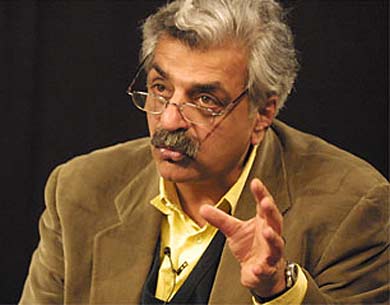
Pakistan Sinks Deeper Into the Night by Tariq Ali

General Pervez Musharraf


For anyone marinated in the history of Pakistan yesterday’s decision by the military to impose a state of emergency comes as no surprise. Martial law in this country has become an antibiotic: in order to obtain the same results one has to keep doubling the doses. This was a coup within a coup.

General Pervez Musharraf ruled the country with a civilian façade, but his power base was limited to the army. And it was the army Chief of Staff who declared the emergency, suspended the 1973 constitution, took all non-government TV channels off the air, jammed the mobile phone networks, surrounded the Supreme Court with paramilitary units, dismissed the Chief Justice, arrested the president of the bar association and inaugurated yet another shabby period in the country’s history.

Why? They feared that a Supreme Court judgment due next week might make it impossible for Musharraf to contest the elections. The decision to suspend the constitution was taken a few weeks ago. According to good sources, contrary to what her official spokesman has been saying (”she was shocked”), Benazir Bhutto was informed and chose to leave the country before it happened. (Whether her “dramatic return” was also pre-arranged remains to be seen.) Intoxicated by the incense of power, she might now discover that it remains as elusive as ever. If she ultimately supports the latest turn it will be an act of political suicide. If she decides to dump the general (she accused him last night of breaking his promises), she will be betraying the confidence of the US state department, which pushed her this way.

The two institutions targeted by the emergency are the judiciary and the broadcasters, many of whose correspondents supply information that politicians never give. Geo TV continued to air outside the country. Hamid Mir, one of its sharpest journalists, said yesterday he believed the US embassy had green-lighted the coup because they regarded the Chief Justice as a nuisance and “a Taliban sympathiser”.

The regime has been confronted with a severe crisis of legitimacy that came to a head earlier this year when Musharraf’s decision to suspend the Chief Justice, Iftikhar Hussain Chaudhry, provoked a six-month long mass movement that forced a government retreat. Some of Chaudhry’s judgments had challenged the government on key issues such as “disappeared prisoners”, harassment of women and rushed privatisations. It was feared that he might declare a uniformed president illegal.

The struggle to demand a separation of powers between the state and the judiciary, which has always been weak, was of critical importance. Pakistan’s judges have usually been acquiescent. Those who resisted military leaders were soon bullied out of it, so the decision of this chief justice to fight back was surprising, but extremely important and won him enormous respect. Global media coverage of Pakistan suggests a country of generals, corrupt politicians and bearded lunatics. The struggle to reinstate the Chief Justice presented a different snapshot of the country.

The Supreme Court’s declaration that the new dispensation was “illegal and unconstitutional” was heroic, and, by contrast, the hurriedly sworn in new Chief Justice will be seen for what he is: a stooge of the men in uniform. If the constitution remains suspended for more than three months then Musharraf may be pushed aside by the army and a new strongman installed. Or it could be that the aim was limited to cleansing the Supreme Court and controlling the media. In which case a rigged January election becomes a certainty.

Whatever the case, Pakistan’s long journey to the end of the night continues.

Published on Sunday, November 4, 2007 by The Independent/UK

Tariq Ali is the author of many books including The Clash of Fundamentalisms and Bush in Babylon.

Wednesday, October 31, 2007

The hypocrites who say they back democracy in Burma by John Pilger

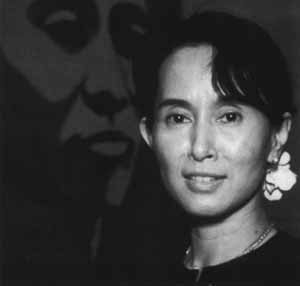
Aung San Suu Kyi

Addressing a London meeting, 'Freedom Writ Large', organised by PEN and the Writers Network of Burma, John Pilger pays tribute to Aung San Suu Kyi and the writers of Burma, 'the bravest of the brave', and describes the hypocrisy of Western leaders who claim to back their struggle for freedom.

The news is no more from Burma. The young monks are quiet in their cells, or they are dead. But words have escaped: the defiant, beautiful poetry of Aung Than and Zeya Aung; and we know of the unbroken will of the journalist U Win Tin, who makes ink out of brick powder on the walls of his prison cell and writes with a pen made from a bamboo mat – at the age of 77.

These are the bravest of the brave. What honour they bring to humanity with their struggle; and what shame they bring to those whose hypocrisy and silence helps to feed the monster that rules Burma. When I began to write this, I had planned to quote a moving passage from my last interview with Aung San Suu Kyi, but I decided not to - because of something Suu Kyi said to me when I last spoke to her. “Be careful of media fashion,” she said. “The media like this sentimental version of life that reduces everything down to personality. Too often this can be a distraction.”

I thought about that, and how typically self effacing it was, and how right she was. For the greatest distraction is the hypocrisy of those political figures in the democratic West, who claim to support the Burmese liberation struggle. Laura Bush and Condaleeza Rice come to mind. “The United States,” said Rice, “is determined to keep an international focus on the travesty that is taking place in Burma.” What she is less keen to keep a focus on is that the huge American company, Chevron, on whose board of directors she sat, is part of a consortium with the junta and the French company, Total, that operates in Burma’s offshore oil fields.

The gas from these fields is exported through a pipeline that was built with forced labour and whose construction involved Halliburton, of which Vice President Cheney was Chief Executive. For many years, the Foreign Office in London promoted business as usual in Burma. When I interviewed Suu Kyi a decade ago I read her a Foreign Office press release that said, “Through commercial contacts with democratic nations such as Britain, the Burmese people will gain experience of democratic principles.” She smiled sardonically and said, “Not a bit of it.” In Britain, the official public relations line has changed; Burma is a favourite New Labour's "cause";

Gordon Brown has written a chapter in a book about his admiration of Suu Kyi. How well his platitudes reflect on his counterfeit liberalism. When the last month’s uprising broke out in Rangoon, he referred to the sanctity of the “universal principles of human rights”. This week he wrote a letter to PEN about Burma's writers; it waffles about prisoners of conscience and is a distraction: indeed part of his current, grand theme of distraction about "returning liberty" when of course none will be returned without a fight.

Hands can be wrung; letters to PEN can be spun; nothing can be done. As for Burma, the essence of Britain's compliance and collusion has not changed. British tour firms – like Orient Express and Asean Explorer – are able to make a handsome profit on the suffering of the Burmese people. Aquatic – a sort of mini Halliburton – has its snout in the same trough, together with all those companies that make a nice earner from Burmese teak. When did Brown or Blair ever use their close connections with business – their platforms at the CBI and in the City London, among the bankers of Brussels - to name and shame those British companies that make money on the back of the Burmese people?

When did a British prime minister call for the European Union to plug the loopholes of arms supply to Burma, stopping, for example, the Italians from supplying military equipment? The reason ought to be obvious. The British government is itself one of the world’s leading arms suppliers, especially to regimes at war with their neighbours, democracies or dictatorships, who cares? Next week, the dictator of Saudi Arabia, King Abdullah, whose tyranny gorges itself on British arms, will receive a state visit. Last night, (On October 25) the Brown government approved Washington's latest fabricated prelude to a criminal attack on Iran - as if the horrors of Iraq and Afghanistan were not enough for the "liberal" lionhearts in Downing Street and Whitehall.

And when did a British prime minister call on its ally and client, Israel, to end its long and sinister relationship with the Burmese junta. Or does Israel’s immunity and impunity also cover its supply of weapons technology to Burma and its reported training of the junta’s most feared internal security thugs? Of course, that is not unusual. The Australian government – so vocal lately in its condemnation of the junta – has not stopped the Australian Federal Police from training Burma’s internal security forces in at the Australian-funded Centre for Law Enforcement Co-operation in Indonesia.

Those who care for freedom in Burma and Iraq and Iran and Saudi Arabia and beyond must not be distracted by the posturing and weasel pronouncements of our leaders, who themselves should be called to account as accomplices. We owe nothing less to Aung San Suu Kyi, to Burma’s writers and to all the bravest of the brave.

Monday, October 22, 2007

A Massacre Foretold by Tariq Ali

Tariq Ali


The massacre in Karachi had been widely predicted. Benazir Bhutto herself has stated that she was aware of the dangers. The government pleaded with her to delay her return. Jihadi leaders, angered by her slavish support of US foreign policy, had publicly threatened to kill her. She survived but a few hundred people have been killed without reason. Her husband, who decided not to accompany her, has accused Pakistani intelligence of complicity in the attacks. Benazir Bhutto herself has preferred to attack the followers of a dead military dictator.

Once it had become obvious that something was being planned, she would have been better advised to make a quiet return, but she insisted on a show of strength. The planning had been going on for over a month. The 130,000 people who were brought to welcome her in trucks and buses from allover the province(how many of them were paid is still not clear). In addition there were 20,000 police and paramilitary personnel for her protection. All to no avail. It ended in a bloodbath, remind us once again of the volatile nature of politics in Pakistan.

More trouble lies ahead. Benazir may be the preferred politician of Washington and the EU, but the Supreme Court is considering five separate petitions to reject the Ordnance that pardons corrupt politicians. Were the court to accept these petitions, Ms Bhutto would have to serve time in prison. This would not displease the government. They would pretend to bow before the dictates of justice.

The tragedy of Pakistan is that the People’s Party of Bhutto and its rivals offer no real alternatives to the policies currently being pursued. The State Department notion of Bhutto perched on Musharraf’s shoulder parrotting pro-Washington homilies was always ridiculous. Now there are doubts as to whether she will even reach the General’s shoulder.

Published on Sunday, October 21, 2007 by CounterPunch

Tariq Ali’s new book, Pirates of the Caribbean: Axis of Hope, is published by Verso. He can be reached at: tariq.ali3@btinternet.com

Monday, October 08, 2007

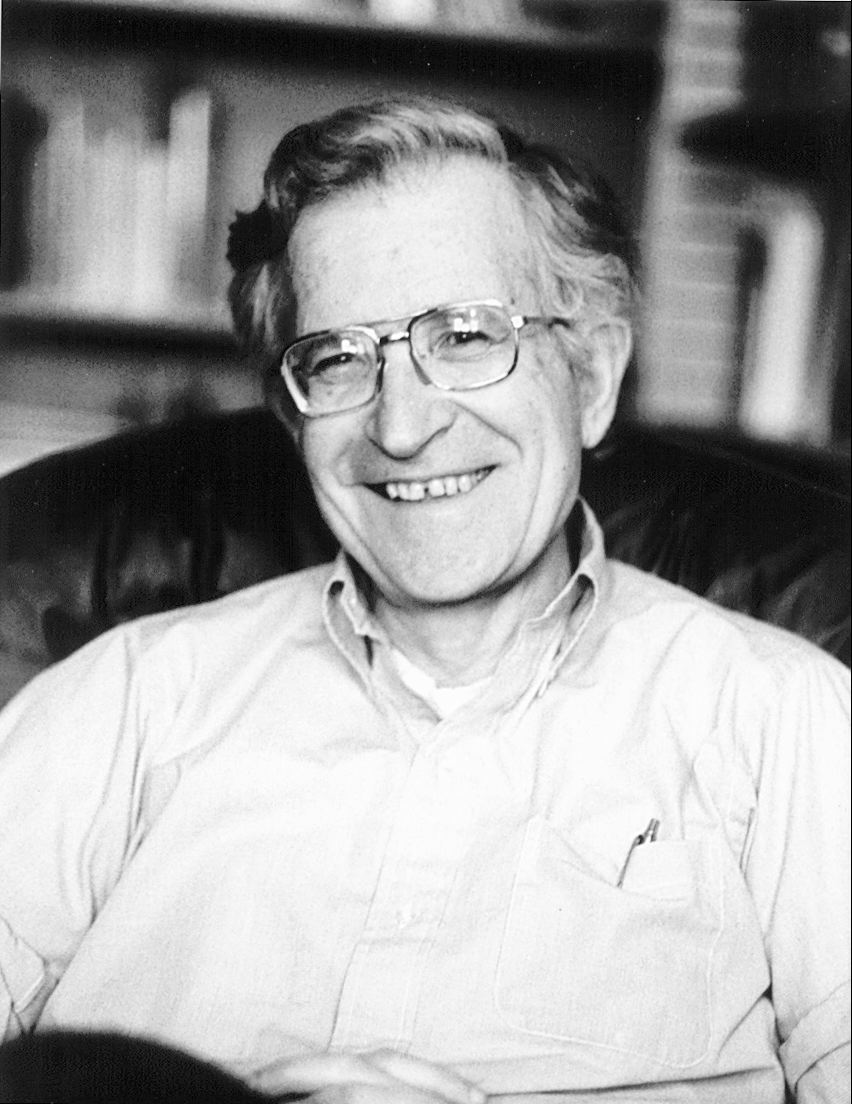
US/Indo Nuclear Agreement: Derailing a Deal by Noam Chomsky

Noam Chomsky

NUCLEAR-armed states are criminal states. They have a legal obligation, confirmed by the World Court, to live up to Article 6 of the Nuclear Nonproliferation Treaty, which calls on them to carry out good-faith negotiations to eliminate nuclear weapons entirely. None of the nuclear states has lived up to it.The United States is a leading violator, especially the Bush administration, which even has stated that it isn’t subject to Article 6.

On July 27, Washington entered into an agreement with India that guts the central part of the NPT, though there remains substantial opposition in both countries. India, like Israel and Pakistan (but unlike Iran), is not an NPT signatory, and has developed nuclear weapons outside the treaty. With this new agreement, the Bush administration effectively endorses and facilitates this outlaw behaviour. The agreement violates US law, and bypasses the Nuclear Suppliers Group, the 45 nations that have established strict rules to lessen the danger of proliferation of nuclear weapons.

Daryl Kimball, executive director of the Arms Control Association, observes that the agreement doesn’t bar further Indian nuclear testing and, “incredibly, … commits Washington to help New Delhi secure fuel supplies from other countries even if India resumes testing.” It also permits India to “free up its limited domestic supplies for bomb production.” All these steps are in direct violation of international nonproliferation agreements.

The Indo-US agreement is likely to prompt others to break the rules as well. Pakistan is reported to be building a plutonium production reactor for nuclear weapons, apparently beginning a more advanced phase of weapons design. Israel, the regional nuclear superpower, has been lobbying Congress for privileges similar to India’s, and has approached the Nuclear Suppliers Group with requests for exemption from its rules. Now France, Russia and Australia have moved to pursue nuclear deals with India, as China has with Pakistan - hardly a surprise, once the global superpower has opened the door.

The Indo-US deal mixes military and commercial motives. Nuclear weapons specialist Gary Milhollin noted Secretary of State Condoleezza Rice’s testimony to Congress that the agreement was “crafted with the private sector firmly in mind,” particularly aircraft and reactors and, Milhollin stresses, military aircraft. By undermining the barriers against nuclear war, he adds, the agreement not only increases regional tensions but also “may hasten the day when a nuclear explosion destroys an American city.” Washington’s message is that “export controls are less important to the United States than money” - that is, profits for US corporations - whatever the potential threat. Kimball points out that the United States is granting India “terms of nuclear trade more favourable than those for states that have assumed all the obligations and responsibilities” of the NPT. In most of the world, few can fail to see the cynicism. Washington rewards allies and clients that ignore the NPT rules entirely, while threatening war against Iran, which is not known to have violated the NPT, despite extreme provocation: The United States has occupied two of Iran’s neighbours and openly sought to overthrow the Iranian regime since it broke free of US control in 1979.

Over the past few years, India and Pakistan have made strides towards easing the tensions between the two countries. People-to-people contacts have increased and the governments are in discussion over the many outstanding issues that divide the two states. Those promising developments may well be reversed by the Indo-US nuclear deal. One of the means to build confidence throughout the region was the creation of a natural gas pipeline from Iran through Pakistan into India. The “peace pipeline” would have tied the region together and opened the possibilities for further peaceful integration.

The pipeline, and the hope it offers, might become a casualty of the Indo-US agreement, which Washington sees as a measure to isolate its Iranian enemy by offering India nuclear power in exchange for Iranian gas - though in fact India would gain only a fraction of what Iran could provide.

The Indo-US deal continues the pattern of Washington’s taking every measure to isolate Iran. In 2006, the US Congress passed the Hyde Act, which specifically demanded that the US government “secure India’s full and active participation in United States efforts to dissuade, isolate, and if necessary, sanction and contain Iran for its efforts to acquire weapons of mass destruction.”

It is noteworthy that the great majority of Americans - and Iranians - favour converting the entire region to a nuclear-weapons free zone, including Iran and Israel. One may also recall that UN Security Council Resolution 687 of April 3, 1991, to which Washington regularly appealed when seeking justification for its invasion of Iraq, calls for “establishing in the Middle East a zone free from weapons of mass destruction and all missiles for their delivery.”

Clearly, ways to mitigate current crises aren’t lacking.

This Indo-US agreement richly deserves to be derailed. The threat of nuclear war is extremely serious, and growing, and part of the reason is that the nuclear states - led by the United States - simply refuse to live up to their obligations or are significantly violating them, this latest effort being another step toward disaster.

The US Congress gets a chance to weigh in on this deal after the International Atomic Energy Agency and the Nuclear Suppliers Group vet it. Perhaps Congress, reflecting a citizenry fed up with nuclear gamesmanship, can reject the agreement. A better way to go forward is to pursue the need for global nuclear disarmament, recognising that the very survival of the species is at stake.

Noam Chomsky’s most recent book is Interventions, a collection of his commentary pieces distributed by The New York Times Syndicate. Chomsky is emeritus professor of linguistics and philosophy at the Massachusetts Institute of Technology in Cambridge, Mass.

Friday, October 05, 2007

My Last Conversation With Aung San Suu Kyi By John Pilger

Aung San Suu Kyi

As the people of Burma rise up again, we have had a rare sighting of Aung San Suu Kyi. There she stood, at the back gate of her lakeside home in Rangoon, where she is under house arrest. She looked very thin. For years, people would brave the roadblocks just to pass by her house and be reassured by the sound of her playing the piano. She told me she would lie awake listening for voices outside and to the thumping of her heart. "I found it difficult to breathe lying on my back after I became ill, she said."

That was a decade ago. Stealing into her house, as I did then, required all the ingenuity of the Burmese underground. My film-making partner David Munro and I were greeted by her assistant, Win Htein, who had spent six years in prison, five of them in solitary confinement. Yet his face was open and his handshake warm. He led us into the house, a stately pile fallen on hard times. The garden with its ragged palms falls down to Inya Lake and to a trip wire, a reminder that this was the prison of a woman elected by a landslide in 1990, a democratic act extinguished by generals in ludicrous uniforms.

Aung San Suu Kyi wore silk and had orchids in her hair. She is a striking, glamorous figure whose face in repose shows the resolve that has seen her along her heroic journey.

We sat in a room dominated by a wall-length portrait of Aung San, independent Burma's assassinated liberation fighter, the father she never knew.

"What do I call you?" I asked. "Well, if you can't manage the whole thing, friends call me Suu."

"The regime is always saying you are finished, but here you are, hardly finished. How is that?"

"It's because democracy is not finished in Burma . . . Look at the courage of the people [on the streets], of those who go on working for democracy, those who have already been to prison. They know that any day they are likely to be put back there and yet they do not give up."

"But how do you reclaim the power you won at the ballot box with brute power confronting you?" I asked.

"In Buddhism we are taught there are four basic ingredients for success. The first is the will to want it, then you must have the right kind of attitude, then perseverance, then wisdom . . ."

"But the other side has all the guns?"

"Yes, but it's becoming more and more difficult to resolve problems by military means. It's no longer acceptable."

We talked about the willingness of foreign business to come to Burma, especially tour companies, and of the hypocrisy of "friends" in the West. I read her a British Foreign Office press release: "Through commercial contacts with democratic nations such as Britain, the Burmese people will gain experience of democratic principles."

"Not in the least bit," she responded, "because new investments only help a small elite to get richer and richer. Forced labor goes on all over the country, and a lot of the projects are aimed at the tourist trade and are worked by children."

"People I've spoken to regard you as something of a saint, a miracle worker."

"I'm not a saint and you'd better tell the world that!"

"Where are your sinful qualities, then?"

"Er, I've got a short temper."

"What happened to your piano?"

"You mean when the string broke? In this climate pianos do deteriorate and some of the keys were getting stuck, so I broke a string because I was pumping the pedal too hard."

"You lost it ... you exploded?"

"I did."

"It's a very moving scene. Here you are, all alone, and you get so angry you break the piano."

"I told you, I have a hot temper."

"Weren't there times when, surrounded by a hostile force, cut off from your family and friends you were actually terrified?"

"No, because I didn't feel hostile towards the guards surrounding me. Fear comes out of hostility and I felt none towards them."

"But didn't that produce a terrible aloneness ...?"

"Oh, I have my meditation, and I did have a radio . . . And loneliness comes from inside, you know. People who are free and who live in big cities suffer from it, because it comes from inside."

"What were the small pleasures you'd look forward to?"

"I'd look forward to a good book being read on 'Off the Shelf' on the BBC and of course to my meditation .... I didn't enjoy my exercises so much; I'd never been a very athletic type."

"Was there a point when you had to conquer fear?"

"Yes. When I was small in this house. I wandered around in the darkness until I knew where all the demons might be . . . and they weren't there."

For several years after that encounter with Aung San Suu Kyi I tried to phone the number she gave me. The phone would ring, then go dead. One day I got through.

"Thank you so much for the books," she said. "It has been a joy to read widely again." (I had sent her a collection of T S Eliot, her favorite, and Jonathan Coe's political romp What a Carve Up!.) I asked her what was happening outside her house. "Oh, the road is blocked and they [the military] are all over the street . . ."

"Do you worry that you might be trapped in a terrible stalemate?"

"I am really not fond of that expression," she replied rather sternly. "People have been on the streets. That's not a stalemate. Ethnic people, like the Karen, are fighting back. That's not a stalemate. The defiance is there in people's lives, day after day. You know, even when things seem still on the surface, there's always movement underneath. It's like a frozen lake; and beneath our lake, we are progressing, bit by bit."

"What do you mean exactly?"

"What I am saying is that, no matter the regime's physical power, in the end they can't stop the people; they can't stop freedom. We shall have our time."

This article was first published by the New Statesman

Monday, January 01, 2007

India-Questions About the Afzal Case, Breaking the News By ARUNDHATI ROY


Arundhati Roy

CounterPunch December 21, 2006

Five years ago this week, on December 13, 2001, the Indian parliament was in its winter session. The government was under attack for yet another corruption scandal. At 11.30 in the morning, five armed men in a white Ambassador car fitted out with an improvised explosive device drove through the gates of Parliament House. When they were challenged, they jumped out of the car and opened fire. In the gun battle that followed, all the attackers were killed. Eight security personnel and a gardener were killed, too. The dead terrorists, the police said, had enough explosives to blow up the parliament building, and enough ammunition to take on a whole battalion of soldiers. Unlike most terrorists, these five left behind a thick trail of evidence--weapons, mobile phones, phone numbers, ID cards, photographs, packets of dried fruit and even a love letter.

Not surprisingly, prime minister Atal Bihari Vajpayee seized the opportunity to compare the assault to the September 11 attacks in the United States only three months previously.

On December 14, 2001, the day after the attack on parliament, the Special Cell (antiterrorist squad) of the Delhi police claimed it had tracked down several people suspected of being involved in the conspiracy. The next day, it announced that it had "cracked the case": the attack, the police said, was a joint operation carried out by two Pakistan-based terrorist groups, Lashkar-e-Taiba and Jaish-e-Mohammad. Three Kashmiri men, Syed Abdul Rahman Geelani, Shaukat Hussain Guru, and Mohammad Afzal, and Shaukat's wife, Afsan Guru, were arrested.

In the tense days that followed, parliament was adjourned. The Indian government declared that Pakistan--America's closest ally in the "war on terror"--was a terrorist state. On December 21, India recalled its high commissioner from Pakistan, suspended air, rail, and bus communications, and banned air traffic with Pakistan. It put into motion a massive mobilization of its war machinery, and moved more than half a million troops to the Pakistan border. Foreign embassies evacuated their staff and citizens, and tourists traveling to India were issued cautionary travel advisories. The world watched with bated breath as the subcontinent was taken to the brink of nuclear war. All this cost India an estimated $2.1 billion of public money. About 800 soldiers died in the panicky process of mobilization alone.

The police charge sheet was filed in a special fast-track trial court designated for cases under the Prevention of Terrorism Act (POTA). Some three years later, the trial court sentenced Geelani, Shaukat, and Afzal to death. Afsan Guru was sentenced to five years of "rigorous imprisonment." On appeal, the high court subsequently acquitted Geelani and Afsan, but upheld Shaukat's and Afzal's death sentences. Eventually, the supreme court upheld the acquittals and reduced Shaukat's punishment to ten years of rigorous imprisonment. However, it not just confirmed, but enhanced Mohammad Afzal's sentence. He was given three life sentences and a double death sentence.

In its judgment on August 5, 2005, the supreme court admitted that the evidence against Afzal was only circumstantial, and that there was no evidence that he belonged to any terrorist group or organization. But it went on to endorse what can only be described as lynch law. "The incident, which resulted in heavy casualties, had shaken the entire nation," it said, "and the collective conscience of the society will only be satisfied if capital punishment is awarded to the offender."

Spelling out the reasons for giving Afzal the death penalty, the judgment went on: "The appellant, who is a surrendered militant and who was bent upon repeating the acts of treason against the nation, is a menace to the society and his life should become extinct." This implies a dangerous ignorance of what it means to be a "surrendered militant" in Kashmir today.

So, should Afzal's life be extinguished? His story is fascinating because it is inextricably entwined with the story of the Kashmir Valley. It is a story that stretches far beyond the confines of courtrooms and the limited imagination of people who live in the secure heart of a self-declared "superpower." Afzal's story has its origins in a war zone whose laws are beyond the pale of the fine arguments and delicate sensibilities of normal jurisprudence.

For all these reasons it is critical that we consider carefully the strange, sad, and utterly sinister story of the December 13 attack. It tells us a great deal about the way the world's largest "democracy" really works. It connects the biggest things to the smallest. It traces the pathways that connect what happens in the shadowy grottoes of our police stations to what goes on in the snowy streets of Paradise Valley, and from there to the malign furies that bring nations to the brink of nuclear war. It raises specific questions that deserve specific, and not ideological or rhetorical, answers. What hangs in the balance is far more than the fate of one man.

For the most part, the December 13 attack was an astonishingly incompetent "terrorist" strike. But consummate competence appeared to be the hallmark of everything that followed: the gathering of evidence, the speed of the investigation by the Special Cell, the arrest and charging of the accused and the three-and-a-half-year-long judicial process that began with the fast-track trial court.

The operative phrase in all of this is "appeared to be." If you follow the story carefully, you will encounter two sets of masks. First, the mask of consummate competence (accused arrested, "case cracked" in two days flat), and then, when things began to come undone, the benign mask of shambling incompetence (shoddy evidence, procedural flaws, material contradictions). But underneath all of this--as several lawyers, academics, and journalists who have studied the case in detail have shown--is something more sinister, more worrying. Over the past few years, the worries have grown into a mountain of misgivings, impossible to ignore.

The doubts set in as early as the day after the parliament attack, when the police arrested Geelani, a young lecturer at Delhi University. His outraged colleagues and friends, certain that he had been framed, contacted the well-known lawyer Nandita Haksar and asked her to take on his case. This marked the beginning of a campaign for the fair trial of Geelani. It flew in the face of mass hysteria and corrosive propaganda that was enthusiastically disseminated by the mass media. But despite this, the campaign was successful, and Geelani was eventually acquitted, along with Afsan Guru.

Geelani's acquittal blew a gaping hole in the prosecution's version of the parliament attack. The linchpin of its conspiracy theory suddenly tuned out to be innocent. But in some odd way, in the public mind, the acquittal of two of the accused only confirmed the guilt of the other two. There was bloodlust that had to be satiated. When the government announced that Afzal, Accused No 1 in the case, would be hanged on October 20, 2006, it seemed that most people welcomed the news not just with approval but with morbid excitement. But then, once again, the questions resurfaced.

To see through the prosecution's case against Geelani was relatively easy. He was plucked out of thin air and transplanted into the center of the "conspiracy" as its kingpin. Afzal was different. He had been extruded through the sewage system of the hell that Kashmir has become. He surfaced through a manhole, covered in shit. (And when he emerged, policemen in the Special Cell pissed on him. Literally.) The first thing they made him do was a "media confession" in which he implicated himself completely in the attack. The speed with which this happened made many of us believe that he was indeed guilty as charged. It was only much later that the circumstances under which this "confession" was made were revealed, and even the supreme court was to set it aside, saying that the police had violated legal safeguards.

From the very beginning there was nothing pristine or simple about Afzal's case. His story gives us a glimpse into what life is really like in the Kashmir Valley. It is only in the Noddy book version we read about in our newspapers that security forces battle militants and innocent Kashmiris are caught in the crossfire. In the adult version, Kashmir is a valley awash with militants, renegades, security forces, double-crossers, informers, spooks, blackmailers, blackmailees, extortionists, spies, both Indian and Pakistani intelligence agencies, human rights activists, NGOs, and unimaginable amounts of unaccounted-for money and weapons. There are not always clear lines that demarcate the boundaries between all these; it is not easy to tell who is working for whom.

Truth, in Kashmir, is probably more dangerous than anything else. The deeper you dig, the worse it gets. At the bottom of the pit are the Special Operations Group and Special Task Force (STF), the most ruthless, undisciplined, and dreaded elements of the Indian security apparatus in Kashmir, which play a central role in the Afzal story. Unlike the more formal forces, they operate in a twilight zone where policemen, surrendered militants, renegades, and common criminals do business. They prey upon the local population, particularly in rural Kashmir. Their primary victims are the thousands of young Kashmiri men who rose up in revolt in the anarchic uprising of the early 1990s and have since surrendered and are trying to live normal lives.

In 1989, when Afzal crossed the border to be trained as a militant, he was only twenty years old. He returned with no training, disillusioned with his experience. He put down his gun and enrolled himself in Delhi University. In 1993, without ever having been a practicing militant, he voluntarily surrendered to the Border Security Force. Illogically enough, it was at this point that his nightmares began. His surrender was treated as a crime, and his life became hell. Afzal's story has enraged Kashmiris because what has happened to him could have happened, is happening, and has happened to thousands of young Kashmiri men and their families. The only difference is that their stories are played out in the dingy bowels of interrogation centers, army camps, and police stations where they have been burned, beaten, electrocuted, blackmailed, and killed, their bodies thrown out of the backs of trucks for passers by to find. Whereas Afzal's story is being performed like a piece of medieval theater on the national stage, in the clear light of day, with the legal sanction of a "fair trial," the hollow benefits of a "free press," and the all pomp and ceremony of a so-called democracy.

In documents submitted to the court, Afzal describes how, in the months before the attack on parliament, he was tortured in the camps of the STF--with electrodes on his genitals and chilies and petrol in his anus. He talks of how he was a constant victim of extortion. He mentions the name of Deputy Superintendent of Police Devinder Singh, who said he needed him to do a "small job" for him in Delhi. (Singh has subsequently admitted on record to having tortured Afzal in exactly the ways Afzal has described.) Afzal has also said that from the time he was arrested up to the time he was charged (a few months), his younger brother Hilal was held in illegal confinement in a police camp in Kashmir. As ransom.

Even today, Afzal does not claim complete innocence. It is the nature of his involvement that is being contested. For instance, was he coerced, tortured, and blackmailed into playing even the peripheral part he played? In a gross violation of his constitutional rights, from the time he was arrested and right through the crucial phase of the trial when the real work of building up a case is done, Afzal did not have a lawyer. He had nobody to put out his version of the story, or help him or anyone else sift through the tangle of lies and fabrications and propaganda put out by the police. Various individuals worked it out for themselves. Today, five years later, a group of lawyers, academics, journalists, and writers has published a reader (December 13th: The Strange Case of the Parliament Attack, published by Penguin India). It is this body of work that has fractured what, only recently, appeared to be a national consensus interwoven with mass hysteria.

Through the fissures, those who have come under scrutiny--shadowy individuals, counter-intelligence and security agencies, political parties--are beginning to surface. They wave flags, hurl abuse, issue hot denials, and cover their tracks with more and more untruths. Thus they reveal themselves.

The essays in the Penguin book raise questions about how Afzal, who never had proper legal representation, can be sentenced to death without having had an opportunity to be heard, without a fair trial. They raise questions about fabricated arrest memos, falsified seizure and recovery memos, procedural flaws, vital evidence that has been tampered with, false telephone records, false testimonies, legal lacunae, material contradictions in the testimonies of police and prosecution witnesses, and the outright lies that were presented in court and published in newspapers. They show how there is hardly a single piece of evidence that stands up to scrutiny.

And then there are even more disturbing questions that have been raised, which range beyond the fate of Afzal. Some of these are critical for a country that is claiming to be a responsible nuclear power. Here are thirteen questions regarding December 13:

Question 1: For months before the attack on parliament, both the government and the police had been saying that parliament could be attacked. On December 12, 2001, then prime minister A.B. Vajpayee warned of an imminent attack. On December 13, it happened. Given that there was an "improved security drill," how did a car bomb packed with explosives enter the parliament complex?

Question 2: Within days of the attack, the Special Cell of the Delhi police said it was a meticulously planned joint operation of Jaish-e-Mohammad and Lashkar-e-Taiba. They said the attack was led by a man called Mohammad who was also involved in the hijacking of flight IC-814 in 1998. (This was later refuted by the Central Bureau of Investigation.) None of this was ever proved in court. What evidence did the Special Cell have for its claim?

Question 3: The entire attack was recorded live on closed-circuit television (CCTV). Two Congress Party members of parliament, Kapil Sibal and Najma Heptullah, demanded in parliament that the CCTV recording be shown to the members. They said that there was confusion about the details of the event. The chief whip of the Congress Party, Priyaranjan Dasmunshi, said, "I counted six men getting out of the car. But only five were killed. The closed-circuit TV camera recording clearly showed the six men." If Dasmunshi was right, why did the police say that there were only five people in the car? Who was the sixth person? Where is he now? Why was the CCTV recording not produced by the prosecution as evidence in the trial? Why was it not released for public viewing?

Question 4: Why was parliament adjourned after some of these questions were raised?

Question 5: A few days after December 13, the government declared that it had "incontrovertible evidence" of Pakistan's involvement in the attack, and announced a massive mobilization of almost half a million soldiers to the Indo-Pakistan border. The subcontinent was pushed to the brink of nuclear war. Apart from Afzal's "confession," extracted under torture (and later set aside by the supreme court), what was the "incontrovertible evidence"?

Question 6: Is it true that the military mobilization to the Pakistan border had begun long before the December 13 attack?

Question 7: How much did this military standoff, which lasted for nearly a year, cost? How many soldiers died in the process? How many soldiers and civilians died because of mishandled landmines, and how many peasants lost their homes and land because trucks and tanks were rolling through their villages and landmines were being planted in their fields?

Question 8: In a criminal investigation, it is vital for the police to show how the evidence gathered at the scene of the attack led them to the accused. The police have not managed to show how they connected Geelani to the attack. And how did the police reach Afzal? The Special Cell says Geelani led them to Afzal. But the message to look out for Afzal was actually flashed to the Srinagar police before Geelani was arrested. So how did the Special Cell connect Afzal to the December 13 attack?

Question 9: The courts acknowledge that Afzal was a surrendered militant who was in regular contact with the security forces, particularly the STF of Jammu and Kashmir police. How do the security forces explain the fact that a person under their surveillance was able to conspire in a major militant operation?

Question 10: Is it plausible that organizations such as Lashkar-e-Taiba or Jaish-e-Mohammad would rely on a person who had been in and out of STF torture chambers, and was under constant police surveillance, as the principal link for a major operation?

Question 11: In his statement before the court, Afzal says that he was introduced to "Mohammed" and instructed to take him to Delhi by a man called Tariq, who was working with the STF. Tariq was named in the police charge sheet. Who is Tariq and where is he now?

Question 12: On December 19, 2001, six days after the parliament attack, police commissioner S.M. Shangari identified one of the attackers who was killed as Mohammad Yasin Fateh Mohammed (alias Abu Hamza) of the Lashkar-e-Taiba, who had been arrested in Mumbai in November 2000 and immediately handed over to the Jammu and Kashmir police. He gave detailed descriptions to support his statement. If police commissioner Shangari was right, how did Yasin, a man in the custody of the Jammu and Kashmir police, end up participating in the parliament attack? If he was wrong, where is Yasin now?

Question 13: Why is it that we still do not know who the five "terrorists" killed in the parliament attack are?

These questions, examined cumulatively, point to something far more serious than incompetence. The words that come to mind are complicity, collusion, involvement. There is no need for us to feign shock or shrink from thinking these thoughts and saying them out loud. Governments and their intelligence agencies have a hoary tradition of using strategies such as this to further their own ends. (Look up the burning of the Reichstag and the rise of Nazi power in Germany in 1933; or Operation Gladio, in which European intelligence agencies created acts of terrorism, especially in Italy, in order to discredit militant groups such as the Red Brigades.)

The official response to all of these questions has been dead silence. As things stand, Afzal's execution has been postponed while the president considers his clemency petition. Meanwhile, the Bharatiya Janata Party (now in the opposition) announced that it would turn "Hang Afzal" into a national campaign. But it does not seem to have taken off. Now other avenues are being explored. The main strategy seems to be to create confusion and polarize the debate on communal lines. In the business of spreading confusion, the media, particularly television journalists, can be counted on to be perfect collaborators. On discussions, chat shows and "special reports," we have television anchors playing around with crucial facts, like young children in a sandpit. Torturers, estranged brothers, senior police officers, and politicians are emerging from the woodwork and talking. The more they talk, the more interesting it all becomes.

One character who is rapidly emerging from the shadowy periphery and wading on to center stage is deputy superintendent Devinder Singh. He was showcased on the national news (CNN-IBN), in what was presented as a "sting" operation with a hidden camera. It all seemed a bit unnecessary, however, because Singh has been talking a lot these days. He has done recorded interviews, on the phone as well as face to face, saying exactly the same shocking things. Weeks before the sting operation, in a recorded interview with Parvaiz Bukhari, a freelance journalist, he said, "I did interrogate and torture him [Afzal] at my camp for several days. And we never recorded his arrest in the books anywhere. His description of torture at my camp is true. That was the procedure those days and we did pour petrol in his ass and gave him electric shocks. But I could not break him. He did not reveal anything to me despite our hardest possible interrogation ... He looked like a bhondu [fool] those days, what you call a chootya [idiot] type. And I had a reputation for torture, interrogation and breaking suspects. If anybody came out of my interrogation clean, nobody would ever touch him again. He would be considered clean for good by the whole department."

This is not an empty boast. Singh has a formidable reputation for torture in the Kashmir Valley. On television, his boasting spiraled into policy making. "Torture is the only deterrent for terrorism," he said. "I do it for the nation." He did not bother to explain why or how the "bhondu" that he tortured and subsequently released allegedly went on to become the diabolical mastermind of the parliament attack. Singh then said that Afzal was a Jaish militant. If this is true, why was the evidence not placed before the courts? And why on earth was Afzal released? Why was he not watched? There is a definite attempt to try to dismiss this as incompetence. But given everything we know now, it would take all of Singh's delicate professional skills to make some of us believe that.

The official version of the story of the parliament attack is very quickly coming apart at the seams. Even the supreme court judgment, with all its flaws of logic and leaps of faith, does not accuse Afzal of being the mastermind of the attack. So who was the mastermind? If Afzal is hanged, we may never know. But L.K. Advani, the leader of the opposition, wants him hanged at once. Even a day's delay, he says, is against the national interest. Why? What is the hurry? The man is locked up in a high-security cell on death row. He is not allowed out of his cell for even five minutes a day. What harm can he do? Talk? Write, perhaps? Surely, even in Advani's own narrow interpretation of the term, it is in the national interest not to hang Afzal? At least not until there is an inquiry that reveals what the real story is and who actually attacked parliament?

A genuine inquiry would have to mean far more than just a political witch-hunt. It would have to look into the part played by intelligence, counter-insurgency, and security agencies as well. Offences such as the fabrication of evidence and the blatant violation of procedural norms have already become established in the courts, but they look very much like just the tip of the iceberg. We now have a police officer admitting--boasting--on record that he was involved in the illegal detention and torture of a fellow citizen. Is all of this acceptable to the people, the government, and the courts of India?

Given the track record of Indian governments (past and present, right, left, and center) it is naive--perhaps utopian is a better word--to hope that today's politicians will ever have the courage to institute an inquiry that will, once and for all, uncover the real story. A maintenance dose of pusillanimity is probably encrypted in all governments. But hope has little to do with reason.

Arundhati Roy is the author of An Ordinary Person's Guide to Empire, Power Politics, War Talk, The Cost of Living and The God of Small Things.

Saturday, December 23, 2006

Pakistan’s Musharraf, The General in his Labyrinth by Tariq Ali


If there is a single consistent theme in Pervez Musharraf’s memoir, it is the familiar military dogma that Pakistan has fared better under its generals than under its politicians. The first batch of generals were the offspring of the departing colonial power. They had been taught to obey orders, respect the command structure of the army whatever the cost and uphold the traditions of the British Indian Army. The bureaucrats who ran Pakistan in its early days were the product of imperial selection procedures designed to turn out incorruptible civil servants wearing a mask of objectivity. The military chain of command is still respected, but the civil service now consists largely of ruthlessly corrupt time-servers. Once its members were loyal to the imperial state: today they cater to the needs of the army.

Pakistan’s first uniformed ruler, General Ayub Khan, a Sandhurst-trained colonial officer, seized power in October 1958 with strong encouragement from both Washington and London. They were fearful that the projected first general election might produce a coalition that would take Pakistan out of security pacts like Seato and towards a non-aligned foreign policy. Ayub banned all political parties, took over opposition newspapers and told the first meeting of his cabinet: ‘As far as you are concerned there is only one embassy that matters in this country: the American Embassy.’ In a radio broadcast to the nation he informed his bewildered ‘fellow countrymen’ that ‘we must understand that democracy cannot work in a hot climate. To have democracy we must have a cold climate like Britain.’

Perhaps remarks of this sort account for Ayub’s popularity in the West. He became a great favourite of the press in Britain and the US. His bluff exterior certainly charmed Christine Keeler (they splashed together in the pool at Cliveden during a Commonwealth Prime Ministers’ Conference) and the saintly Kingsley Martin of the New Statesman published a grovelling interview. Meanwhile opposition voices were silenced and political prisoners tortured; Hasan Nasir, a Communist, died as a result. In 1962 – by now he had promoted himself to field-marshal – Ayub decided that the time had come to widen his appeal. He took off his uniform, put on native gear and addressed a public meeting (a forced gathering of peasants assembled by their landlords) at which he announced that there would soon be presidential elections and he hoped people would support him. The bureaucracy organised a political party – the Convention Muslim League – and careerists flocked to join it. The election took place in 1965 and the polls had to be rigged to ensure the field-marshal’s victory. His opponent, Fatima Jinnah (the sister of the country’s founder), fought a spirited campaign but to no avail. The handful of bureaucrats who had refused to help fix the election were offered early retirement.

Now that he had been formally elected, it was thought that Ayub would be further legitimised by the publication of his memoirs. Friends Not Masters: A Political Autobiography appeared from Oxford in 1967 to great acclaim in the Western press and was greeted with sycophantic hysteria in the government-controlled media at home. But Ayub’s information secretary, Altaf Gauhar, a crafty, cynical courtier, had ghosted a truly awful book: stodgy, crude, verbose and full of half-truths. It backfired badly in Pakistan and was soon being viciously satirised in clandestine pamphlets on university campuses. Ayub had suggested that Pakistanis ‘should study this book, understand and act upon it . . . it contains material which is for the good of the people.’ More than 70 per cent of the population was illiterate and of the rest only a tiny elite could read English. In October 1968, during lavish celebrations to commemorate the ten years of dictatorship as a ‘decade of development’, students in Rawalpindi demanded the restoration of democracy; soon Student Action Committees had spread across the country. The state responded with its usual brutality. There were mass arrests and orders to ‘kill rioters’. Several students died during the first few weeks. In the two months that followed workers, lawyers, small shopkeepers, prostitutes and government clerks joined the protests. Stray dogs with ‘Ayub’ painted on their backs became a special target for armed cops. In March 1969 Ayub passed control of the country to the whisky-soaked General Yahya Khan.

Yahya promised a free election within a year and kept his word. The 1970 general election (the first in Pakistan’s history) resulted in a sensational victory for the Awami League, Bengali nationalists from East Pakistan (now Bangladesh). The Bengalis were disgruntled, and for good reason: East Pakistan, where a majority of the population lived, was treated as a colony and the Bengalis wanted a federal government. The military-political-economic elite came from West Pakistan, however, and all it could see in the Awami League’s victory was a threat to its privileges.
Zulfiqar Ali Bhutto, the leader of the Pakistan People’s Party, which had triumphed in the western portion of the country, should have negotiated a settlement with the victors. Instead he sulked, told his party to boycott a meeting of the new assembly that had been called in Dhaka, the capital of East Pakistan, and thus provided the army with breathing space to prepare a military assault. Yahya prevented the leader of the Awami League, Mujibur Rahman, from forming a government and, in March 1971, sent in troops to occupy East Pakistan. ‘Thank God, Pakistan has been saved,’ Bhutto declared, aligning himself with what followed. Rahman was arrested and several hundred nationalist and left-wing intellectuals, activists and students were killed in a carefully organised massacre. The lists of victims had been prepared with the help of local Islamist vigilantes, whose party, the Jamaat-e-Islami, had lost badly in the elections. The killings were followed by a campaign of mass rape. Soldiers were told that Bengalis were relatively recent converts to Islam and hence not ‘proper Muslims’ – their genes needed improving.

The atrocities provoked an armed resistance and there were appeals for military aid from New Delhi, where the Awami League had established a government-in-exile. The Indians, fearful that Bengali refugees might destabilise the Indian province of West Bengal and no doubt sensing an opportunity, sent in their army, which was welcomed as a liberating force. Within a fortnight, the Pakistan troops were surrounded. Their commander, General ‘Tiger’ Niazi, chose surrender rather than martyrdom, for which his colleagues, a thousand miles from the battlefield, were never to forgive him. In December 1971, East Pakistan became Bangladesh and 90,000 West Pakistani soldiers ended up in Indian prisoner of war camps. Nixon, Kissinger and Mao had all ‘tilted towards Pakistan’ but to little effect. It was a total disaster for the Pakistan army: the first phase of military rule had led to the division of the country and the loss of a majority of its population.

Bhutto was left with a defeated army and a truncated state. He had been elected on a social-democratic programme that pledged food, clothing, education and shelter for all, major land reform and nationalisation. He was the only political leader Pakistan has ever produced who had the power, buttressed by mass support, to change the country and its institutions, including the army, for ever. But he failed on every front. The nationalisations merely replaced profit-hungry businessmen with corrupt cronies and tame bureaucrats. As landlords flocked to join his party, the radical reforms he had promised in the countryside were shelved. The poor felt instinctively that Bhutto was on their side (the elite never forgave him) but few measures were enacted to justify their confidence. His style of government was authoritarian; his personal vindictiveness was corrosive.

Bhutto attempted to fight the religious opposition by stealing their clothes: he banned the sale of alcohol, made Friday a public holiday and declared the Ahmediyya sect to be non-Muslims (a long-standing demand of the Jamaat-e-Islami that had, till then, been treated with contempt). These measures did not help him, but damaged the country by legitimising confessional politics. Despite his worries about the Islamist opposition, Bhutto would probably have won the 1977 elections without state interference, though with a reduced majority. But the manipulation was so blatant that the opposition came out on the streets and neither his sarcasm nor his wit was any help in the crisis.

Always a bad judge of character, he had made a junior general and small-minded zealot, Zia-ul-Haq, army chief of staff. As head of the Pakistani training mission to Jordan, Brigadier Zia had led the Black September assault on the Palestinians in 1970. In July 1977, to pre-empt an agreement between Bhutto and the opposition parties that would have entailed new elections, Zia struck. Bhutto was arrested, and held for a few weeks, and Zia promised that new elections would be held within six months, after which the military would return to barracks. A year later Bhutto, still popular and greeted by large crowds wherever he went, was again arrested, and this time charged with murder, tried and hanged in April 1979.

Over the next ten years the political culture of Pakistan was brutalised. As public floggings (of dissident journalists among others) and hangings became the norm, Zia himself was turned into a Cold War hero – thanks largely to events in Afghanistan. Religious affinity did nothing to mitigate the hostility of Afghan leaders to their neighbour. The main reason was the Durand Line, which was imposed on the Afghans in 1893 to mark the frontier between British India and Afghanistan and which divided the Pashtun population of the region. After a hundred years (the Hong Kong model) all of what became the North-Western Frontier Province of British India was supposed to revert to Afghanistan but no government in Kabul ever accepted the Durand Line any more than they accepted British, or, later, Pakistani control, over the territory.
In 1977, when Zia came to power, 90 per cent of men and 98 per cent of women in Afghanistan were illiterate; 5 per cent of landowners held 45 per cent of the cultivable land and the country had the lowest per capita income of any in Asia. The same year, the Parcham Communists, who had backed the 1973 military coup by Prince Daud after which a republic was proclaimed, withdrew their support from Daud, were reunited with other Communist groups to form the People’s Democratic Party of Afghanistan (PDPA), and began to agitate for a new government. The regimes in neighbouring countries became involved. The shah of Iran, acting as a conduit for Washington, recommended firm action – large-scale arrests, executions, torture – and put units from his torture agency at Daud’s disposal. The shah also told Daud that if he recognised the Durand Line as a permanent frontier the shah would give Afghanistan $3 billion and Pakistan would cease hostile actions. Meanwhile, Pakistani intelligence agencies were arming Afghan exiles while encouraging old-style tribal uprisings aimed at restoring the monarchy. Daud was inclined to accept the shah’s offer, but the Communists organised a pre-emptive coup and took power in April 1978. There was panic in Washington, which increased tenfold as it became clear that the shah too was about to be deposed. General Zia’s dictatorship thus became the lynchpin of US strategy in the region, which is why Washington green-lighted Bhutto’s execution and turned a blind eye to the country’s nuclear programme. The US wanted a stable Pakistan whatever the cost.

As we now know, plans (a ‘bear-trap’, in the words of the US national security adviser Zbigniew Brzezinski) were laid to destabilise the PDPA, in the hope that its Soviet protectors would be drawn in. Plans of this sort often go awry, but they succeeded in Afghanistan, primarily because of the weaknesses of the Afghan Communists themselves: they had come to power through a military coup which hadn’t involved any mobilisation outside Kabul, yet they pretended this was a national revolution; their Stalinist political formation made them allergic to any form of accountability and ideas such as drafting a charter of democratic rights or holding free elections to a constituent assembly never entered their heads. Ferocious factional struggles led, in September 1979, to a Mafia-style shoot-out at the Presidential Palace in Kabul, during which the prime minister, Hafizullah Amin, shot President Taraki dead. Amin, a nutty Stalinist, claimed that 98 per cent of the population supported his reforms but the 2 per cent who opposed them had to be liquidated. There were mutinies in the army and risings in a number of towns as a result, and this time they had nothing to do with the Americans or General Zia.
Finally, after two unanimous Politburo decisions against intervention, the Soviet Union changed its mind, saying that it had ‘new documentation’. This is still classified, but it would not surprise me in the least if the evidence consisted of forgeries suggesting that Amin was a CIA agent. Whatever it was, the Politburo, with Yuri Andropov voting against, now decided to send troops into Afghanistan. Its aim was to get rid of a discredited regime and replace it with a marginally less repulsive one. Sound familiar?

From 1979 until 1988, Afghanistan was the focal point of the Cold War. Millions of refugees crossed the Durand Line and settled in camps and cities in the NWFP. Weapons and money, as well as jihadis from Saudi Arabia, Algeria and Egypt, flooded into Pakistan. All the main Western intelligence agencies (including the Israelis’) had offices in Peshawar, near the frontier. The black-market and market rates for the dollar were exactly the same. Weapons, including Stinger missiles, were sold to the mujahedin by Pakistani officers who wanted to get rich quickly. The heroin trade flourished and the number of registered addicts in Pakistan grew from a few hundred in 1977 to a few million in 1987. (One of the banks through which the heroin mafia laundered money was the BCCI – whose main PR abroad was a retired civil servant called Altaf Gauhar.)

As for Pakistan and its people, they languished. During Zia’s period in power, the Jamaat-e-Islami, which had never won more than 5 per cent of the vote anywhere in the country, was patronised by the government; its cadres were sent to fight in Afghanistan, its armed student wing was encouraged to terrorise campuses in the name of Islam, its ideologues were ever present on TV. The Inter-Services Intelligence also encouraged the formation of other, more extreme jihadi groups, which carried out acts of terror at home and abroad and set up madrassahs all over the frontier provinces. Soon Zia, too, needed his own political party and the bureaucracy set one up: the Pakistan Muslim League.

With the elevation of Mikhail Gorbachev in March 1985 it became obvious that the Soviet Union would accept defeat in Afghanistan and withdraw its troops. It wanted some guarantees for the Afghans it was leaving behind and the United States – its mission successful – was prepared to play ball. General Zia, however, was not. The Afghan war had gone to his head (as it did to that of Osama bin Laden and his colleagues) and he wanted his own people in power there. As the Soviet withdrawal got closer, Zia and the ISI made plans for the postwar settlement.

And then Zia disappeared. On 17 August 1988, he took five generals to the trial of a new US Abrams M-1/A-1 tank at a military test range near Bahawalpur. Also present were a US general and the US ambassador, Arnold Raphael. The demonstration did not go well and everybody was grumpy. Zia offered the Americans a lift in his specially built C-130 aircraft, which had a sealed cabin to protect him from assassins. A few minutes after the plane took off, the pilots lost control and it crashed into the desert. All the passengers were killed. All that was left of Zia was his jawbone, which was duly buried in Islamabad (the chowk – roundabout – nearby became known to cabbies as ‘Jawbone Chowk’). The cause of the crash remains a mystery. The US National Archives contain 250 pages of documents, but they are still classified. Pakistani intelligence experts have told me informally that it was the Russians taking their revenge. Most Pakistanis blamed the CIA, as they always do. Zia’s son and widow whispered that it was ‘our own people’ in the army.

With Zia’s assassination, the second period of military rule in Pakistan came to an end. What followed was a longish civilian prologue to Musharraf’s reign. For ten years members of two political dynasties – the Bhutto and Sharif families – ran the country in turn. It was Benazir Bhutto’s minister of the interior, General Naseerullah Babar, who, with the ISI, devised the plan to set up the Taliban as a politico-military force that could penetrate Afghanistan, a move half-heartedly approved by the US Embassy. Washington had lost interest in Afghanistan and Pakistan once the Soviet Union had withdrawn its troops. The Taliban (‘students’) were children of Afghan refugees and poor Pathan families ‘educated’ in the madrassahs in the 1980s: they provided the shock troops, but were led by a handful of experienced mujahedin including Mullah Omar. Without Pakistan’s support they could never have taken Kabul, although Mullah Omar preferred to forget this. Omar’s faction was dominant, but the ISI never completely lost control of the organisation. Islamabad kept its cool even when Omar’s zealots asserted their independence by attacking the Pakistan Embassy in Kabul and his religious police interrupted a football match between the two countries because the Pakistan players sported long hair and shorts, caned the players before the stunned crowd and sent them back home.

After Benazir’s fall, the Sharif brothers returned to power. And once again, Shahbaz, the younger but shrewder sibling, accepted family discipline and Nawaz became the prime minister. In 1998 Sharif decided to make Pervez Musharraf army chief of staff in preference to the more senior General Ali Kuli Khan (who was at college with me in Lahore). Sharif’s reasoning may have been that Musharraf, from a middle-class, refugee background like himself, would be easier to manipulate than Ali Kuli, who came from a landed Pathan family in the NWFP. Whatever the reasoning, it turned out to be a mistake.

On Bill Clinton’s urging, Sharif pushed for a rapprochement with India. Travel and trade agreements were negotiated, land borders were opened, flights resumed, but before the next stage could be reached, the Pakistan army began to assemble in the Himalayan foothills. The ISI claimed that the Siachen glacier in Kashmir had been illegally occupied by the Indians and the Indians claimed the opposite. Neither side could claim victory after the fighting that followed, but casualties were high, particularly on the Indian side (Musharraf exaggerates Pakistan’s ‘triumph’). A ceasefire was agreed and each army returned to its side of the Line of Control.
Why did the war take place at all? In private the Sharif brothers told associates that the army was opposed to their policy of friendship with India and was determined to sabotage the process: the army had acted without receiving clearance from the government. In his memoir, Musharraf insists that the army had kept the prime minister informed in briefings in January and February 1999. Whatever the truth, Sharif told Washington that he had been bounced into a war he didn’t want, and not long after the war, the Sharif family decided to get rid of Musharraf.

Constitutionally, the prime minister had the power to dismiss the chief of staff and appoint a new one, as Zulfiqar Ali Bhutto had done in the 1970s, when he appointed Zia. But the army then was weak, divided and defeated; this was certainly not the case in 1999.

Sharif’s candidate to succeed Musharraf was General Ziauddin Butt, head of the ISI, who was widely seen as corrupt and incompetent. He was bundled off to Washington for vetting and while there is said to have pledged bin Laden’s head on a platter. If Sharif had just dismissed Musharraf he might have had a better chance of success but what he lacked in good sense his brother tried to make up for in guile. Were the Sharif brothers really so foolish as believe that the army was unaware of their intrigues or were they misled by their belief in US omnipotence? Clinton duly warned the army that Washington would not tolerate a military coup in Pakistan and I remember chuckling at the time that this was a first in US-Pakistan relations. Sharif relied too heavily on Clinton’s warning.

What followed was a tragi-comic episode that is well described in Musharraf’s book. He and his wife were flying back from Sri Lanka on a normal passenger flight when the pilot received instructions not to land. While the plane was still circling over Karachi, Nawaz Sharif summoned General Butt and in front of a TV crew swore him in as the new chief of staff. Meanwhile there was panic on Musharraf’s plane, by now low on fuel. He managed to establish contact with the commander of the Karachi garrison, the army took control of the airport and the plane landed safely. Simultaneously, military units surrounded the prime minister’s house in Islamabad and arrested Nawaz Sharif. General Zia had been assassinated on a military flight; Musharraf took power on board a passenger plane.

So began the third extended period of military rule in Pakistan, initially welcomed by all Nawaz Sharif’s political opponents and many of his colleagues. In the Line of Fire gives the official version of what has been happening in Pakistan over the last six years and is intended largely for Western eyes. Where Altaf Gauhar injected nonsense of every sort into Ayub’s memoirs, his son Humayun Gauhar, who edited this book, has avoided the more obvious pitfalls. The general’s raffish lifestyle is underplayed but there is enough in the book to suggest that he is not too easily swayed by religious or social obligations.

The score-settling with enemies at home is crude and for that reason the book has caused a commotion in Pakistan. A spirited controversy has erupted in the media, something that could never have happened during previous periods of military rule. Scathing criticism has come from ex-generals (Ali Kuli Khan’s rejoinder was published in most newspapers), opposition politicians and pundits of every sort. In fact, there was more state interference in the media during Nawaz Sharif’s tenure than there is under Musharraf and the level of debate is much higher than in India, where the middle-class obsession with shopping and celebrity has led to a trivialisation of TV and most of the print media.

When Musharraf seized power in 1999, he refused to move house, preferring his more homely, colonial bungalow in Rawalpindi to the kitsch comfort of the President’s House in Islamabad, with its gilt furniture and tasteless decor that owes more to Gulf State opulence than local tradition. The cities are close to each other, but far from identical. Islamabad, laid out in a grid pattern and overlooked by the Himalayan foothills, was built in the 1960s by General Ayub. He wanted a new capital remote from threatening crowds, but close to GHQ in Rawalpindi, which had been constructed by the British as a garrison town. After Partition, it became the obvious place to situate the military headquarters of the new Pakistan.
One of the 19th-century British colonial expeditions to conquer Afghanistan (they all ended in disaster) was planned in Rawalpindi. And it was also from there, a century and a half later, that the Washington-blessed jihad was launched against the hopeless Afghan Communists. And it was there too that the US demand to use Pakistan as a base for its operations in Afghanistan was discussed and agreed in September 2001. This was a crucial decision for the army chiefs because it meant the dismantling of their only foreign triumph: the placing of the Taliban in Kabul.

Heavy traffic often makes the ten-mile journey from Islamabad to Rawalpindi tortuous, unless you’re the president and the highway has been cleared by a security detail. Even then, as this book reveals in some detail, assassination attempts can play havoc with the schedule. The first happened on 14 December 2003. Moments after the general’s motorcade passed over a bridge, a powerful bomb exploded and badly damaged the bridge, although no one was hurt. The armoured limo, fitted with radar and an anti-bomb device, courtesy of the Pentagon, saved Musharraf’s life. His demeanour at the time surprised observers. He was said to have been calm and cheerful, making jocular allusions to living in perilous times. Unsurprisingly, security had been high – decoys, last-minute route changes etc – but this didn’t prevent another attempt a week later, on Christmas Day. This time two men driving cars loaded with explosives came close to success. The president’s car was damaged, guards in cars escorting him were killed, but Musharraf was unhurt. Since his exact route and the time of his departure from Islamabad were heavily guarded secrets the terrorists must have had inside information. If your security staff includes angry Islamists who see you as a traitor and want to blow you up, then, as the general states in his memoir, Allah alone can protect you. He has certainly been kind to Musharraf.

The culprits were discovered, and tortured till they revealed details of the plot. Some junior military officers were also implicated. The key plotters were tried in secret and hanged. The supposed mastermind, a jihadi extremist called Amjad Farooqi, was shot by security forces.

Two questions haunt both Washington and Musharraf’s colleagues: how many of those involved remain undetected and would the command structure of the army survive if a terrorist succeeded next time around? Musharraf doesn’t seem worried and adopts a jaunty, even boastful tone. Before 9/11 he was treated like a pariah abroad and beset by problems at home. How to fortify the will of a high command weakened by piety and corruption? How to deal with the corruption and embezzlement that had been a dominant feature of both the Sharif and Bhutto governments? Benazir Bhutto was already in self-exile in Dubai; the Sharif brothers had been arrested. Before they could be charged, however, Washington organised an offer of asylum from Saudi Arabia, a state whose ruling family has institutionalised the theft of public funds.

Musharraf’s unstinting support for the US after 9/11 prompted local wags to dub him ‘Busharraf’, and was the motive behind the attempts on his life. (In March 2005 Condoleezza Rice described the US-Pakistan relationship since 9/11 as ‘broad and deep’.) Had he not, after all, unravelled Pakistan’s one military victory in order to please Washington? General Mahmood Ahmed, who headed the ISI, was in Washington as a guest of the Pentagon, trying to convince the Defense Intelligence Agency that Mullah Omar was a good bloke and could be persuaded to disgorge Osama, when the attacks of 11 September took place. That his listeners were freaked out by this is hardly surprising. Musharraf tells us he agreed to become Washington’s surrogate because the State Department honcho, Richard Armitage, threatened to bomb Pakistan back to the Stone Age if he didn’t. What really worried Islamabad, however, was a threat Musharraf doesn’t mention: if Pakistan refused, the US would have used Indian bases.

Musharraf was initially popular in Pakistan and if he had pushed through reforms aimed at providing an education (with English as a compulsory second language) for all children, instituted land reforms which would have ended the stranglehold of the gentry on large swathes of the countryside, tackled corruption in the armed forces and everywhere else, and ended the jihadi escapades in Kashmir and Pakistan as a prelude to a long-term deal with India, then he might have left a mark on the country. Instead, he has mimicked his military predecessors. Like them, he took off his uniform, went to a landlord-organised gathering in Sind and entered politics. His party? The evergreen, ever available Muslim League. His supporters? Chips off the same old corrupt block that he had denounced so vigorously and whose leaders he was prosecuting. His prime minister? Shaukat ‘Shortcut’ Aziz, formerly a senior executive of Citibank with close ties to the eighth richest man in the world, the Saudi prince Al-Walid bin Talal. As it became clear that nothing much was going to change a wave of cynicism engulfed the country.

Musharraf is better than Zia and Ayub in many ways, but human rights groups have noticed a sharp rise in the number of political activists who are being ‘disappeared’: four hundred this year alone, including Sindhi nationalists and a total of 1200 in the province of Baluchistan, where the army has become trigger-happy once again. The war on terror has provided many leaders with the chance to sort out their opponents, but that doesn’t make it any better.

In his book he expresses his detestation of religious extremists and his regrets over the murder of Daniel Pearl. He suggests that one of those responsible, the former LSE student Omar Saeed Sheikh, was an MI6 recruit who was sent to fight the Serbs in Bosnia. Al-Qaida fighters had also been sent there (with US approval) and Sheikh established contact with them and became a double agent. Now Sheikh sits in a death-cell in a Pakistani prison, chatting amiably to his guards and emailing newspaper editors in Pakistan to tell them that if he is executed papers he has left behind will be published exposing the complicity of others. Perhaps this is bluff, or perhaps he was a triple agent and was working for the ISI as well.

Next year there will be an election and rumours abound that Musharraf is offering Benazir Bhutto’s People’s Party a deal, but one that excludes her. A few years ago she could be spotted in Foggy Bottom, waiting forlornly to plead for US support from a State Department junior on the South Asia desk. All she wanted then was a cabinet position under Musharraf, so that she could remain a presence on the political scene. Musharraf is much weaker now and she may decide not to play ball with him, but to hang on for something better.

And then there is Afghanistan. Despite the fake optimism of Blair and his Nato colleagues everyone is aware that it is a total mess. A revived Taliban is winning popularity by resisting the occupation. Nato helicopters and soldiers are killing hundreds of civilians and describing them as ‘Taliban fighters’. Hamid Karzai, the man with the nice shawls, is seen as a hopeless puppet, totally dependent on Nato troops. He has antagonised both the Pashtuns, who are turning to the Taliban once again in large numbers, and the warlords of the Northern Alliance, who openly denounce him and suggest it’s time he was sent back to the States. In western Afghanistan, it is only the Iranian influence that has preserved a degree of stability. If Ahmedinejad was provoked into withdrawing his support, Karzai would not last more than a week. Islamabad waits and watches. Military strategists are convinced that the US has lost interest and Nato will soon leave. If that happens Pakistan is unlikely to permit the Northern Alliance to take Kabul. Its army will move in again. A Pakistan veteran of the Afghan wars joked with me: ‘Last time we sent in the beards, but times have changed. This time, inshallah, we’ll dress them all in Armani suits so it looks good on US television.’ The region remains fog-bound. Pakistan’s first military leader was seen off by a popular insurrection. The second was assassinated. What will happen to Musharraf?

From London Review of Books

Saturday, November 11, 2006

Arundhati Roy On Bush's Visit to India


Published on Thursday, March 2, 2006 by the International Herald Tribune
Letter from India: India's Activist Author Indignant at Bush Visit
by Amelia Gentleman

NEW DELHI - Last week, Arundhati Roy found herself standing at traffic lights in a sleazy district of Delhi handing out stickers bearing the slogan "Bush Quit India" to passing traffic. No one recognized her as the Booker Prize winning writer. It was a curiously anonymous form of protest for a woman adept at using her celebrity to draw attention to forgotten causes.


Arundhati Roy

"It was very enlightening. People on the auto-rickshaws and horse carts were asking for more," she said; the drivers of cars were less receptive.

Amid the noisy street demonstrations to protest President George W. Bush's trip to India, Roy provides a sober but quietly strident voice of opposition to the United States.

Such is her fury at the new Indian tilt towards Washington that she is giving the campaign all her energy: not content with pouring her literary talents into sharp- tongued written protest, she has joined students in nighttime vigils mourning the event and become an enthusiastic distributor of anti-Bush stickers.

Often laughing, she highlights the ludicrous to underline her despair at the welcome Bush has been given. The organizational details of a presidential trip offer much amusement - particularly the decision to hold the president's landmark speech about the emerging Indo-U.S. strategic partnership in a spot by the Delhi zoo.

"First they tried to see whether he would address Parliament, but most of the MPs said they would heckle and boycott so that was canceled," she said in an interview this week.

The Red Fort was out because the Muslim population surrounding the building made it a security nightmare. "So now he will be speaking in the zoo - to some eminent people and some caged animals. I don't know if the lions can disagree, the cockatoos might say they are against globalization. It's really kind of funny," she said.

Opinion polls offer contradictory information about how widely her antipathy to the U.S. is shared. Beyond the protests organized by Muslim and leftist organizations, there is evidence to suggest that Indian affection for the U.S. is growing. A recent survey found that 71 percent of the population had a positive opinion of the U.S., up from 54 percent three years ago; another study published in India last Friday concluded that 66 percent of the nation see Bush as a friend of India.

But Roy argues that polling in India is notoriously unreliable and particularly ill-equipped to gauge the sentiments of the large remote rural regions.

She believes that people have been seduced by the promise of imminent glory that a partnership with Washington might bring. "The middle class loves nothing more than to be told, now you're a nuclear power, now you're a superpower. They're mesmerized," she said. She finds India's growing closeness with the United States "vaguely humiliating."

"This fawning that goes on. There is such a lack of dignity," she said. But beyond a personal distaste for the style of the courtship, she is concerned about the long-term consequences of such a partnership.

Since "The God of Small Things" appeared in 1997, selling more than 6 million copies, Roy has moved away from fiction and devoted herself instead to campaigning against the brand of globalization that Bush's visit aims to promote. "What is very, very worrying is that if you look at the record of countries that have cooperated with America, that have entered that embrace, most of them have been incinerated," she said. "I'm not talking about the first world - but look at Africa, and Indonesia, Latin America, see what happens."

She bridles at being branded anti- American. "The term 'anti-American' is usually used by the American establishment to discredit and - not falsely, but shall we say inaccurately - define its critics," she wrote in a recent essay. "Once someone is branded anti-American, the chances are that he or she will be judged before they're heard and the argument will be lost in the welter of bruised national pride.

"What does the term anti-American mean? Does it mean you are anti-jazz? Or you are opposed to free speech?"

Besides, in this current protest, her condemnation of the U.S. is matched by her criticism of the Indian administration.

"I actually have a problem with people protesting against Bush in Bush's visit," she said. "What they should be protesting against is the Indian government."

At a time of surging optimism about India's economic prospects, Roy has become a champion of those left out of the new economic order - those dispossessed by the construction of big dams, the farmers driven to suicide by debts, the "emaciated laborers" who work through the night by candlelight "to lay fiber-optic cables to speed up our digital revolution."

It is not always easy, she finds, to draw the nation's attention to their plight. "It is almost as if the light is shining so brightly that you do not notice the darkness," she says.

Her antipathy to India's ruling Congress government prompted her earlier this year to turn down India's highest literary prize, awarded for a collection of political essays, "The Algebra of Infinite Justice."

The prize was, she said, a ruse to "deal with a troublesome writer."

"Under the BJP government I was sent to jail and under the Congress government I was given this award," she said, referring to a short prison sentence for contempt of court handed down under the previous administration. "I don't see any difference."

Her unstinting activism has taken a heavy toll on her literary output, and now Roy says that her energy for campaigning is beginning to wane. "I must say I am at the end of the rope, in terms of this kind of work," she said.

Will she return to writing fiction? "I hope fiction will return to be written by me. You just need to make a space for yourself before that can happen," she said.

But in order to find time to write she has to find a way to close off her social conscience. "It is very difficult, because it's not superficial things that beckon," she said. "It's easy to believe that you make a difference, which is both true and untrue."

Published on Wednesday, March 1, 2006 by the Seattle Times
Iraq: A Solution to Nothing
by Scott Ritter

As the United States and Iraq approach the third anniversary of the invasion and occupation of Iraq, it might do all Americans well to take some time out and reflect on how we got where we are, as well as where we are going in Iraq and the Middle East as a whole.

Gone forever is any talk of song and flowers, economic recoveries paid for by Iraqi oil, or a blooming democracy in the cradle of civilization. The state of affairs between the Bush administration and the newly elected government of Prime Minister Ibrahim Jafari is strained, to say the least, with the United States threatening to cut off aid to Iraq, and Iraq telling the United States to "butt out."

Nearly three months have passed since the "historic" elections of December 2005, and the Iraqis have just now selected a prime minister (Jafari, a Shiite Islamic fundamentalist closely allied with Iran), and seemed hopelessly deadlocked on the issue of forming a government that will not promote an immediate outbreak of sectarian violence once formed.

The Sunni insurgency is stronger than ever, and Shiite death squads roam the street in the guise of government police and soldiers. Torture, rape and murder are rampant as official tools of government suppression. And American troops appear to be powerless to stop this mindless slide into the abyss, all the while being killed and maimed for a cause that has always been nebulous.

"Duty," "honor" and "country" mean little when the majority of the American citizens supposedly being served by the ongoing occupation of Iraq are more interested in "American Idol" than the process of bringing peace and stability to ancient Babylon, or when American politicians seem content to continue to allow the men and women who honor our nation through their service to die while those in power grasp for a politically face-saving way to "solve the Iraqi problem." And herein lies the problem: We continue to try to solve a problem we have yet to define, meaning we are seeking a solution to nothing.

America continues to pretend that we are building something of value in Iraq. And yet, common sense dictates that when one seeks to build on a corrupt foundation, whatever it is that is being constructed is doomed eventually to collapse. Our nation's involvement in Iraq is based on as corrupt a foundation as imaginable. We didn't go to war for sound national-security reasons (i.e., a threat that manifested itself in a form solvable only through military intervention), but rather for domestic political reasons based on ideology that exploited the fear and ignorance of the American people in the post-Sept. 11, 2001, world.

In the topsy-turvy world of domestic American politics, this reality continues to fail to resonate. Those who opposed the invasion of Iraq continue to be demonized and marginalized, while those who supported it are embraced and applauded.

This "through the looking glass" quality in the American body politic not only hamstrings the nation collectively on the issue of solving the Iraq problem, but also continues to distort reality when dealing with other emerging problems confronting our country and the world, such as the looming crisis with Iran over its nuclear programs.

Even as we fail to grasp the lessons of our unraveling failure in Iraq, we seem to be moving full steam ahead into a similar catastrophe in Iran, making the same mistakes by embracing a threat model (nuclear weapons) void of any hard evidence, and promoting a solution (democracy) that is undefined.

If the upcoming leather anniversary of the U.S.-led invasion of Iraq tells us anything as a nation, it is that we are in desperate need of a national "time out" when it comes to the issue of Iraq, Iran and the global war on terror. We need to learn the lesson that every soldier, sailor, airman and Marine serving oversees knows only too well — you don't reinforce failure.

If our politicians, Republican and Democrat alike, are unable or unwilling to engage in a rancor-free discussion about where we as a nation are heading when it comes to issues of war and peace, then perhaps we the people should engage in one of our own, and in the process establish agreed-upon principles and standards that not only would serve as a solid foundation upon which to build any future endeavors in the Middle East and elsewhere, but also set forward values and ideals that could be used to hold to account those whom we elect to represent us in higher office.

Scott Ritter is a former U.N. weapons inspector in Iraq (1991-1998) and Marine Corps intelligence officer. He is the author of "Iraq Confidential: The Untold Story of the Intelligence Conspiracy to Undermine the U.N. and Overthrow Saddam Hussein," published by Nation Books.

Published on Monday, February 27, 2006 by The Nation
Bush in India: Just Not Welcome
by Arundhati Roy

On his triumphalist tour of India and Pakistan, where he hopes to wave imperiously at people he considers potential subjects, President Bush has an itinerary that's getting curiouser and curiouser.

For Bush's March 2 pit stop in New Delhi, the Indian government tried very hard to have him address our parliament. A not inconsequential number of MPs threatened to heckle him, so Plan One was hastily shelved. Plan Two was to have Bush address the masses from the ramparts of the magnificent Red Fort, where the Indian prime minister traditionally delivers his Independence Day address. But the Red Fort, surrounded as it is by the predominantly Muslim population of Old Delhi, was considered a security nightmare. So now we're into Plan Three: President George Bush speaks from Purana Qila, the Old Fort.

Ironic, isn't it, that the only safe public space for a man who has recently been so enthusiastic about India's modernity should be a crumbling medieval fort?

Since the Purana Qila also houses the Delhi zoo, George Bush's audience will be a few hundred caged animals and an approved list of caged human beings, who in India go under the category of "eminent persons." They're mostly rich folk who live in our poor country like captive animals, incarcerated by their own wealth, locked and barred in their gilded cages, protecting themselves from the threat of the vulgar and unruly multitudes whom they have systematically dispossessed over the centuries.

So what's going to happen to George W. Bush? Will the gorillas cheer him on? Will the gibbons curl their lips? Will the brow-antlered deer sneer? Will the chimps make rude noises? Will the owls hoot? Will the lions yawn and the giraffes bat their beautiful eyelashes? Will the crocs recognize a kindred soul? Will the quails give thanks that Bush isn't traveling with Dick Cheney, his hunting partner with the notoriously bad aim? Will the CEOs agree?

Oh, and on March 2, Bush will be taken to visit Gandhi's memorial in Rajghat. He's by no means the only war criminal who has been invited by the Indian government to lay flowers at Rajghat. (Only recently we had the Burmese dictator General Than Shwe, no shrinking violet himself.) But when Bush places flowers on that famous slab of highly polished stone, millions of Indians will wince. It will be as though he has poured a pint of blood on the memory of Gandhi.

We really would prefer that he didn't.

It is not in our power to stop Bush's visit. It is in our power to protest it, and we will. The government, the police and the corporate press will do everything they can to minimize the extent of our outrage. Nothing the happy newspapers say can change the fact that all over India, from the biggest cities to the smallest villages, in public places and private homes, George W. Bush, the President of the United States of America, world nightmare incarnate, is just not welcome.

Arundhati Roy, the Booker Prize-winning author of 'The God of Small Things' and 'The Ordinary Person's Guide to Empire', lives in New Delhi, India.

© 2006 The Nation