John/Togs Tognolini

John/Togs Tognolini
March for Humanity August 3 2025. On the Sydney Harbour Bridge with 300,000 other people protesting against Israel's Genocide against the Palestinians in Gaza.

Blog Archive

Popular Posts

Pageviews last month

Showing posts with label New Romans Venezuela and Latin America June 26 to Today. Show all posts

Tuesday, May 25, 2010

Response to SBS's Anti-Chavez Propaganda on Venezuela by Australia-Venezuela Solidarity Network

Higo Chavez with Green Left Weekly's  Kiraz Janicke

The Dateline program “Power politics”, aired on SBS TV on May 23, 2010 (and on SBS2 on May 24) was one of the most blatantly biased reports on Venezuelan politics yet to be aired on Australian TV. The anti-Bolivarian line unashamedly pushed by reporter David O'Shea mirrors (in fact was shaped by) the most right-wing of Venezuela’s opposition parties.

O’Shea’s key spokesperson for the supposedly widespread public disgruntlement with President Chavez and his government was Aixa Lopez. Lopez is presented as an ordinary citizen/mother of an asthmatic daughter/lawyer turned activist who set up the "Association of Victims of the Blackouts" out of fear for her child’s safety. What O’Shea fails to mention is that Lopez is also a long-term, committed activist for the political right, including holding the position of Women’s Secretary in the conservative Accion Democratica (Democratic Action - AD) party.

Almost everyone interviewed by O’Shea are middle-class professionals with axes to grind, and he gives them free, uncritical rein. Their vague but vehement claims that the Chavez government silences dissent are ridiculous in a country where there is greater freedom of movement, speech and assembly than even in Australia.

In this regard, O’Shea’s apparent refusal to absorb the significance of some of his own script is stunning. For example, just seconds after footage showing government critics freely demonstrating outside the ombudsman's office, anti-Chavez leader Vladimir Villegas is presented accusing the Chavez government of “shutting down critics, restricting debate, trying to impose a political view that monopolises society and preventing dissidents from expressing their views, especially internally”.

Just minutes after O’Shea reports that Venezuela’s government has recently armed 30,000 farmers and other ordinary people in national defence militias, Chavez is described as an “egotistical, militaristic totalitarian”.

It doesn’t make sense. If Chavez is such a totalitarian, why would all members of Venezuela’s armed forces be required to pledge not harm their fellow citizens? Why would Chavez have led the radical reform of Venezuela’s military to include social and community work as part of military life?

What does make sense is that, in the face of coup threats and plots, the alarming militarisation of surrounding countries by the United States, and Western TV stations like SBS actively promoting “regime change” in his country, Chavez wants an armed population.

Before Chavez was elected in 1998, Venezuela was ruled by only two parties: Democratic Action (AD) and Copei, the Christian Democrats. By contrast, the September 26th, 2010, national assembly elections will be contested by around 10 major parties, as well as dozens of smaller parties. This is hardly a state that does not allow dissent.

In fact, this Dateline program is very like the many aired daily in Venezuela by the opposition, who own the licenses for all but one state-owned and one community TV broadcasting frequency. Again, hardly evidence of a state that does not allow dissent.

For a program supposedly focused on a basic service – electricity – it is remarkable that there was no mention of the many infrastructure projects the Chavez government has successfully undertaken: a huge expansion of public housing, schools, universities, hospitals and health clinics. Compared to 1998, more than 4 million more Venezuelans now have access to clean drinking water, and more than 5 million more Venezuelans now have access to sanitation.

It is even more remarkable that, having mocked the Chavez government’s public education campaign to reduce energy consumption, Dateline did not even mention the more significant attempts of the government and workers in the electricity sector to address the energy crisis. There was no mention, for example, of the two-day presidential consultation with the rank-and-file electricity workers in April, or the May 15 handover of control of various primary production plants to the workers.

Setting aside the absurdity of implying that President Chavez is somehow responsible for the current drought in Venezuela, or that low-energy light bulbs are evil tools of communist dictatorships, it in evident in every election result since Chavez first came to power that the poor of Venezuela know they would be the last to get any electricity had this happened before Chavez was elected.

And that is the nub of it: it is not Chavez the individual that fills the opposition with fear and loathing as much as the poor majority - the millions of Chavistas who are determined not to let themselves be driven back into an underclass of excluded and oppressed people. Despite undeniable obstacles and problems, in Venezuela a large proportion of people are starting to play an active role in their shaping their society, organising collectively to overcome their problems through mass movements, social missions, communal councils, community media and so on.

Rather than providing a well-researched, credible investigation of the social, economic and political situation in Venezuela, this Dateline program appeared, as one viewer’s comment on SBS’s website put it, to be little more than “an English version of the election launch for the Democratic Action (AD) Party … AD ruled Venezuela badly for 40 years. AD chose to boycott the last elections - their mistake. But now they are running for office with Dateline's help!”

We suggest that SBS endeavour to repair some of the damage to its reputation by commissioning another Dateline report that strives honestly to document the views of some of the majority of Venezuelans, who have repeatedly re-elected Chavez with increasing majorities each time, and who support his efforts to put such vital resources as electricity and the media under their/public control.

As another viewer commented on the SBS website: “For those who have missed out on dreams of a gravy boat ride or a green ticket to the US I imagine that Chavez would be hard to swallow. For the people of the world who support … equality across all economic groups, Chavez is a hero. Chavez supports the poor, obviously the rich are going to cry, they will have to share. Viva Chavez!”

Australia-Venezuela Solidarity Network

http://www.venezuelasolidarity.org

May 24, 2010

Sunday, December 14, 2008

Foreign Intervention Won The Venezuelan Elections by Eva Golinger

Eva Golinger

Years of work penetrating communities and financing "democracy" programs and projects with an anti-socialist vision in the communities of Petare, Sucre Municipality of Miranda State, and Catia, Libertador Municipality in Caracas, and in other zones where the vast majority of the population of Caracas and Miranda is located, allowed the opposition to retake control of these areas.
The strategic political consultation, with its separatist vision and in favor of the infiltration of paramilitaries in Zulia and Tachira, allowed these areas that are of such importance to the security of the Venezuelan state to be controlled by an opposition that is subordinate to the agenda of Washington and the objectives of Plan Colombia that plague the region.

It's not just the 4.7 million dollars invested in the opposition's campaign for the regional elections in 2008 by the United States Agency of International Development (USAID), the National Endowment for Democracy (NED), and their affiliated agencies, but also the 50 million dollars, along with expert political consultation, donated by the US and used since 2000 to construct a solid base of the Venezuelan opposition, who, beginning in 2004, began to set their sights on infiltrating communities supportive of Chavez as well as students. Still, we can't rule out or ignore the responsibility of certain politicians who used the revolution and the good faith of President Chavez to come to power and then abused it with their corrupt practices that hurt the people they represented. But the media campaign that blames the Pro-Chavez movement for crime and corruption in the in the country – mainly in the large capital city of Caracas – had a major impact, and the local and national government didn't respond effectively.

The short memory of those Venezuelans who forgot how the mayor-elect, Antonio Ledezma, governed as mayor of the Federal District in 1993 when he prohibited any protest or rally in the city. Or how Ledezma was one of those responsible for the deterioration of public services in the city, along with its infrastructure. As a result, the Chavista elected officials of 2000 and 2004 inherited a capital city in total ruin – the historic center almost destroyed, streets full of potholes and buildings stained after being forgotten and abandoned for years. Could the same mayor who destroyed the city 15 years ago be the one to save it now? Only time will tell, but the odds are slim and the unfortunate short-term memory of some Caraqueños will make them to pay for their impulsive decision.

The most strategic and populated states of the country, Carabobo, Miranda, Tachira, Zulia, and the metropolitan mayor of Caracas, have been handed like a prize to the same political players who, in the last seven years, have carried out attacks against Venezuelan democracy, including a coup d'état (all of these new elected officials were top leaders in the coup d'état of April 2002), the economic sabotage that almost destroyed the country and its petroleum industry in 2002-2003, and the numerous protests and attempts to destabilize since then that have tested the patience of Venezuelan society.

Why then did these important regions fall back in the hands of coup-plotters? The answer is simple and complex at the same time. There is a lack of understanding within the revolution about the importance and about the impact of subversion and the interference of foreign agencies in the country. We aren't just talking about the financing of opposition political parties – something that should be strictly prohibited by law – but a complex web of different actors, entities, front groups, and agencies that have managed to infiltrate the ranks of the pro-Chavez movement, and have been able to snag and remove political parties like PPT (Homeland for All) and Podemos (We can), which previously sided fully with the revolution.

This web – which I call the Empire's Spider Web – also penetrates communities and barrios and promotes alternative projects and programs to those proposed by President Chavez that may be more attractive in the short term, providing instant satisfaction to these needy sectors. These foreign agencies, like the aforementioned USAID and the NED, and others such as Freedom House, the National Democratic Institute (NDI), the International Republican Institute (IRI), the Konrad Adenauer Foundation (Germany), FAES (Spain), FOCAL (Canada), Friedrich Ebert Foundation (Germany), among others, have been working in Venezuela for years, advising and financing parties such as Primero Justicia (Justice First), Un Nuevo Tiempo (A New Era), and Podemos to help them create political platforms and strategies that reflect the needs and wants of the Venezuelan people, but maintain a hidden agenda that promotes a neo-liberal, anti-socialist vision.

Remember that we are in a battle of ideas and in this war without a battlefield all weapons within reach are employed to neutralize the enemy. The work of these agencies has also been extremely effective with the NGOs and within right-wing student groups, such as Súmate, Cedice, Hagamos Democracia, Sinergia, "White Hands" student movement, and others. With this help, these groups have taken over sectors of society that have been neglected by the revolution, if not forgotten entirely. The ability and effectiveness of foreign interference, like an imperial fist, cannot be underestimated.

The strategy of "promoting democracy" in countries like Venezuela is more dangerous than a military invasion. Why? Its detection is difficult and the cover-up is almost perfect – it is hidden behind NGOs and programs with noble-sounding names and missions that claim to help communities and improve the country, but in reality they aim to destabilize and implement an agenda against the sovereign interests of the nation. Its web is immense and it is seen in Venezuelan society through the mainstream media, the touching speeches of spokesmen such as Yon Goicoechea, who try to trick Venezuelans with poetic and comforting phrases, and the complaints of human rights organizations like Human Rights Watch, Inter American Press Society, and the Human Rights Commission of the Organization of American States (OAS).

This is the most dangerous foreign interference that the Bolivarian Revolution faces. Its deadly web extends across the country after the results of November 23. The people and national government need to act now to neutralize this growing threat to their future. The fact that the new United Socialist Party of Venezuela (PSUV, Spanish acronym) won 17 governors races with nearly six million votes is an important step for the strengthening of the revolution. It also shows the revolutionary commitment of the majority of Venezuelans. Despite this, the strategic victory of the opposition forces can't be denied or discounted, and its recovery of these regional governments should be a wake up call for the revolutionary citizens and the Venezuelan government.

They will use these spaces to introduce and promote their individualist, anti-socialist vision, shrouded in the message of "democracy and liberty." And they will open up their regions even more to the imperial web. The border area is in serious risk. The Venezuelan "half moon" could further strengthen with Zulia and Tachira in the hands of the most reactionary right-wing political players in the country. Its time for strong actions to combat the interference of foreign agencies in the country. If they aren't neutralized now, they will embed their followers so deeply in the country that they will be here for good.

Eva Golinger is a lawyer, researcher and writer, and author of The Chavez Code, Bush vs. Chavez: Washington's War against Venezuela, and The Empire's Web: Encyclopedia of Interventionism and Subversion (in Spanish), which was published in Venezuela in November 2008.

Contact her at evagolinger@gmail.com.

Venezuelaanalysis.com December 3rd 2008,

Translated by Erik Sperling

Saturday, November 24, 2007

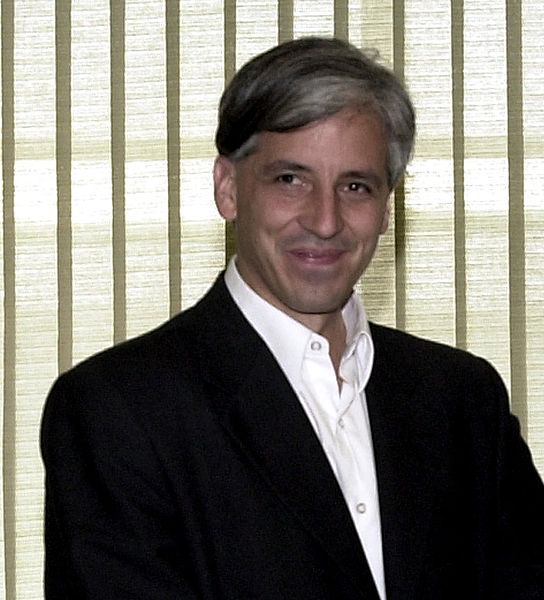
Bolivia—Coming to Terms with Diversity-interview with Bolivia's Vice President Álvaro García Linera by Laura Carlsen


Bolivia's Vice President Álvaro García Linera

Americas Program, Center for International Policy (CIP) americas.irc-online.org
(Abbreviated version available at http://americas.irc-online.org/am/4735.)

As head of Congress and the major political operator for President Evo Morales, Bolivia's Vice President Álvaro García Linera stands in the eye of a political hurricane. The changes proposed by the MAS government have unleashed protest from conservative sectors of society, leading to suspension of the Constituent Assembly called to revamp the nation's political institutions.

García Linera says the conflicts are to be expected, as Bolivian society takes on "the two conquests of equality"—political rights for indigenous peoples and economic equality through a redistribution of national wealth. He calls the Morales administration a "government of social movements" and describes the goals to build "institutions that allow us to recognize our pluralism" and "generate minimal levels of access to opportunities and resources."

LC: The government of Evo Morales came to power with the symbolic force of being the first indigenous president in the country, and has promised to address an historic backlog of demands for indigenous rights. But the government also faces the challenge of achieving some degree of unity to carry out deep transformations in society. In practice, how do you reconcile these two responsibilities?

AGL: The presence of the first indigenous president is without a doubt the most important symbolic break in the last centuries in Bolivia. Within our political culture, both indigenous and non-indigenous people had always had an image of indigenous people as second-class citizens, in a position of permanent subordination. President Morales in the presidency marks a radical transformation, politically speaking, in this country because it re-establishes a principle of equality that had been denied by colonial or neocolonial practices, and by the mentality and the customs of society.

Since Morales has been president, the range of options and opportunities open to members of society has been socialized, has evened up. If an indigenous person can be president, then why not diplomat, congressional representative, member of the constituent assembly, or minister or vice minister—all positions previously closed to the indigenous majority of the country.

But soon we saw that as political equality advanced, the challenge remained to expand this progress in political equality to other realms—notably, the economic realm in the form of a new redistribution of wealth. Not just because of the results of the elections, but because this was already on the agenda of grassroots mobilizations as a main demand coming from the most vulnerable sectors of Bolivian society.

So society was ready for, and needed, both these tasks to be taken on together: Political equality and recognition of equality for indigenous peoples, their culture, and their language; but also a redistribution of wealth to improve peoples' access to resources. And that's where the job of President Morales' government has gotten complicated.

LC: Why is that?

AGL: In other societies, political equality is not necessarily accompanied by an immediate effort to redistribute wealth. South Africa is a case in point: There was a huge battle for political equality and a slower process of redistribution, or economic equality. In the case of Bolivia, the two tasks had to be taken on simultaneously.

Modernity and the advance of the general process pushed the privileged sectors to accept political equality, but to accept redistribution of wealth is another matter. It generates more resistance from groups that are accustomed not only to holding positions of power but also to a form of allotment that earmarked public resources with their families' names on them.

This is the most difficult part of what we've taken on—the two conquests of equality. But the fact that there was already a democratic and redistributive agenda proposed by society since 2000 led to the need to assume both tasks simultaneously, with all the difficulties that you're seeing in these days and weeks—all predictable, of course.

LC: In this task where the government has to take measures that affect very powerful interests, how do you convince or obligate sectors with historic privileges to cede privileges in order to establish the new state and society?

AGL: Among the most privileged sectors, it requires—not "generosity," because in politics and economics that term doesn't exist—but a strategic viewpoint. This is not a movement that at any time seeks to annul privileges. This is a movement that seeks to generate minimal levels of access to opportunities and resources.

From a strategic point of view, the most privileged sectors would understand that the best way to preserve part of their privileges is to cede part of their privileges. But when they are not willing to cede a part of these privileges, what that does is generate a pressure that's more and more adverse to them, with the risk that it could affect all their privileges.

If you look at the program put forth by the poor in Bolivia, it doesn't propose socializing all wealth or property. What you find is the demand for opportunities, a demand to take part in the distribution of resources. I haven't seen anyone who's saying "We have to take all the land away from the hacendados (large landowners)." They say, "We want to have land too, we also have a right to have land." Same with natural resources, water, or oil. They're not saying "We want to expropriate oil and gas and kick all the foreign companies out" but rather, "We want to be included in the profits from these resources."

And in fact, the measures we've taken—such as the nationalization of hydrocarbons that didn't expropriate fixed assets but rather took back property and decision-making capacity over gas and petroleum—illustrate the strategy of society and the government. But there are privileged sectors that have a short-term perspective and resist this redistribution.

The key for privileged sectors resides in not looking to the future in one year, but in 10, 20, or 30, or 50 years. This strategic point of view is what could help this process of redistribution of wealth and lead to a coming together, but in a more balanced way and not with the scandalous distances in terms of property and money that we still see in Bolivia.

LC: Speaking of these sectors and their resistance, today with the problems facing the Constituent Assembly, there has been talk of a growing political and social polarization in the country.

Do you agree with this assessment of the present moment?

AGL: Ethnic, class, and regional differences in Bolivia are not recent; they didn't appear this year or even in the last five or 10 years. They cut across our entire history as a republic.

Don't forget that Bolivia emerges as a republic refusing to recognize the right of citizenship for the indigenous majority. And that refusal was only slightly modified just 50 years ago when indigenous persons were granted the right to vote.

Even then, what doesn't disappear are the privileges in terms of access to and control of the positions of political, economic, and cultural power that run the society. It's not the forms but rather the practices and habits of society that continue to impede indigenous people from reaching decision-making spheres, due to that kind of "glass ceiling" that feminists talk about.

The fact that today these issues are on the agenda of debate is nothing new. The novelty is that society for the first time is forced to look at itself in the mirror, and it has to see its limitations, its cracks, its weaknesses. Exclusion and confrontation have been recurrent themes throughout Bolivia's history—uprisings, massacres every 10, every 15 years. The idea is that what's been a fissure in society for over 190 years must finally be resolved now, based on a democratic pact of mutual recognition.

The same goes for regional divisions. Bolivia is born as a republic as the fruit of a very particular alliance of more than 100 mini-republics—regions with their own leaders, economies, symbols, and political practices, all very fragmented. The process of building national unity has been to this day a tortuous process, with many imbalances.

In fact, the governments of the 19 th century concentrated power, wealth, and privileges, where they established their control while leaving out the rest of the zones and regions.

It's no coincidence that by 1830 they were already talking about federalism. A hundred years ago there was a federalist proposal in the country that sought to redistribute political power among the regions. Again, it emerges as an historic fissure throughout the history of our republican life, and is never resolved. There was a federal civil war that ended up in the agreement to move the capital from Sucre to La Paz and after achieving that the next day they forgot about federalism. The regional elites of Santa Cruz have raised the flag of autonomy and decentralization since the 50s. When they came to power, they became centralists again, putting away their banners of autonomy and decentralization.

And now the issue comes up again—what we want is to have it resolved, not by pretending the problem had gone away like they did in the past, but to be resolved through an authentic territorial distribution of power, and not on a class basis.

Bolivia has been experiencing these ethnic, class, and regional tensions off and on throughout its history. The difference today is that in the past they were separated. An ethnic movement would arise and be "resolved" through massacres or bullets. Time would go by and the regional issue would come up and find some kind of half-way solution. A little while later, ethnic or class conflicts would emerge again.

Ethnic, cultural, and regional differences in our Bolivian society, today visible all at once, are not recent products. They are old wounds that have been present in our history and were never healed.

It's up to this generation—I'm not saying "this government," but this generation, this society—to resolve issues that couldn't be resolved in 182 years of political life as an independent republic. We have to resolve them, not by pretending the problem has gone away as leaders did in the past, but through an authentic territorial distribution of power, and not on a class basis. If we do, we will have resolved something that throughout our history couldn't be resolved by dictators or liberals or populists or caudillos.

At root, what you're seeing now is the real inner workings of society exposed. And you see the unhealed wounds, previously hidden behind bandages, and now we have to heal the three kinds of wounds at once.

There's no reason to become undone over these tensions because they're tensions that we've experienced before. Instead of worrying about these issues becoming visible, the concern would be if we did what past governments have done—just swept them under the rug.

Because this is the historic opportunity for society to finally come to terms with itself, to see a rebirth of our collective spirit based on who we really are—not the illusion of who we want to be, as the elites have always done before in this country.

Perhaps this is the big spiritual void that we Bolivians have had: that we never could be honest about who we are. We said we were a unified republic, when we weren't. We've wanted to be modern, but we're not. We've wanted to be homogenous, but we're not. What we are is diverse, with many local and regional identities, and we have to build an institutional structure for what Bolivia really is. And that is exactly what we want to do now.

LC: In the context of these divisions, do you still think it's feasible to agree on a new constitution with profound changes, or will it be necessary to accept minor reforms?

AGL: The Constituent Assembly is conceived of and was convoked to create an institutional order that corresponds to the reality of who we are. Up to now, each one of our 17 of 18 constitutions has just tried to copy the latest institutional fashion—French, U.S., European. And it was clear that it didn't fit us, because these institutions correspond to other societies. We are indigenous and non-indigenous, we are modern and traditional, we are liberal and communitarist, we are a profoundly diverse society regionally and a hybrid in terms of social classes. So we have to have institutions that allow us to recognize that pluralism.

This is the great challenge of the Constituent Assembly. And that's why we are confident, we are betting on its success, in spite of the difficulties, with this idea of expressing the real society and projecting that in institutional and normative terms for the coming decades.

LC: You have spoken of diversity not only in terms of the need to recognize it in a new form of institutionality but also as the guiding principle of a new social pact. Reading the newspapers these days, diversity would appear to be more a factor of division. How do you move toward this vision of strength through diversity?

AGL: We've always been divided. It's just that now we're seeing ourselves with all our divisions and tendencies. The illusion of a monolithic, cohesive unity has broken like a glass thrown to the ground. And it can never be put back together. We can't go back to living with illusions. The key for all the groups is to affirm their difference, but at the same time produce a will to unity—to an agreed-on unity, not an imposed unity, not an illusive or merely superficial unity.

Sure, at first it's scary as everyone begins to wake up to the fact that they are different from the other, and to assume that difference and not to hide it. That's the first step in building real unity.

The second step is, based on the affirmation of differences, to affirm what we have in common. Without a doubt, the indigenous and peasant movements that have led this process are the most lucid in taking these steps. To give you an example: it would be very easy for the indigenous and peasant movement to demand that each community, each culture, each nationality have the right to the control and ownership of natural resources. Even the United Nations declaration recognizes that right—to land, forests, gas, and oil.

But what you see is that, at the same time as they say "we are indigenous peoples, we are nationalities with our own culture," they are also objectively asserting unity when they say "we have to nationalize hydrocarbons"—in the sense of a collective "I" that is above the particular language, culture, or region. The proposal to nationalize gas and oil didn't come from intellectuals or from the middle classes. It came out of the social movements, mostly indigenous and peasant.

That's why you see the indigenous-peasant sector leading changes today. Not because it mobilizes more people, not because it stages the biggest, most militant demonstrations, but because it proposed with greatest clarity this idea of the collective "I."

It is in this dialectic—between the individual and the community, between the differences and the commonalities—where the country's future will be decided.

Not all sectors have this way of looking at things, especially the privileged sectors. Sometimes the press focuses the cameras on the differences. Then you see a country that appears to be on the verge of a breakdown because everybody wants to assert their own identities and differences at their moment. The sectors that demand difference as a historic right because they were never allowed the right to difference are simultaneously the ones that fight the hardest, the ones who have done the most, to build a real common "I." Not a fictitious one, not just symbols and rites, but in real actions: the constituent assembly, nationalization of hydrocarbons, redistribution of wealth.

LC: You mention the responsibility of social movements. Other progressive governments, brought to power by grassroots movements, have been criticized for subsequently demobilizing or sidelining those movements. How do you conceive the role of social movements in the Morales government?

AGL: We consider this to be a government of social movements. Even though that means there are tensions. Because government and state are by definition a process of centralization of decisions. And by definition a social movement is a process of socialization and collective diffusion of decision-making, of controls. What's interesting is to ride on that tension. That's the novelty of the process.

You'll ask: But do you back up this claim of being a government of social movements? How can this be demonstrated in objective, material, practical terms?

On four levels, from the most general to the most specific.

The most general: the program of changes and transformations in the government is, without a doubt, the program proposed by the social mobilizations over the last five, 10, 15 years. What the government of President Morales has done is simply to practically transcribe into decree or law what was collectively built up by society itself through social movements. Land, hydrocarbons, Constituent Assembly, the issue of autonomies, redistribution of wealth, process of industrialization, and so many things still pending—the big decisions of this government have been historically proposed over the past 10 years by the social movements.

The second level is that for the government's major decisions—all of them, without exception—we've consulted with the leadership of the different social movements. Not all the social movements, of course, but a good part of the most active social movements in the country. The issue of water, the law on agrarian reform with indigenous and peasant organizations, the issue of hydrocarbons with neighborhood assemblies in El Alto, mobilized workers, and so on. There isn't one important measure that isn't marked by a process of feedback and consultation with these sectors, because every one of these actions can only be sustained through mobilization of society, not through bureaucratic action.

Third, in the structure of the government, among its upper- and medium-level leaders you'll find the presence of a good part of the sectors' and movements' leadership. Whether as mayors, prefects (the provincial leadership), parliamentary representatives, constituent assemblypersons, ministers, there's a practical, physical presence of grassroots leadership in government.

To what degree they maintain their connection to their constituents is a different problem. To what degree they could become bureaucratized is definitely a risk. But if you watch the parliament on television or the assembly, you see an enormous presence of these sectors. This is something that was unthinkable five or 10 years ago, because these were positions reserved for certain families, for elites cultivated in foreign universities, with famous last names, and a tradition of being in politics.

In fourth place, because even if the social movement itself can't move into government administration, as a movement, the process of selection of government officials obligatorily passes not only through a criteria of merit but also through approval from social movements and organizations. Here it's equally valid to have a masters or doctorate from Harvard as to have links with the peasant federation. Yes, this can slow up certain areas of government efficiency but it's a sign of the times.

These are the four elements that show you a government of social movements. Does that mean that all social movements are in the government? No, there are other social movements that remain on the margins of government. But there's no doubt that the mobilizing nucleus of the last decades is what sustains this government.

LC: You and the president come from a background of participation in movements. What are the big surprises or unexpected challenges of coming to government?

AGL: There are so many.

There's clearly a leap between the logic of mobilization and protest, to the logic of administration. However, the Movement toward Socialism (MAS) as a coalition of social organizations has experienced a learning curve and transition from strictly making demands and being a union movement to increasingly becoming a revolutionary political entity. This started 10 years ago when the unions began to control local governments. The agrarian unions entered the mayorships and had to put to the test their demands with transparency. It's not a lot of time, many parties have to spend 30 years preparing for governing. In our case, there were 10 years of training—too fast.

But for better or worse, you have there a first period of gestation of political leaders who had to combine the discourse of mobilization with the ability to govern. These leaders that were trained since the 90s in local government, several of them are now in parliament or are even vice ministers. There has been a small training school, rapid, but training in this new logic.

It also has to do with the fact that this social movement matures very quickly since 2000, to go from confrontational strategies to proposing designs for the nation. It isn't usual, even in the history of Bolivia, to see this kind of political maturation. It means that increasingly in the process of mobilization and protest the issues that you enter into dialogue with the government on are no longer "how can I get something for my sector?" but "how can I change Bolivia?" The Constituent Assembly arose as a proposal since 2000-2001, recovery of control over of the hydrocarbon sector in 2003, a new law on land since 1999—there were already general guidelines developed for defining public goods.

When President Morales, colleagues, myself, arrive here we have to change part of the chip in our brains. What we decide to do is very clear: there are a lot of things we don't know and we have to learn, but there are a lot of things that we have to do. Because we came to act; we didn't come to administer government, we came to change it. So what do we decide? The first decision of President Morales was to leave the technical base of intermediate officials in all the ministries and institutions intact and just make changes on the level of ministers and vice ministers with political leaders.

Those were the months last year that we had problems—when public administration didn't work so well, there wasn't good implementation of the budget, there were contradictions between ministries. However, if we had tried to replace all the staff at once from the beginning and install pure political leaders, it would have been a catastrophe.

There have been difficulties that we've admitted publicly of course, but it still is remarkable what we've achieved with these decisions. Economic growth; modification of the economic structure of society; implementation, albeit gradual, of some things at the social level; and so many changes still pending.

For this reason, I believe it's a healthy process and full of vitality and has good possibilities of success.


Laura Carlsen (lcarlsen(a)ciponline.org) is director of the Americas Policy Program (www.americaspolicy.org) in Mexico City.

Thursday, November 22, 2007

Media lies about Venezuela’s democratic revolution by Lauren Carroll Harris


The US-backed right-wing campaign to destabilise the democratic revolution in Venezuela, lead by socialist President Hugo Chavez, is escalating again. The upcoming December 2 referendum on proposed amendments to the constitution is prompting a new drive from US-backed capitalist elite to undermine the elected Chavez government. Crucially, the international corporate-owned media’s distortion of events is reaching new heights, with false allegations of government repression of opposition protesters a key component of the campaign to demonise Chavez and the process of change his government is leading.

Over the last two weeks, a former military and political ally of Chavez has defected to the opposition, student-led demonstrations against the constitutional reforms have turned into violent riots, and massive demonstrations, involving hundreds of thousands, have occurred in support of the proposed constitutional reforms.

A demonstration on November 4 in favour of the proposed constitutional changes attracted hundreds of thousands of people. Although peaceful and massive, it remained mostly ignored by the international media.

Three days later, a widely covered but relatively small student demonstration against the reforms ended in violence and gunfire. Over 120 pro-Chavez students and staff were trapped inside the social work building on the Central University of Venezuela (UCV), surrounded by a mob of oppositionists throwing rocks and tear gas grenades. Nine students were injured, one critically.

Confrontations between opposition students and police have continued since then, with a Reuters article that day reporting that opposition protesters opened fire on police, with four officers shot.

Chavez proposed the constitutional changes on August 15, arguing that the changes were necessary to bring about “21st Century socialism” and “to remove the old oligarchic, exploiter hegemony”. The changes have been widely debated in thousands of mass meetings across the country, with the outcome being an additional 36 proposed changes to the constitution — on top of Chavez’s initial 33 — being adopted by the National Assembly. The 69 proposed reforms, in different blocs, will be put to the referendum.

The current outbreak of conflict — driven by an elite terrified of losing more of its power and wealth through increasing moves towards socialism — is aimed at creating a false political crisis, and through this the conditions for counter-revolution.

Without a significant support base that can be mobilised after suffering a series of defeats, the opposition have failed to develop a comprehensive strategy to defeat the revolutionary movement led by Chavez — which has won 11 straight national electoral victories since 1998. The opposition has relied on a narrow layer of privileged students based on the old elite universities. (Under Chavez, free university education has been massively expanded to incorporate hundreds of thousands of the previously excluded poor, largely through the new Bolivarian University, with the government currently constructing 18 new universities.)

The traditional social base of the opposition in the middle class is being eroded not just by demoralisation caused by repeated defeats, but by economic changes that are benefiting that vast majority of Venezuelans, bolstering support for Chavez and undermining opposition.

According to a 2007 AC Nielson and Datos study on behalf of the Venezuelan American Chamber of Commerce and Industry, 97% of the population make up the three poorest (of six) income brackets, and all have experienced significant increases in income between 2004 and 2006 a result of pro-poor measures of the Chavez government. The poorest bracket makes up 58% of the population, and their income has increased 130% after being corrected for inflation. These gains don’t include the benefits associated with the Chavez government’s social missions, that have provided free health care, education, subsidised food, housing and other benefits.

Struggling for a way forward, opposition parties remain split over whether to vote “No” to the reforms, or to abstain from voting. Previous attempts at destabilisation have all failed — such as the April 2002 coup that briefly overthrew Chavez but was defeated by a popular uprising.

An October 4 piece by opposition blogger Francisco Toro entitled “Who are we really?”, which was posted on Venezuelanalysis.com, revealed the dishonest methods used by the opposition have helped lead to repeated defeats. He reveals how the opposition use the private media, largely owned and controlled by anti-Chavez elites, as propaganda machines that provide distorted and selective information to present a false picture of the Venezuelan reality. The international media, taking its lead from Venezuela’s private media, repeat these distortions.

Toro points out the figures in the private media openly stated as far back as 2002 that they would abandon impartiality, which meant news would “no longer be judged by the normal standards of journalistic ethics. Questions of newsworthiness, impartiality, confirmability and public interest would be set aside” in favour of a new guide — will it assist in the goal of overthrowing Chavez? “Henceforth”, he wrote, “the media would serve as a trick mirror — reflecting only those parts of reality that it judged would further an ulterior end. That the image such a mirror produces is deeply distorted is tautological: in this context, the distortion is the point.”

“We were systematically deceived”, Toro said, arguing that all forces in the opposition, himself included, went along with this deception.

Toro argued this backfired on the opposition, because “all we did was fatally undermine our own ability to understand the society we live in”, leaving the opposition’s support base confused and demoralised by repeated defeats that could not be comprehended if you took pro-opposition media propaganda as good coin.

The coverage in the international media continues to follow this same pattern, with heavily distorted and outright false coverage of opposition student riots. The most dramatic was the November 7 UCV violence. According to eye-witnesses, the anti-government protesters were armed with tear gas and masked in balaclavas as they laid siege to the building containing trapped Chavistas. In response, officers from the Venezuelan Protection Unit entered the scene after one hour to release the hostages, with shots fired into the air by way of warning.

Yet, the Venezuelan and international corporate media reported that pro-Chavez supporters violently attacked their opponents, a lie repeated by US state department spokesperson Sean McCormack at a press conference on November 8. The Sydney Morning Herald, on November 9, ran the same picture that appeared in a number of international media outlets of an alleged Chavista pointing a gun at an alleged oppositionist — the identity of both having never been confirmed. The article reported that “opposition members have in the past accused pro-Chavez militants of being behind similar incidents”, something that Chavistas also claim about opposition supporters, although only the opposition claim was reported.

US-Venezuelan author Eva Golinger, author of The Chavez Code, which exposes the extent of US funding of the Venezuelan opposition, wrote on her blog () on November 7: “The Venezuelan government is doing everything in its power to allow [opposition] students to freely enjoy their rights to protest without permitting them to destabilise the country, create chaos, and place in danger the lives of citizens.” She points out that in the US, those responsible for similar acts of violence “would be jailed and subjected to severe repression. Venezuela, on the other hand, is overly permissive with these protests and despite the ample freedom enjoyed by all sectors in this country, the international media distorts the scenario and attempts to paint a portrayal of the Venezuelan government as repressive. Repressive is the US government, permissive is the Venezuelan.”

Many aspects of the proposed constitutional reform directly conflict with capitalist interests. Political power will be decentralised, with the institutions of popular, direct power, given formal recognition. Venezuela’s key natural resources will be protected against future privatisation. Venezuelans who work in the informal economy or are self-employed, most of whom currently have no benefits or guaranteed working conditions, will be ensured a pension, a retirement fund, holiday pay and maternity leave. Workers in the formal economy will have their working week reduced from 44 to 36 hours with the same pay. The impact is clear: the US-backed Venezuelan elites will lose power and wealth should the constitutional reforms be adopted.

The reforms are democratic and progressive in nature. For instance, the voting age will be lowered to 16 years, rights of gays and lesbians will be recognised (a first in South America) and the rights and culture of Afro-Venezuelans further protected.

Political participation of the people has been vital at every step of the reform process. The proposed reforms have been debated widely by the Venezuelan population — between August and October, over 9000 public meetings between National Assembly representatives and citizens were held to discuss the reforms. Workers’, women’s, students’ and other social groups were also consulted. Contrary to mainstream media representation, dissent to the reforms has not been repressed, rather, lively debate has been expressed in the media, in the National Assembly, the constituent assembly and in all aspects of society.

Even the aspects of the reform that the international media have misrepresented as an attack on democracy — for instance, the proposal to allow the reelection of a president for more than two terms (Australia, for its part, has unlimited prime ministerial terms) and the extension of terms from six to seven years — must be approved by the majority of Venezuelans at a referendum on December 2. Also in Venezuela any elected official, including the president, can be recalled before their term finishes if 20% of electors sign a petition calling for a new vote.

Venezuela is continuing along the course of profoundly democratic change it has been carrying out of the last few years, driven by and relying on the participation of the working people. It is becoming increasingly apparent that a major confrontation with powerful interests is inevitable, as the gains and intentions of the revolution and the interests of the US-backed capitalist class continue to clash. There is no possible convergence of democratic, rationally planned socialism, and the profits-first, neoliberal agenda of Venezuelan elite (to say nothing of significant US and European corporate interests in Venezuela).

“The people of Latin America have reached a level of maturity about the politics of the empire”, Venezuelanalysis.com quoted Venezuelan Foreign Minister Nicolas Maduro as saying on November 9. “We have no doubt that, as the surveys show, a huge majority of Venezuelans will vote ‘yes’ on the reform.”


From: International News, Green Left Weekly issue #732 21 November 2007.

Monday, November 19, 2007

VENEZUELA SOLIDARITY MEETING AND ACTIONS


CANBERRA Forum: Constitutional Reforms, Democracy & People's Power
6.30pm Wed. November 28. Ph 0414 886 237 for venue details.

MELBOURNE - Protest action - US hands off Venezuela
5pm Friday 30th November, Flinders St Station (on the steps)

PERTH Forum - Constitutional Reform and Media Lies
6.30pm Friday 30 November, Social Sciences Lecture Theatre, University of WA. Ph 0407 070 841

BRISBANE Forum - Venezuela: Constitutional reforms, democracy & people's power
7pm, Friday, November 30. CEPU Building, 41 Peel St, South Brisbane. Ph (07) 3831 2644.

BRISBANE PROTEST- US Hands Off Venezuela & Bolivia!
1pm, Saturday December 1, Brisbane Square (top of Queens St Mall) 0439 411 330

HOBART film premiere - Now the People Have Awoken
6pm Thursday, December 6, 225 Murray St, Hobart. Ph 0423 978 518

MELBOURNE - Forum - Constitutional Reforms, Democracy & People's Power
2pm, Sat December 8th, Old ETU Office, Crn Swanston and Queensberry St, Carlton. Ph 0425 289 394 or 0438 447 063

MELBOURNE Film premiere - Now the People Have Awoken
4.30pm, Sat, December 8th, Old ETU Offices, Crn Swanston St and Queensberry St, Carlton Ph 0425 289 394 or 0438 447 063

BLUE MOUNTAINS Film Premiere: "Now the People Have Awoken
7.30pm Mon Dec 10, Tris Elies Red Room, next to Katoomba Station, Katoomba, Ph 4787 7859 for more info.
URGENT CALL FOR SOLIDARITY: DEFEND THE VENEZUELAN PEOPLE'S RIGHT TO REFORM THEIR CONSTITUTION


Dear friends of Venezuela,

You have received various items of information over recent weeks as we aim to keep everyone informed about events in Venezuela in the lead-up to the crucial December 2 referendum on the Constitution reforms.

The proposed reforms are being developed - and supported - by the overwhelmingly majority of Venezuelans through widespread community consultation. This has yet again infuriated the increasingly isolated the right-wing opposition, to the extent that central leaders of the opposition, some of whom were involved in the 2002 coup against President Hugo Chavez, have recently been seen with key figures in the US administration, including former director of national security director Paul Wolfowitz and Madeleine Albright. The opposition are calling their current efforts to destabilise Venezuela through violent protests and other actions "the ultimate battle" (La Ultiima Batalla).

The AVSN pledged at its founding conference to act as an Emergency Response Network to defend the Venezuelan people's right to sovereignty and democracy free from violent and illegal internal or international destabilisation. Given the current developments, the AVSN strongly restates the call of Venezuela's Charge d'Affaires in Australia, Nelson Davila, that we all to remain well informed and vigilant as the international media campaign against Venezuela's Constitutional reform intensifies.

We encourage all supporters of Venezuela's democratic revolution to:

* keep informed about developments around the Constitution reform process by regularly visiting http://www.venezuelasolidarity.org and www.venezuelanalysis.org

* add your name to the solidarity statement at: http://www.venezuelasolidarity.org/?q=node/1564;

* help to counter the lies by forwarding this email throughout your networks, and sending letters to the editor of your local papers about the real nature of the proposed Constitutional reforms (a "model" letter to the editor is available by emailing info@venezuelasolidarity.org);

* help promote and attend the solidarity activities - public meetings, film screenings and protest actions - being organised in various cities around the time of the Constitutional referendum on December 2; and

* Sign the invitation to President Hugo Chavez to visit Australia at http://www.venezuelasolidarity.org, and ask everyone else who'd be interested to also do so. A visit by Hugo Chavez would be the best possible counter to the corporate media lies about democracy in Venezuela.

AVSN members and supporters are urged to be pro-active in defence of the Venezuelan revolution at this vital stage in its consolidation, which if successful will strengthen the missions and participatory democracy as foundations for Venezuela's Socialism of the 21st Century.

During November and December, a number of activists will be participating in the 7th AVSN solidarity brigade in Venezuela, observing the democratic process as Venezuelan's cast their vote for the future. Reports from the brigadistas will also be posted at http://www.venezuelasolidarity.org. If you are interested in joining the next brigade to Venezuela - scheduled for May Day 2008 - please contact us at brigades@venezuelasolidarity.org

On behalf of the people of Venezuela, thank you for your solidarity at this important time.

Eight participants in the AVSN's 7th solidarity brigade to Venezuela - including two activists from Canada and Aotearoa-NZ - will on November 25 begin visits to communal councils, social missions, the women's organisation and Indigenous Parliament, and factories under workers' control, as well as observing the final days of campaigning for the referendum on the Constitution reforms. Sydney AVSN member Tamara Pearson, who is on the brigade, will be posting regular accounts of the brigadistas' meetings and experiences on her blog - so we can all stay in touch with what they are doing, seeing and learning on the brigade.

The AVSN is now accepting registrations for the 2008 May Day brigade to Venezuela, to run from April 29 for around 12 days. For more information about how to participate in this wonderful opportunity to see for yourself an unfolding revolution.

To find out more about and to get involved in the AVSN activities in your city go to Venezuela Solidarity in the Links

Tuesday, June 26, 2007

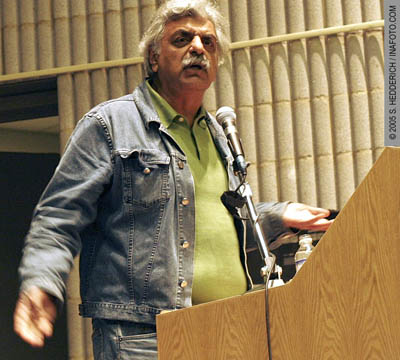
London Review of Books Diary: Caracas/Cochabamba by Tariq Ali


The 1960s skyscrapers of Caracas seemed uglier than usual. The Hotel Gran Melia wasn’t very appealing either. The kitsch ceiling in the giant lobby was reminiscent of the Dubai School (why does oil wealth seem to result in such bad architecture?) and I wished I was staying, as I normally do, at the shabby, bare, miserable but atmospheric Hilton. I was in Caracas to speak at a conference on global media networks and to attend a meeting of the advisory board of the Spanish/Portuguese cable news channel Telesur – set up jointly by Venezuela, Argentina, Uruguay, Bolivia, Cuba and now Ecuador. Intended to provide an alternative to the CNN/BBC worldview, the new channel has been a modest success, with between five and six million regular viewers. The privately owned channels devote hours of coverage to US Congressional results or a murder on a US campus: Telesur announces these events briefly and devotes the rest of the bulletin to live coverage from Nicaragua, where elections are taking place, or from Ecuador, where a referendum that will lead to the drafting of a new constitution has been won by the new government.

I first raised the idea of setting up a station to counter the Washington Consensus networks at a public meeting here in 2003. It was seized on quickly, but the name I suggested – al-Bolívar – was firmly rejected. It was inappropriate, I was told, since it would exclude the largest continental state, which had no links to the Liberator. In the event, Brazil excluded itself. ‘Why won’t you support Telesur?’ Chávez asked Lula. ‘I don’t know,’ he replied, shame-faced. The reason was obvious: he didn’t want to antagonise the Brazilian media or annoy Washington. But Telesur is starting to attract viewers in his country even so.

The conference centre was packed for Chávez’s speech. When we were all seated, he was whisked in and a few pleasantries exchanged. ‘You must be happy now that Blair is going,’ he said to me. I pointed out that my happiness was somewhat circumscribed by the succession. ‘Long live the revolution,’ he said, practising his English. Then we settled down for his three-hour address, which was being broadcast live. Occasions like this always make me wish I’d brought a picnic basket. The speech was pretty typical. Some facts (for example, that the increase in oil revenues brought about by charging more royalties amounts to a few billion dollars); homespun philosophy; autobiography; an account of his most recent conversation with Castro, together with a rough estimate of the length of time the two men have spent talking to each other (well over a thousand hours); his pride that the Venezuelan government is funding Danny Glover’s film about Toussaint L’Ouverture and the Haitian slave uprising; the horrors of occupied Iraq; a sharp attack on the pope for suggesting in the course of his recent visit to Brazil that the indigenous population had not been badly treated and had willingly embraced Christ.

An impromptu song, which normally indicates that the speech is nearing its end, followed the denunciation of the pope, but this time the speech continued. There was a shortish (30-minute) historical detour, much of it to do with Bolívar and how he had been let down by men in the pay of the local aristocracy/oligarchy: ‘The history books at school never taught us about these betrayals.’ And then there was a discussion of planetary survival before the speech ended with a slogan borrowed from Cuba in bad times: ‘Socialism or Death.’ It’s a truly awful message. When I pointed out to one of Chávez’s aides how threatening this sounds, he explained that the president was in Rosa Luxemburg mode. What he really meant was ‘Socialism or Barbarism.’ I’m not convinced.

Chávez seemed to be slightly subdued and I wondered whether the audience he was really addressing wasn’t the army rank and file. The next day, the former vice-president, José Vicente Rangel, told us that there had been a US-Colombian plot to infiltrate Colombian paramilitaries, including snipers, into Venezuela. The aim, he said, had been to create a national emergency: government members and leaders of the opposition would be assassinated and each side would blame the other. A plot to assassinate Chávez involving three senior army officers was uncovered around the same time. Two of the would-be assassins are in prison; the third reportedly fled to Miami.

Chávez’s military studies taught him that the enemy must never be reduced to desperation, since this only makes them stronger. His strategy is to offer escape routes. He and his supporters are not vindictive, and the Western media chorus portraying his regime as authoritarian is wide of the mark. It was in full voice when I was in Caracas. The cause this time was a privately owned TV station (RCTV) whose 20-year licence the government had refused to renew. RCTV, in common with most of the Venezuelan media, was involved in the 2002 coup against Chávez’s (democratically elected) government. RCTV mobilised support for the coup, falsified footage to suggest that Chávez supporters were killing people, and when the coup failed didn’t show any images of Chávez’s triumphant return. A year later they made lengthy appeals to the citizens to topple the government during an opposition-engineered oil strike. Again, they were not alone, but their appeals actively encouraged violence.

Asked by a Guardian reporter whether I supported the decision, I said I did. He was shocked: ‘But now the opposition is without its TV channel.’ I asked whether the opposition in Britain or anywhere else in Europe or America had ‘its TV’? Which Western government would tolerate any of this? Thatcher refused to renew Thames TV’s franchise, and it had merely shown one critical documentary. Blair sacked Greg Dyke and neutered the BBC. Bush has the luxury of uncritical news channels, and Fox TV as a propaganda network.

I warned against an obsession with the power of the media at the conference. After all, Chávez won six elections despite near universal media opposition. Evo Morales in Bolivia and Rafael Correa in Ecuador also won despite unremitting opposition. And this wasn’t true only of South America. The French voted against the European Constitution without the support of a single daily newspaper or TV station.

Four days later I was at another conference – this time ‘defending humanity’, something I often do – in Cochabamba in Bolivia. I was last there forty years ago as part of a four-man team (the others were Perry Anderson, Robin Blackburn and Ralph Schoenman) sent by Bertrand Russell to attend the trial of Régis Debray in Camiri, not far from where a besieged Che Guevara was fighting to escape the Bolivian army. Debray had been captured while attempting to leave the guerrilla encampment and head home. I had also been asked by the Cubans to photograph every Bolivian army officer in the region. This got me into trouble a few times. On one occasion a colonel, pistol drawn, walked up to me and asked for the film. I gave him a blank roll. ‘If you take any more photographs of me,’ he said, ‘I’ll shoot you.’ I didn’t. These photographs and others (including one of Robin Blackburn having a long shower) were dispatched to Havana, where they must still be held in some ageing archive.

Cochabamba was where the US Military Advisory Group, which was supervising the operation to capture and kill Guevara, established its HQ. And it was to Cochabamba that I fled from Camiri in 1967 after being briefly arrested, accused of being a Cuban guerrilla called Pombo, Che’s bodyguard and one of those who escaped the encampment and returned safely to Cuba. I holed up there till I could get a flight to La Paz and a connection to Europe via Brazil. Hearing me reminisce with Richard Gott, who was also defending humanity, and who had been the Guardian’s chief Latin America correspondent in 1967, a young Telesur journalist from Madrid said: ‘God. It’s just like listening to Spanish Civil War veterans returning to Spain.’

Bolivia has a large Indian population: 62 per cent describe themselves as indigenous; 35 per cent live on less than a dollar a day. It has a turbulent history: wars, coups, revolutions, the odd guerrilla foco and numerous uprisings. There were 157 coups between 1825 and 1982 and 70 presidents, half of whom held office for less than a year. Neoliberal slumber lasted throughout the 1990s, before anti-government protests culminated in the ‘water wars’. The government sold the water in Cochabamba to Bechtel, who told people it was illegal to collect rainwater. There were clashes with the army, a young demonstrator was killed and the protesters won. The municipality regained control of the water. Such unrest created the basis for the triumph of Morales and the Movement for Socialism in the elections of 2005. Not only was Morales on the left, he was an Aymara Indian, and his victory ended a century and a half of Creole rule. The rich were furious. Within a few months, a campaign of destabilisation centred in the Creole stronghold of Santa Cruz had begun. ‘They predicted economic chaos,’ Rafael Puente, a former government minister and Jesuit priest, told us. ‘They said Bolivia would become another Zimbabwe. They accused Evo of starting a civil war. They exchanged doctored photographs on their cell phones depicting their elected president bleeding from a gunshot wound in the head with the words “Viva Santa Cruz” painted above him in blood.’ The government went ahead and carried out its election promises, nationalising energy resources and taking direct control of operations. The increase in state revenues was to be used to help poor families keep their children at school. The government aimed to reduce poverty by 10 per cent, a modest enough aim, but the Santa Cruz businessmen screamed ‘Communism!’ When economic conditions improved, the opposition moved on to Morales’s relationship with Chávez. The walls of Santa Cruz were plastered with posters reading ‘Evo, Chola de Chávez’ (chola is the word for ‘Indian whore’). When one looks at the newspapers here it is hard to work out which man they hate more.

Richard Gott and I wandered around Cochabamba. The Paris Café on the Plaza de 14 Septembre was still there, looking much less dilapidated. The Roxy cinema where I watched Lee Marvin and Jane Fonda in Cat Ballou has also survived, although it is now an evangelical church. Gott insisted that we visit La Cancha. This is the indigenous market opposite the old railway station, reminiscent of an Arab bazaar with its narrow lanes, and commodities transported by wheelbarrow; among other things it has to offer is the most ravishing assortment of multi-coloured potatoes anywhere in the world. Little has changed since 1967, though the quality seems to have declined a bit. I bought two cheap tin plates painted with flowers, which turned out to have been made in China.

Back at the hotel I was ambushed by a Spanish journalist from El Mundo: ‘You’ve described Venezuela, Bolivia, Cuba and Ecuador as an axis of hope. What is your axis of evil in this continent?’ I told her that I avoid the terms good and evil because they are religious concepts, but that my axis of despair consists of Brazil, Chile and Mexico. ‘Could you please add the Dominican Republic?’ asked Scheherazade Vicioso, a feminist poet. ‘We’re always being ignored.’ I did so. Then I asked the reason for her name. Her father, a composer, adored The Thousand and One Nights. ‘I got off lightly, she added. ‘My brother is called Rainer Maria Rilke.’

I left on an early morning flight. An Indian, his back bent, a brush in each hand, was cleaning the streets. Waiting in Caracas for another plane I flicked through the guest book in the VIP lounge. Two messages summed up the contradictions. The first was from Ahn Jung Gu, the president of Samsung in South America: ‘Venezuela is one of the core markets for Samsung. We will continue to invest here and contribute development to this market.’ A few entries later: ‘Dear President Chávez and Venezuela. Thank you for the love and hospitality of your people. In love and peace. Cindy Sheehan, USA.’

London Review of Books, 21 June 2007
Also in Spanish