The police treat protests and festivals as a threat to their power
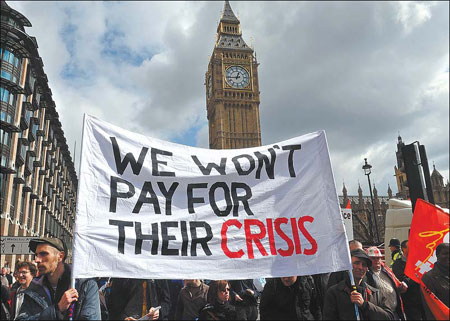
This Thursday a year will have passed since Ian Tomlinson died after being assaulted by a policeman at the G20 protests. No charges have been brought; no one has been punished. Despite 300 official complaints about the policing of the protests on April 1st, and plenty of video and photographic evidence, no officer has faced serious disciplinary proceedings(1,2). Those who removed their identification numbers, beat up peaceful protesters and bystanders, then repeatedly lied about what had happened remain untroubled, either by the law or their superior officers. There has been no apology to Tomlinson’s family.
Contrast this with another case, in which a Nottinghamshire police officer caused two deaths in June. As soon as it happened, the police reported themselves to the Independent Police Complaints Commission and launched their own investigation. A chief superintendent told the press that “we will certainly take any lessons we can get from this process and make sure we put them in place so this sort of thing never happens again. It has caused immense sadness and immense shock.”(3) The papers carried pictures of officers paying tribute, saluting the flowers left outside police headquarters(4). There was no cover up, no botched post-mortem, no lies about the victims or their families. The officer responsible was quickly charged and, though his victims died as a result of neglect not assault, last month he was convicted over the deaths(5).
There’s a significant difference between the two cases: the Nottinghamshire victims were dogs. The officer had left two police dogs in his car and forgot about them while he completed some paperwork. Judging by their response to these two tragedies, both police and prosecutors appear to care more about dogs than human beings.
Later this week the Association of Chief Police Officers (ACPO) will publish its draft manual for policing protests. Expect police forces to assure us that the bad old days of beating up protesters are over. And don’t believe a word of it.
Seven days before the G20 demos last year, the parliamentary committee on human rights published a damning report on the policing of protest. It proposed that “counter-terrorism powers should never be used against peaceful protesters”; and that “the presumption should be in favour of protests taking place without state interference”(6). Police chiefs insisted that they took the report seriously. A week later the Met deployed the tactics the committee had criticised.
In November the chief inspector of constabulary lambasted the way protests are policed. He urged the police to stop treating protesters as the enemy and reminded them that they have a duty under human rights law to facilitate peaceful assembly. The policing of public events, he said, “demands more than a rigid response within a conveniently harsh legal environment.”(7) But little has changed.
Last week at Isleworth Crown Court the prosecution abandoned a case brought against a protester called Jake Smith(8). Smith had been charged with violent disorder at a protest outside the Israeli embassy: the police accused him of throwing a stick at them, and produced video evidence which appeared to support them. Though Mr Smith found some material on YouTube that told a different story, they stuck to their line, and denied that they had any more footage of the incident.
Two days before the case was about to begin, the police admitted that they had a further seven and a half hours of videos. What they showed was that another man had thrown the stick then run away; Smith, by contrast, had committed the traditional offence of having the crap beaten out of him by riot cops. Just as dead civilians in Iraq and Afghanistan become terrorists, protesters beaten by the police become guilty of violent disorder: how else can their treatment be explained, and what other means do the police have of silencing them? Smith’s lawyer maintains that the video evidence the Met had used was a “cut and paste job”: a bit like the story they codded up about Ian Tomlinson.
A fortnight ago, the Cambridgeshire force won the battle it has been waging against peaceful assembly, when it forced the cancellation of Strawberry Fair, a free festival that has taken place in Cambridge every summer since 1972. At the beginning of March the fair was licensed for this year by the city council, against the protests of the police.
In order to show what a terrifying threat to public order it presented, Cambridge police posted up a video of scenes from the last festival: a few hippies skinning up and some people pissing against a tree. They took it down again when they realised that it made them look like total wallies, breaking up picnics and arresting people for microscopic particles of hash(9). But though they had told the local paper that they were “not aware of any major incidents at the event”(10), they lodged an appeal against the licence.
As the alternative magazine Schnews points out, the appeal couldn’t have been resolved until soon before the fair was due to begin(11). If the police had won, it would have forced a last-minute cancellation of the kind that bankrupted the Big Green Gathering last year(12). The organisers had no choice but to cancel. The police told the BBC, “we are surprised that the Strawberry Fair organisers have decided to cancel this year’s event … we are not against the event in principle, and never have been.”(13) This looks disingenuous on both counts. The chair of the city council’s licensing committee attacked the “unelected and unaccountable police force” for countermanding a democratic decision(14).
Schnews also reports that Durham police have just lost their case against Andrew Norman, the organiser of Thimbleberry Festival, who was charged with allowing his premises (a field) to be used for taking cannabis. The case should never have come to court(15). It is hard to see what protection policing of this kind offers the public. Every summer the cops spend millions of pounds patrolling and disrupting peaceful festivals like this, for no obvious purpose except to spoil people’s fun. This is morality policing of the kind you’d expect in Iran or Saudi Arabia.
In both cases - protests and festivals - the police trample our legal right to peaceful assembly, cause trouble where none existed before, cobble together evidence against the people they want to stop, deny responsibility for their actions and treat peaceful citizens like enemies of the state. No recommendations - from parliament, the chief inspector, ACPO or the Home Office - are likely to change this pattern much, because this is about power. The police believe that they should exercise unchallenged control over public space: any gathering is a threat to their hegemony.
The reviews and proposals published so far have failed because they treat the problem as a tactical issue. It’s not: it is deeply rooted in the politics and culture of the police. We must demand much bolder reforms than these if we want the police to stop behaving as if they run this country.
http://www.monbiot.com/
published in the
Guardian 20th March 2010
References:
1. http://www.guardian.co.uk/uk/2010/mar/26/ian-tomlinson-g20-protests-anniversary
2. http://www.guardian.co.uk/uk/2010/mar/18/g20-protest-officers-not-disciplined-report
3. http://news.bbc.co.uk/1/hi/england/nottinghamshire/8129826.stm
4. eg http://www.guardian.co.uk/world/2010/feb/22/police-dog-handler-animal-cruelty
5. http://www.metro.co.uk/news/814373-pc-s-depression-blamed-for-excruciating-death-of-two-police-dogs
6. Joint Committee on Human Rights, 3rd March 2009. Demonstrating respect for rights? A human rights approach to policing protest. http://www.publications.parliament.uk/pa/jt200809/jtselect/jtrights/47/4702.htm
7. Her Majesty’s Chief Inspector of Constabulary, 2009. Adapting to Protest. HMIC. http://www.hmic.gov.uk/SiteCollectionDocuments/PPR/PPR_20090706.pdf
8. http://www.guardian.co.uk/world/2010/mar/25/israel-embassy-gaza-protest-video
9. http://www.youtube.com/watch?v=ghoHFgXR3WY&feature=youtube_gdata
10. http://www.schnews.org.uk/archive/news715.php
11. ibid.
12. http://www.monbiot.com/archives/2009/08/04/the-busybody-state/
13. http://news.bbc.co.uk/1/hi/england/cambridgeshire/8577053.stm
14. http://www.schnews.org.uk/archive/news715.php
15. ibid.