John/Togs Tognolini

John/Togs Tognolini
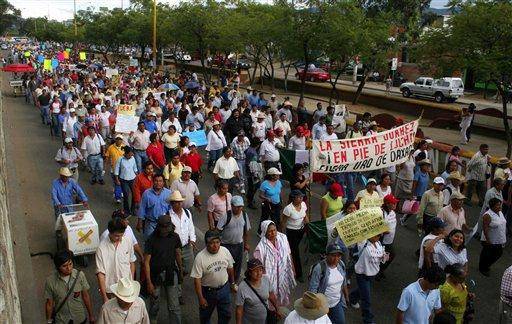
March for Humanity August 3 2025. On the Sydney Harbour Bridge with 300,000 other people protesting against Israel's Genocide against the Palestinians in Gaza.

Blog Archive

Popular Posts

Pageviews last month

Showing posts with label New Romans Venezuela and Latin America. Show all posts

Monday, December 31, 2007

There Hasn't Been a Day in My Life When I Haven't Learned Something By FIDEL CASTRO


Comrades of the National Assembly:

You have no easy task on your hands. On January 1st, 1959, surrounded by the accumulated and deepening grievances that our society inherited from its neo-colonial past under U.S. domination, many of us dreamed of creating a fully independent nation where justice prevailed. In the arduous and uneven struggle, there came the moment when we were left completely alone.

Nearly 50 years since the triumph of the Revolution, we can justifiably feel proud of ourselves, as we have held our ground, for almost half a century, in the struggle against the most powerful empire ever to exist in history. In the Proclamation I signed on July 31, 2006, none of you saw any signs of nepotism or an attempt to usurp parliamentary powers. That year, at once difficult and promising for the Revolution, the unity of the people, the Party and State were essential to continue moving forward and to face the declared threat of a military action by the United States.

This past December 24, during his visit to the various districts of the municipality which honored me with the nomination of candidate to parliament, Raúl noted that all of the numerous candidates proposed by the people of a district famous for its combativeness, but with a low educational level, had completed their higher education. This, as he said on Cuban television, made a profound impression in him.

Party, State and Government cadres and grassroots organizations face new problems in their work with an intelligent, watchful and educated people who detest bureaucratic hurdles and inconsiderate justifications. Deep down, every citizen wages an individual battle against humanity's innate tendency to stick to its survival instincts, a natural law which governs all life.

We are all born marked by that instinct, which science defines as primary. Coming face to face with this instinct is rewarding because it leads us to a dialectical process and to a constant and altruistic struggle, bringing us closer to Martí and making us true communists.

What the international press has emphasized most in its reports on Cuba in recent days is the statement I made on the 17th of this month, in a letter to the director of Cuban television's Round Table program, where I said that I am not clinging to power. I could add that for some time I did, due to my youth and lack of awareness, when, without any guidance, I started to leave my political ignorance behind and became a utopian socialist. It was a stage in my life when I believed I knew what had to be done and wanted to be in a position to do it! What made me change? Life did, delving more deeply into Martí's ideas and those of the classics of socialism. The more deeply I became involved in the struggle, the stronger was my identification with those aims and, well before the revolutionary victory I was already convinced that it was my duty to fight for these aims or to die in combat.

We also face great risks that threaten the human species as a whole. This has become more and more evident to me since I predicted, for the first time in Rio de Janeiro, --over 15 years ago, in June 1992-- that a species was threatened with extinction as a result of the destruction of its natural habitat. Today, the number of people who understand the real danger of this grows every day.

A recent book by Joseph Stiglitz, former Vice-President of the World Bank and President Clinton's chief economic advisor until 2002, Nobel Prize laureate and bestselling author in the United States, offers up-to-date and irrefutable facts on the subject. He criticizes the United States, a country which did not sign the Kyoto Protocol, for being the largest producer of carbon dioxide in the world, with annual emissions of 6 billion tons of this gas which disturbs the atmosphere without which life is impossible. In addition to this, the United States is the largest producer of other greenhouse gases.

Few people are aware of these facts. The same economic system which forced this unsustainable wastefulness on us impedes the distribution of Stiglitz' book. Only a few thousand copies of an excellent edition have been published, enough to guarantee a margin of profit. This responds to a market demand, which the publishing house cannot ignore if it is to survive.

Today, we know that life on Earth has been protected by the ozone layer, located in the atmosphere's outer ring, at an altitude between 15 to 50 kilometers, in the region known as the stratosphere, which acts as the planet's shield against the type of solar radiation which can prove harmful. There are greenhouse gases whose warming potential is higher than that of carbon dioxide and which widen the hole in the ozone layer above Antarctica, which loses as much as 70 percent of its volume every spring. The effects of this phenomenon, which is gradually taking place, are humanity's responsibility.

To have a clear sense of this phenomenon, suffice it to say that the world produces an average of 4.37 metric tons of carbon dioxide per capita. In the case of the United States, the average is 20.14, nearly 5 times as much. In Africa, it is 1.17, while in Asia and Oceania it is 2.87.

The ozone layer, in brief, protects us from ultraviolet and heat radiation which affects the immune system, sight, skin and life of human beings. Under extreme conditions, the destruction of that layer by human beings would affect all forms of life on the planet.

Other problems, foreign to our nation and many others under similar conditions, also threaten us. A victorious counterrevolution would spell a disaster for us, worse than Indonesia's tragedy. Sukarno, overthrown in 1967, was a nationalist leader who, loyal to Indonesia, headed the guerrillas who fought the Japanese.

General Suharto, who overthrew him, had been trained by Japanese occupation forces. At the conclusion of World War II, Holland, a U.S. ally, re-established control over that distant, extensive and populated territory. Suharto maneuvered. He hoisted the banners of U.S. imperialism. He committed an atrocious act of genocide. Today we know that, under instructions from the CIA, he not only killed hundreds of thousands but also imprisoned a million communists and deprived them and their relatives of all properties or rights; his family amassed a fortune of 40 billion dollars -which, at today's exchange rate, would be equivalent to hundreds of billions- by handing over the country's natural resources, the sweat of Indonesians, to foreign investors. The West paid up. Texan-born Lyndon B. Johnson, Kennedy's successor, was then the President of the United States.

The news on the events in Pakistan we received today also attest to the dangers that threaten our species: internal conflict in a country that possesses nuclear weapons. This is a consequence of the adventurous policies of and the wars aimed at securing the world's natural resources unleashed by the United States.

Pakistan, involved in a conflict it did not unleash, faced the threat of being taken back to the Stone Age.

The extraordinary circumstances faced by Pakistan had an immediate effect on oil prices and stock exchange shares. No country or region in the world can disassociate itself from the consequences. We must be prepared for anything.

There hasn't been a day in my life in which I haven't learned something.

Martí taught us that "all of the world's glory fits in a kernel of corn". Many times have I said and repeated this phrase, which carries in eleven words a veritable school of ethics.

Cuba's Five Heroes, imprisoned by the empire, are to be held up as examples for the new generations.

Fortunately, exemplary conducts will continue to flourish with the consciousness of our peoples as long as our species exists.

I am certain that many young Cubans, in their struggle against the Giant in the Seven-League Boots, would do as they did. Money can buy everything save the soul of a people who has never gone down on its knees.

I read the brief and concise report which Raúl wrote and sent me. We must not waste a minute as we continue to move forward. I will raise my hand, next to you, to show my support.

(Signed) Fidel Castro Ruz December 27, 2007

Address to the Cuban National Assembly, 12/28/2007

Wednesday, November 14, 2007

Venezuela: Reform battle continues as Chavez ally splits by Federico Fuentes, Caracas


Hundreds of thousands of Venezuelans took to the streets of Caracas on November 4, in a massive sea of red, to support the proposed constitutional reforms adopted by the National Assembly that will be put to a referendum on December 2. Venezuelan President Hugo Chavez has explained that the reforms aim to deepen the Bolivarian revolution that his government is leading, which has already achieved significant gains in redistributing wealth and power to the poor majority.
On November 6, Chavez explained to a swearing-in ceremony for activists involved in the National Zamora Command, launched to campaign in favour of the proposed reforms, that the referendum “is the most important battle” of the Bolivarian revolution so far. He said “destabilisation, abstention and the ‘No’ vote, are the three principal adversaries we have to defeat”.

Chavez argued that the socialism the reforms aimed at providing a framework to help construct would be “democratic and humanist”. Chavez explained that “this economic system will be managed by everyone”, claiming that democratising the economy was essential to defeat poverty and create happiness.

He argued that this conflicted with the interests of capitalism and imperialism, and that this explained the ongoing offensive against his government by the US government and local opposition.

Confirming Chavez’s speculation in his speech to the November 4 rally that some leading Chavistas would jump ship and join the counter-revolutionary opposition, the following day retired General Raul Baduel, who had been defence minister until July and who played a key role in defeating the April 2002 US-backed military coup against Chavez, broke a three-month silence declaring his opposition to the reforms. He said they represent a “constitutional coup” — the same claim made by the right-wing opposition.

During the press conference, to which only pro-opposition media outlets were invited, Baduel argued that the proposed reforms would “seize power away from the people”. “The only democratic and legal means left to us is to vote ‘No’ and defend ourselves [against] this undemocratic imposition.”

Baduel called on the armed forces to “profoundly analyse” the proposed changes to the structure of the military (transforming the reserves into a “popular militia” among other steps), declaring “it must be stopped”, adding that “the capacity of Venezuelan military men to analyse and think” should not be underestimated.

This defection came two days after a sizable mobilisation, organised by the radical opposition group, the National Resistance Command (CNR) and supported by a number of opposition parties, called for a boycott of the referendum. CNR leader Hermann Escarra proclaimed: “This is not about whether or not to vote, it is about impeding [the reforms].”

The speakers, applauding right-wing students who had led small but violent protests against the reforms, called for a march “without return” for November 26.

Speculation spread rapidly about the meaning of Baduel’s statements. Within hours, two former defence ministers, general Jorge Garcia Carneiro and admiral Orlando Manigilia, spoke against him.

Carneiro accused Baduel of having held “dubious” positions for a while, and argued his comments would not have any impact in the military. Manigilia reminded the military that they have the right to exercise their democratic vote, but not to involve themselves in party politics.

Vice-President Jorge Rodriguez argued that Baduel’s speech would have little effect, “not even a breeze”. “Baduel has said the same thing that the opposition has been
saying … he is not saying anything new.” Rodriquez welcomed, however, Baduel’s call to participate in the referendum.

Chavez declared Baduel a “traitor” and said he had become “a pawn in this game [of the opposition]. We will be on alert because it is part of a plan that without doubt aims to fill the streets of Venezuela with violence”.

He added that Baduel’s shift to the opposition in the context of the deepening struggle for socialism was good because it clarified his position. “It is not strange that when a submarine goes deeper the pressure is increased and can free a loose screw. The weak points are going to leave, and I believe it is good that they leave”, Chavez said.

Chavez added “I’m completely sure there is no current within the armed forces that has the necessary strength to carry out a successful coup d’etat or to lead the country to a civil war”. However he explained that there would be a meeting of the military high command because “there is nothing innocent about this”.

Miranda Governor Diosdado Cabello also criticised Baduel, saying that his arguments were the same as the opposition’s, and that “I believe he must have met with them”. Cabello added that he never swallowed the story that Baduel was a hero during the 2002 coup.

A different take was provided by Chavista National Assembly deputy Luis Tascon, who said that it would be “stupid” to say
that this was simply about the betrayal of one person, and would not affect Chavismo. Tascon argued that Baduel’s treachery represented “a division within Chavismo”, adding that Baduel had been widely respected among Chavistas.

Rather than simply attacking Baduel, Tascon argued it was necessary to politically debate the issues at stake and that there could be further rumblings within Chavismo. He also pointed to the influence of powerful groups and business interests behind Baduel’s moves.

Immediately after Baduel’s press conference, six opposition parties, some of whom were previously calling for a boycott, called for “massive” participation in the referendum and registered at the National Electoral Council to officially become part of the “No” campaign. They were later joined by another eight, including Podemos — a social-democratic party that until this year had been part of the Chavista camp, but have moved rapidly towards the opposition as more radical, socialist-oriented measures have been introduced.

The opposition press were quick to point to the potential emergence of a new opposition leader in Baduel, changing their editorial lines from supporting a boycott to backing a “No” vote.

As speculation whirls around the possible ramifications of Baduel’s declarations inside the military, most analysts, pro- and anti-Chavista, agree that it is unlikely that this could lead in the immediate future to a military coup.

At his press conference, Baduel, who was dressed in civilian clothing as opposed to his military uniform, made clear he did not speak for the military and repeatedly emphasised the need to vote “No”, which seems to indicate that his statements were more aimed at giving confidence to those individuals in the military who are opposed to reforms, and not necessarily a direct incitement to rebellion. It has been widely reported that Baduel sought out other military figures to speak out at the same time, although no one was willing to accept. Given that strong opponents of the revolution are a small minority in the military, a premature move would lead to a quick defeat and a further purge of counter-revolutionaries.

The Venezuelan military has been undergoing a significant transformation since the uprising of much of the armed forces along with the poor majority that defeated the 2002 coup against Chavez. This lead to the clearing out of large sections of those who had been involved in the coup, with control of the military passing over from the capitalist elite to the Bolivarian forces. This was further deepened during the bosses lockout in December 2002-February 2003, when the armed forces, alongside the people and particularly the oil workers, worked to regain control of the oil industry and break the sabotage of the capitalist class.

However, the process is ongoing and not irreversible. As the revolution deepens, the possibility of increased internal fractures grows. Comprised of men and women who live in a society, there is no doubt that the full spectrum of politics in Venezuela is also reflected within the military. No-one doubts that US imperialism and the opposition retain some influence within the military, and they hope to deepen divisions among those that have until now backed Chavez. One issue in relation to this is the resistance within the military to moves away from the concept of a “professionalised” armed forces — reflected in some of the amendments subsequently made to Chavez’s initial proposals to reform articles of the constitution relating to the military.

Given Baduel’s statement that he would not rule out a future political career, and the timing of this declaration to coincide with the beginning of the official referendum campaign, it seems to indicate an intention to position himself as the new leader of the opposition. His statement’s timing, after three months of public silence, lends credence to the idea that this is part of a bigger plan around which he has been conspiring with others.

Presenting Baduel as separate from the thoroughly discredited old opposition forces, the aim is to win over a section of Chavismo that, while supporting Chavez, is not convinced, or is opposed to, the reforms and would prefer to abstain rather than support the opposition. However, Baduel’s mimicking of opposition catch-phrases, such as “constitutional coup”, have undermined this attempt.

Although the full impact of this fracturing of Chavismo is yet to be seen, it no doubt will have a greater impact than previous splits, including by Podemos. Baduel was widely seen as a real hero of the revolution, and many in the civilian left had worked closely with him in strengthening organisational bonds with sections of the military around the time of the coup. He continues to proclaim his adherence to “Bolivarianism” (while rejecting its radical aspects), giving him more potential than the existing opposition to draw behind him sectors of Chavismo.

Chavez revealed that in the lead-up to the presidential elections last year, some Chavistas were campaigning to make Baduel vice-president. This year, Baduel began to express publicly some disagreements with aspects of the Bolivarian revolution, raising doubts over what kind of socialism was being built and defending the need for a “professional” standing army in counter-position to the proposed reform re-organising the reserves into a popular militias. Chavez pointed out that behind all this are business interests and groups of power, fearful of losing their privileges, and that it reflects the ideological weakness of the revolution.

These points tend to point to the idea that Baduel’s defection, carried out both in collaboration with the opposition and some of the right-wing Chavista elements whose position is referred to as “Chavismo without Chavez” hopes to take advantage of confusion amongst Chavista ranks and conservative sections of the military. The aim is to crate a counterweight to the radical course that Chavez, and the majority of working people, seem determined to take. Part of the plan is to attempt to slow the revolutionary process by arguing for negotiations with “moderate” opposition sectors.

Baduel’s defection provides further evidence of a new campaign of destabilisation that is being unleashed by the opposition — with the backing of the US — which has so far failed in a number of attempts at overthrowing the Chavez government and rolling back the gains of the revolution.

The violent campaign by small groups of fascist students — with the burning of buildings and vehicles, including that belonging to the environment minister — continued the day after Baduel’s press conference. The campaign has included a number of shootings on university campuses. The national and international media have attempted to portray the students as victims of a “dictatorship”, either implying or outright lying that the shootings were carried out by Chavista forces.

One example was a highly publicised shooting in the University of Zulia on November 2 that was initially blamed on Chavista students. Once it was revealed that the death had been a result of a shoot out between two rival opposition parties, the overwhelmingly anti-Chavez private media quickly dropped the story without clarifying the truth. (This should at least put to rest the lie these days Chavez controls the media.)

Combined with the growing presence of paramilitaries on the border region with Colombia, this is further evidence that the opposition has unleashed a new destabilisation plan with the backing of US imperialism — with Baduel a key component. They hope to substitute for their lack of any mass support base with a climate of tension and fear — amplified by the national and international media who are central to this plan.

If they cannot stop the reforms from going ahead, they hope that they can encourage or intimidate enough people to either boycott or vote “No” in order to present the reforms as illegitimate, adding weight to argument of conservative sectors of Chavismo to slow down the process.

It is in this context that Chavez has described the referendum as the revolution’s “most important battle”, because “it is much more defining” of the fundamental nature of the process than previous struggles.

Speaking at the November 4 rally, Chavez explained that the 1999 constitution had left in place some obstacles to the “development of the Bolivarian project and the construction of socialism”. The reforms represent a break with the “false principal that politics is the art of the possible … No, politics is the art of making possible tomorrow what today seems impossible, this is truly revolutionary politics ….”

“By signalling socialism as the goal … [the reform campaign] began to generate additional tensions in the process”, Chavez explained. He said that while some argue that it is necessary to reach this objective via slow moves, “many times these end up being slower every day until it reaches zero”.

“That is why the proposal is a proposal of rupture … We will never get to socialism with the bureaucratic trickle down from above … The reform overturns this concept; we will only reach socialism by unleashing the power of the people … That is the essence of the proposal.”

That is why, Chavez declared, that “our campaign strategy, our principal objective is to approve the constitutional reform in a resounding manner”. He added that popular mobilisation was “the vaccine against a coup, against destabilisation, against the oligarchy, against Bush. This is what happened” when the 2002 coup was defeated, it was “the people in the streets, popular mobilisation, and of course, our soldiers together with the people.”

He added that the “fundamental motor” of the campaign would be the socialist battalions, the base units of new United Socialist Party of Venezuela, whose explicit aim is to organise the revolutionary vanguard into a united fighting organisation to deepen the process.

It is clear that the battle over the next three weeks — and then immediately afterwards — will be crucial for the future of the revolutionary process. Not just for what a defeat would mean for Chavez and the opposition respectively, but for the process of change as a whole.

From: International News, Green Left Weekly issue #731 14 November 2007.

Monday, November 12, 2007

Latin America’s Shock Resistance by Naomi Klein

Hugo Chavez,Rafael Correa & Juan Evo Morales

In less than two years, the lease on the largest and most important US military base in Latin America will run out. The base is in Manta, Ecuador, and Rafael Correa, the country’s leftist president, has pronounced that he will renew the lease “on one condition: that they let us put a base in Miami–an Ecuadorean base. If there is no problem having foreign soldiers on a country’s soil, surely they’ll let us have an Ecuadorean base in the United States.”

Since an Ecuadorean military outpost in South Beach is a long shot, it is very likely that the Manta base, which serves as a staging area for the “war on drugs,” will soon shut down. Correa’s defiant stand is not, as some have claimed, about anti-Americanism. Rather, it is part of a broad range of measures being taken by Latin American governments to make the continent less vulnerable to externally provoked crises and shocks.

This is a crucial development because for the past thirty-five years in Latin America, such shocks from outside have served to create the political conditions required to justify the imposition of “shock therapy”–the constellation of corporate-friendly “emergency” economic measures like large-scale privatizations and deep cuts to social spending that debilitate the state in the name of free markets. In one of his most influential essays, the late economist Milton Friedman articulated contemporary capitalism’s core tactical nostrum, what I call the shock doctrine. He observed that “only a crisis–actual or perceived–produces real change. When that crisis occurs, the actions that are taken depend on the ideas that are lying around.”

Latin America has always been the prime laboratory for this doctrine. Friedman first learned how to exploit a large-scale crisis in the mid-1970s, when he advised Chilean dictator Gen. Augusto Pinochet. Not only were Chileans in a state of shock following Pinochet’s violent overthrow of Socialist President Salvador Allende; the country was also reeling from severe hyperinflation. Friedman advised Pinochet to impose a rapid-fire transformation of the economy–tax cuts, free trade, privatized services, cuts to social spending and deregulation. It was the most extreme capitalist makeover ever attempted, and it became known as a Chicago School revolution, since so many of Pinochet’s top aides and ministers had studied under Friedman at the University of Chicago. A similar process was under way in Uruguay and Brazil, also with the help of University of Chicago graduates and professors, and a few years later, in Argentina. These economic shock therapy programs were facilitated by far less metaphorical shocks–performed in the region’s many torture cells, often by US-trained soldiers and police, and directed against those activists who were deemed most likely to stand in the way of the economic revolution.

In the 1980s and ’90s, as dictatorships gave way to fragile democracies, Latin America did not escape the shock doctrine. Instead, new shocks prepared the ground for another round of shock therapy–the “debt shock” of the early ’80s, followed by a wave of hyperinflation as well as sudden drops in the prices of commodities on which economies depended.

In Latin America today, however, new crises are being repelled and old shocks are wearing off–a combination of trends that is making the continent not only more resilient in the face of change but also a model for a future far more resistant to the shock doctrine.

When Milton Friedman died last year, the global quest for unfettered capitalism he helped launch in Chile three decades earlier found itself in disarray. The obituaries heaped praise on him, but many were imbued with a sense of fear that Friedman’s death marked the end of an era. In Canada’s National Post, Terence Corcoran, one of Friedman’s most devoted disciples, wondered whether the global movement the economist had inspired could carry on. “As the last great lion of free market economics, Friedman leaves a void…. There is no one alive today of equal stature. Will the principles Friedman fought for and articulated survive over the long term without a new generation of solid, charismatic and able intellectual leadership? Hard to say.”

It certainly seemed unlikely. Friedman’s intellectual heirs in the United States–the think-tank neocons who used the crisis of September 11 to launch a booming economy in privatized warfare and “homeland security”–were at the lowest point in their history. The movement’s political pinnacle had been the Republicans’ takeover of the US Congress in 1994; just nine days before Friedman’s death, they lost it again to a Democratic majority. The three key issues that contributed to the Republican defeat in the 2006 midterm elections were political corruption, the mismanagement of the Iraq War and the perception, best articulated by Jim Webb, a winning Democratic candidate for the US Senate, that the country had drifted “toward a class-based system, the likes of which we have not seen since the nineteenth century.”

Nowhere, however, was the economic project in deeper crisis than where it had started: Latin America. Washington has always regarded democratic socialism as a greater challenge than totalitarian Communism, which was easy to vilify and made for a handy enemy. In the 1960s and ’70s, the favored tactic for dealing with the inconvenient popularity of economic nationalism and democratic socialism was to try to equate them with Stalinism, deliberately blurring the clear differences between the worldviews. A stark example of this strategy comes from the early days of the Chicago crusade, deep inside the declassified Chile documents. Despite the CIA-funded propaganda campaign painting Allende as a Soviet-style dictator, Washington’s real concerns about the Allende victory were relayed by Henry Kissinger in a 1970 memo to Nixon: “The example of a successful elected Marxist government in Chile would surely have an impact on–and even precedent value for–other parts of the world, especially in Italy; the imitative spread of similar phenomena elsewhere would in turn significantly affect the world balance and our own position in it.” In other words, Allende needed to be taken out before his democratic third way spread.

But the dream Allende represented was never defeated. It was temporarily silenced, pushed under the surface by fear. Which is why, as Latin America now emerges from its decades of shock, the old ideas are bubbling back up–along with the “imitative spread” Kissinger so feared.

By 2001 the shift had become impossible to ignore. In the mid-’70s, Argentina’s legendary investigative journalist Rodolfo Walsh had regarded the ascendancy of Chicago School economics under junta rule as a setback, not a lasting defeat, for the left. The terror tactics used by the military had put his country into a state of shock, but Walsh knew that shock, by its very nature, is a temporary state. Before he was gunned down by Argentine security agents on the streets of Buenos Aires in 1977, Walsh estimated that it would take twenty to thirty years until the effects of the terror receded and Argentines regained their footing, courage and confidence, ready once again to fight for economic and social equality. It was in 2001, twenty-four years later, that Argentina erupted in protest against IMF-prescribed austerity measures and then proceeded to force out five presidents in only three weeks.

“The dictatorship just ended!” people declared at the time. They meant that it had taken seventeen years of democracy for the legacy of terror to fade–just as Walsh had predicted.

In the years since, that renewed courage has spread to other former shock labs in the region. And as people shed the collective fear that was first instilled with tanks and cattle prods, with sudden flights of capital and brutal cutbacks, many are demanding more democracy and more control over markets. These demands represent the greatest threat to Friedman’s legacy because they challenge his central claim: that capitalism and freedom are part of the same indivisible project.

The staunchest opponents of neoliberal economics in Latin America have been winning election after election. Venezuelan president Hugo Chávez, running on a platform of “Twenty-First-Century Socialism,” was re-elected in 2006 for a third term with 63 percent of the vote. Despite attempts by the Bush Administration to paint Venezuela as a pseudo-democracy, a poll that year found 57 percent of Venezuelans happy with the state of their democracy, an approval rating on the continent second only to Uruguay’s, where the left-wing coalition party Frente Amplio had been elected to government and where a series of referendums had blocked major privatizations. In other words, in the two Latin American states where voting had resulted in real challenges to the Washington Consensus, citizens had renewed their faith in the power of democracy to improve their lives.

Ever since the Argentine collapse in 2001, opposition to privatization has become the defining issue of the continent, able to make governments and break them; by late 2006, it was practically creating a domino effect. Luiz Inácio Lula da Silva was re-elected as president of Brazil largely because he turned the vote into a referendum on privatization. His opponent, from the party responsible for Brazil’s major sell-offs in the ’90s, resorted to dressing up like a socialist NASCAR driver, wearing a jacket and baseball hat covered in logos from the public companies that had not yet been sold. Voters weren’t persuaded, and Lula got 61 percent of the vote. Shortly afterward in Nicaragua, Daniel Ortega, former head of the Sandinistas, made the country’s frequent blackouts the center of his winning campaign; the sale of the national electricity company to the Spanish firm Unión Fenosa after Hurricane Mitch, he asserted, was the source of the problem. “Who brought Unión Fenosa to this country?” he bellowed. “The government of the rich did, those who are in the service of barbarian capitalism.”

In November 2006, Ecuador’s presidential elections turned into a similar ideological battleground. Rafael Correa, a 43-year-old left-wing economist, won the vote against Álvaro Noboa, a banana tycoon and one of the richest men in the country. With Twisted Sister’s “We’re Not Gonna Take It” as his official campaign song, Correa called for the country “to overcome all the fallacies of neoliberalism.” When he won, the new president of Ecuador declared himself “no fan of Milton Friedman.” By then, Bolivian President Evo Morales was already approaching the end of his first year in office. After sending in the army to take back the gas fields from “plunder” by multinationals, he moved on to nationalize parts of the mining sector. That year in Chile, under the leadership of President Michelle Bachelet–who had been a prisoner under Pinochet–high school students staged a wave of militant protests against the two-tiered educational system introduced by the Chicago Boys. The country’s copper miners soon followed with strikes of their own.

In December 2006, a month after Friedman’s death, Latin America’s leaders gathered for a historic summit in Bolivia, held in the city of Cochabamba, where a popular uprising against water privatization had forced Bechtel out of the country several years earlier. Morales began the proceedings with a vow to close “the open veins of Latin America.” It was a reference to Eduardo Galeano’s book Open Veins of Latin America: Five Centuries of the Pillage of a Continent, a lyrical accounting of the violent plunder that had turned a rich continent into a poor one. The book was published in 1971, two years before Allende was overthrown for daring to try to close those open veins by nationalizing his country’s copper mines. That event ushered in a new era of furious pillage, during which the structures built by the continent’s developmentalist movements were sacked, stripped and sold off.

Today Latin Americans are picking up the project that was so brutally interrupted all those years ago. Many of the policies cropping up are familiar: nationalization of key sectors of the economy, land reform, major investments in education, literacy and healthcare. These are not revolutionary ideas, but in their unapologetic vision of a government that helps reach for equality, they are certainly a rebuke to Friedman’s 1975 assertion in a letter to Pinochet that “the major error, in my opinion, was…to believe that it is possible to do good with other people’s money.”

Though clearly drawing on a long rebellious history, Latin America’s contemporary movements are not direct replicas of their predecessors. Of all the differences, the most striking is an acute awareness of the need for protection from the shocks that worked in the past–the coups, the foreign shock therapists, the US-trained torturers, as well as the debt shocks and currency collapses. Latin America’s mass movements, which have powered the wave of election victories for left-wing candidates, are learning how to build shock absorbers into their organizing models. They are, for example, less centralized than in the ’60s, making it harder to demobilize whole movements by eliminating a few leaders. Despite the overwhelming cult of personality surrounding Chávez, and his controversial moves to centralize power at the state level, the progressive networks in Venezuela are at the same time highly decentralized, with power dispersed at the grassroots and community levels, through thousands of neighborhood councils and co-ops. In Bolivia, the indigenous people’s movements that put Morales in office function similarly and have made it clear that Morales does not have their unconditional support: the barrios will back him as long as he stays true to his democratic mandate, and not a moment longer. This kind of network approach is what allowed Chávez to survive the 2002 coup attempt: when their revolution was threatened, his supporters poured down from the shantytowns surrounding Caracas to demand his reinstatement, a kind of popular mobilization that did not happen during the coups of the ’70s.

Latin America’s new leaders are also taking bold measures to block any future US-backed coups that could attempt to undermine their democratic victories. Chávez has let it be known that if an extremist right-wing element in Bolivia’s Santa Cruz province makes good on its threats against Morales’s government, Venezuelan troops will help defend Bolivia’s democracy. Meanwhile, the governments of Venezuela, Costa Rica, Argentina, Uruguay and Bolivia have all announced that they will no longer send students to the School of the Americas (now called the Western Hemisphere Institute for Security Cooperation)–the infamous police and military training center in Fort Benning, Georgia, where so many of the continent’s notorious killers learned the latest in “counterterrorism” techniques, then promptly directed them against farmers in El Salvador and auto workers in Argentina. Ecuador, in addition to closing the US military base, also looks set to cut its ties with the school. It’s hard to overstate the importance of these developments. If the US military loses its bases and training programs, its power to inflict shocks on the continent will be greatly eroded.

The new leaders in Latin America are also becoming better prepared for the kinds of shocks produced by volatile markets. One of the most destabilizing forces of recent decades has been the speed with which capital can pick up and move, or how a sudden drop in commodity prices can devastate an entire agricultural sector. But in much of Latin America these shocks have already happened, leaving behind ghostly industrial suburbs and huge stretches of fallow farmland. The task of the region’s new left, therefore, has become a matter of taking the detritus of globalization and putting it back to work. In Brazil, the phenomenon is best seen in the million and a half farmers of the Landless Peoples Movement (MST), who have formed hundreds of cooperatives to reclaim unused land. In Argentina, it is clearest in the movement of “recovered companies,” 200 bankrupt businesses that have been resuscitated by their workers, who have turned them into democratically run cooperatives. For the cooperatives, there is no fear of facing an economic shock of investors leaving, because the investors have already left.

Chávez has made the cooperatives in Venezuela a top political priority, giving them first refusal on government contracts and offering them economic incentives to trade with one another. By 2006 there were roughly 100,000 cooperatives in the country, employing more than 700,000 workers. Many are pieces of state infrastructure–toll booths, highway maintenance, health clinics–handed over to the communities to run. It’s a reverse of the logic of government outsourcing: rather than auctioning off pieces of the state to large corporations and losing democratic control, the people who use the resources are given the power to manage them, creating, at least in theory, both jobs and more responsive public services. Chávez’s many critics have derided these initiatives as handouts and unfair subsidies, of course. Yet in an era when Halliburton treats the US government as its personal ATM for six years, withdraws upward of $20 billion in Iraq contracts alone, refuses to hire local workers either on the Gulf Coast or in Iraq, then expresses its gratitude to US taxpayers by moving its corporate headquarters to Dubai (with all the attendant tax and legal benefits), Chávez’s direct subsidies to regular people look significantly less radical.

Latin America’s most significant protection from future shocks (and therefore from the shock doctrine) flows from the continent’s emerging independence from Washington’s financial institutions, the result of greater integration among regional governments. The Bolivian Alternative for the Americas (ALBA) is the continent’s retort to the Free Trade Area of the Americas, the now-buried corporatist dream of a free-trade zone stretching from Alaska to Tierra del Fuego. Though ALBA is still in its early stages, Emir Sader, a Brazil-based sociologist, describes its promise as “a perfect example of genuinely fair trade: each country provides what it is best placed to produce, in return for what it most needs, independent of global market prices.” So Bolivia provides gas at stable discounted prices; Venezuela offers heavily subsidized oil to poorer countries and shares expertise in developing reserves; and Cuba sends thousands of doctors to deliver free healthcare all over the continent, while training students from other countries at its medical schools.

This is a very different model from the kind of academic exchange that began at the University of Chicago in the mid-’50s, when hundreds of Latin American students learned a single rigid ideology and were sent home to impose it with uniformity across the continent. The major benefit is that ALBA is essentially a barter system in which countries decide for themselves what any given commodity or service is worth rather than letting traders in New York, Chicago or London set the prices for them. That makes trade less vulnerable to the kind of sudden price fluctuations that have hurt Latin American economies before. Surrounded by turbulent financial waters, Latin America is creating a zone of relative economic calm and predictability, a feat presumed impossible in the globalization era.

When one country does face a financial shortfall, this increased integration means that it does not necessarily need to turn to the IMF or the US Treasury for a bailout. That’s fortunate because the 2006 US National Security Strategy makes it clear that for Washington, the shock doctrine is still very much alive: “If crises occur, the IMF’s response must reinforce each country’s responsibility for its own economic choices,” the document states. “A refocused IMF will strengthen market institutions and market discipline over financial decisions.” This kind of “market discipline” can only be enforced if governments actually go to Washington for help. As former IMF deputy managing director Stanley Fischer explained during the Asian financial crisis, the lender can help only if it is asked, “but when [a country is] out of money, it hasn’t got many places to turn.” That is no longer the case. Thanks to high oil prices, Venezuela has emerged as a major lender to other developing countries, allowing them to do an end run around Washington. Even more significant, this December will mark the launch of a regional alternative to the Washington financial institutions, a “Bank of the South” that will make loans to member countries and promote economic integration among them.

Now that they can turn elsewhere for help, governments throughout the region are shunning the IMF, with dramatic consequences. Brazil, so long shackled to Washington by its enormous debt, is refusing to enter into a new agreement with the fund. Venezuela is considering withdrawing from the IMF and the World Bank, and even Argentina, Washington’s former “model pupil,” has been part of the trend. In his 2007 State of the Union address, President Néstor Kirchner (since succeeded by his wife, Christina) said that the country’s foreign creditors had told him, “‘You must have an agreement with the International Fund to be able to pay the debt.’ We say to them, ‘Sirs, we are sovereign. We want to pay the debt, but no way in hell are we going to make an agreement again with the IMF.’” As a result, the IMF, supremely powerful in the 1980s and ’90s, is no longer a force on the continent. In 2005 Latin America made up 80 percent of the IMF’s total lending portfolio; the continent now represents just 1 percent–a sea change in only two years.

The transformation reaches beyond Latin America. In just three years, the IMF’s worldwide lending portfolio had shrunk from $81 billion to $11.8 billion, with almost all of that going to Turkey. The IMF, a pariah in countries where it has treated crises as profit-making opportunities, is withering away.

The World Bank faces an equally precarious future. In April Correa revealed that he had suspended all loans from the Bank and declared the institution’s representative in Ecuador persona non grata–an extraordinary step. Two years earlier, Correa explained, the World Bank had used a $100 million loan to defeat economic legislation that would have redistributed oil revenues to the country’s poor. “Ecuador is a sovereign country, and we will not stand for extortion from this international bureaucracy,” he said. Meanwhile, Evo Morales announced that Bolivia would quit the World Bank’s arbitration court, the body that allows multinational corporations to sue national governments for measures that cost them profits. “The governments of Latin America, and I think the world, never win the cases. The multinationals always win,” Morales said.

When Paul Wolfowitz was forced to resign as president of the World Bank in May, it was clear that the institution needed to take desperate measures to rescue itself from its profound crisis of credibility. In the midst of the Wolfowitz affair, the Financial Times reported that when World Bank managers dispensed advice in the developing world, “they were now laughed at.” Add the collapse of the World Trade Organization talks in 2006 (prompting declarations that “globalization is dead”), and it appears that the three main institutions responsible for imposing the Chicago School ideology under the guise of economic inevitability are at risk of extinction.

It stands to reason that the revolt against neoliberalism would be in its most advanced stage in Latin America. As inhabitants of the first shock lab, Latin Americans have had the most time to recover their bearings, to understand how shock politics work. This understanding is crucial for a new politics adapted to our shocking times. Any strategy based on exploiting the window of opportunity opened by a traumatic shock– the central tenet of the shock doctrine–relies heavily on the element of surprise. A state of shock is, by definition, a moment when there is a gap between fast-moving events and the information that exists to explain them. Yet as soon as we have a new narrative that offers a perspective on the shocking events, we become reoriented and the world begins to make sense again.

Once the mechanics of the shock doctrine are deeply and collectively understood, whole communities become harder to take by surprise, more difficult to confuse–shock-resistant.

Naomi Klein is the author of many books, including her most recent, The Shock Doctrine: The Rise of Disaster Capitalism. Visit Naomi’s website at nologo.org.

Published on Saturday, November 10, 2007 by The Nation

Wednesday, October 17, 2007

One last favour: Australia, Cuba and the US by Tim Anderson


One of the last favours the Howard government will be asked to perform for the Bush regime will be to attempt to soften the crushing diplomatic defeat the US suffers every year at the United Nations over its ongoing economic blockade of Cuba.

A UN vote is expected on a motion by Cuba at the end of October. In 2006 the motion passed 183 to four (US, Israel, the Marshall Islands and Palau) with one abstention. Australia voted for the motion, but not before an unsuccessful attempt at an amendment which sought to criticise Cuba. In breach of a range of international laws — from telecommunications to trade to the Genocide Convention — the US has blockaded Cuba for nearly half a century, as part of a campaign to overthrow the elected government and the Cuban constitution. The US blockade, an executive act of President John F. Kennedy (after a failure to agree on compensation terms over the nationalisation of US companies), was set in US law by the 1996 Helms Burton Act. Under this “trading with the enemy” law, US companies are banned from trading with Cuba and US citizens cannot visit Cuba without US government permission.

US citizens are regularly fined for visiting Cuba, or being caught with Cuban cigars. Cuba receives more than 2 million tourists every year, but very few are US citizens. Cuba says the economic blockade has cost it at least US$89 billion in damages, denied important medical equipment, blocked scientific and cultural exchange, stolen the assets of or intimidated trading companies and constitutes a form of genocide, designed quite simply to recolonise Cuba. The blockade has been accompanied by terrorist actions (including one CIA-backed aircraft bombing) that have cost the lives of more than 3000 Cubans. The US says its measures only constitute an “embargo”, that the Cuban government alone is responsible for any economic problems and that this “embargo” is a bilateral matter which does not concern any other state.

However US subsidiaries in other countries are also banned from dealing with Cuba and this has widened the net, since the wave of takeovers and mergers during the 1990s and 2000s. Under US law, technology with more than 10% US content cannot be traded with Cuba, regardless of the nationality of ownership. Vessels carrying goods from Cuba cannot enter US ports. And even the families of business people who trade with Cuba may be (and have been) denied US visas. In 2007, two Australian banks were drawn into this campaign, because of their US shareholdings and operations. In February ANZ said it was ending all transactions with Cuba, to ensure compliance with US law.

In September the National Australia Bank was fined $100,000 by the Office of Foreign Assets Control (OFAC) of the US Treasury, for a number of small transactions that allowed transfers to Cuban interests. One of these was a payment of $452 to a Canadian credit card owned by a Cuban citizen. Banks are generally “apolitical” when it comes to business, but in this case Washington calls the shots. The Howard government has consistently voted in favour of anti-blockade motions at the UN. “Free trade”, after all, is a major element of Australian foreign policy, as successive Australian governments have tried to expand their exports of agricultural goods, especially to the US. However the practice of Australian “free trade” is a much dirtier affair.

In November 2006 the Australian ambassador to the UN, Robert Hill, moved an amendment to the Cuban motion, seeking to add a clause which called on Cuba to “release unconditionally all political prisoners” and to respect human rights treaties. The Australian role only emerged because even the most pro-US Latin American governments would not agree to take up the task. Hill’s amendment was roundly defeated and the Cuban motion was passed overwhelmingly. South African diplomat Sivu Maqungo, on behalf of the Group of 77 (a coalition of Third World countries), supported the Cuban motion “because this relentless and unilateral action has caused untold suffering to the people of Cuba”.

The motion was a way to exert pressure on US actions that are “contrary to international law, international humanitarian law, the United Nations Charter and the norms and principles governing peaceful relations among States”. What did the Australian “human rights” amendment have to do with a motion over the US trade blockade of Cuba? Very little. Opposition to the US blockade has steadily grown at the UN, and it was clear the amendment would fail. However the US wanted to save face, and needed “allies” to pretend a little legitimacy. The major “human rights” accusation the US aims at Cuba concerns political prisoners. Cuba does have several dozen political prisoners, but almost all have been convicted of taking money from US government programs that aim to overthrow the Cuban government and constitution. The US claims that these US-paid agents have special privileges as “independent journalists” or part of “civil society”.

The US also pretends that Cuba does not have elections, because the US funded groups are banned from contesting, and because the constitution embeds socialist principles. In fact, Cuban national elections are in October. After Hill’s motion failed, Cuban foreign minister Felipe Perez Roque said that Australia “does not have the moral authority to attempt to refer to the human rights situation in Cuba”. Perez Roque called Australia a “lackey” and “accomplice” in US wars of imperialism. Indeed. Robert Hill personally, as defence minister, directed Australian bombing raids and missile strikes in the 2003 invasion of Iraq. He was personally responsible for the slaughter of many thousands of innocent Iraqis.

Hill also hid his knowledge of the torture operations at Abu Ghraib for over a year, and backed the closure of Al Jazeera’s Baghdad television station. Hill’s colleague, foreign minister Alexander Downer, argued for the invasion of Iraq on the basis that support for the US-led war could benefit “Australia’s commercial position in Iraq”. These are better credentials for war criminals than defenders of human rights. Nevertheless, Hill feigned innocence at the UN, saying that “the price of speaking up and asking for nothing more than [what] is reasonable is to be abused by the Cuban minister, with false allegations and offensive language”. Stay tuned for the next instalment of the Howard government’s spirited defence of “human rights” at the United Nations. The next anti-blockade motion is scheduled for late October. With Howard’s defeat looming in the imminent Australian elections, Washington might call on one last favour.

From: International News, Green Left Weekly issue #727 10 October 2007.

Sunday, October 07, 2007

Che Guevara's legacy lives on in Latin America by Stuart Munckton


As the 40th anniversary of the death of Argentinean-born revolutionary Ernesto “Che” Guevara, murdered in Bolivia on October 9, 1967, on the orders of the CIA, arrives, there is increasing evidence that his spirit of struggle against injustice continues to get stronger in Latin America.

Five left-wing Latin American governments used the United Nations’ September 25-October 3 General Assembly meeting to slam US imperialism and corporate control of the world economy — the very things Che died fighting against — insisting these two things threatened to destroy the planet. Representatives of the governments of Cuba, Venezuela, Bolivia, Ecuador and Nicaragua attacked the hypocrisy of the US government, and demanded changes to the global capitalist system that puts profits before people’s needs and the environment.

As a direct result of US-imposed neoliberal policies on Latin America in the 1980s and 1990s, there has been a massive increase in poverty across the continent — which has also spurred a growing rebellion that is now challenging US domination of the region. While heterogeneous, the governments of Venezuela, Bolivia, Ecuador and Nicaragua are the product of this growing revolt — joining with socialist Cuba, which has for decades been a symbol of resistance to US corporate domination of the continent.

Addressing the UN assembly on October 2, Venezuelan foreign minister Nicolas Maduro slammed US President George Bush whose bullying speech to the same body on September 25 hypocritically talked up the defence of human rights and democracy around the world. Maduro described Bush’s threats against Iran as a campaign by Washington to “demonise the Iranian people”. “We have seen how”, he explained, “in a dangerous fashion, [the US government is] making threatening statements against the peaceful people of Iran. Has the world thought about what would happen if this total madness on the part of the elites in the United States government led to an attack on the peaceful nation of Iran?” Maduro continued, saying the “foolish and irrational war” on Iraq “has brought death, destruction, instability, and has created more havens for terrorism”.

He emphasised the number of homes, hospitals and schools the US$600 billion spent on the occupation of Iraq could have provided globally. Bolivian President Evo Morales, his nation’s first indigenous president, spoke of the disastrous impact that climate change and environmental destruction were having on impoverished Third World countries. “I feel that many of our countries are victims of these phenomenon”, he said on September 26. “I still cannot understand why there are so many lives lost in floods, invasions, or wars”, he said, blaming the capitalist system. “I am even more convinced that the concentration of capital in a few hands is not the solution for humanity … It is capitalism and the exaggerated and unlimited industrialisation of some countries that generates these problems.”

Morales, whose government is facing a concerted, US-backed destabilisation campaign by right-wing forces, explained: “When we align ourselves with social movements to protest, to condemn these unsustainable policies … then comes the interventions, military bases and wars, the demonising and accusations of terrorism, as if the people have no right … to demand new approaches to rescuing life and humankind.” Morales called for capitalism to be eradicated, pointing to socialist Cuba as a positive alternative. “Cuba also sends troops to many countries”, he said, adding: “But these troops save lives.”

Morales was referring to the Cuban medical program in which Cuban doctors work to provide free health care in 68 poor countries across the world, including Bolivia. Ecuadorean President Rafael Correa, on September 28, explained that in his country a “citizens’ revolution” has begun with the aim of eradicating poverty and underdevelopment. Addressing a UN meeting on climate change four days earlier, Correa highlighted the need to change the current “model of development”, arguing that the poor nations were disproportionately suffering the adverse affects of climate change. He insisted that the wealthy industrialised countries bear the responsibility to stop climate change and reverse the damage already done.

In his speech to the UN on September 25, Nicaraguan President Daniel Ortega, a leader of the Sandinista National Liberation Front (FSLN), slammed the “global capitalist empire enslaving the world”. Ortega began his address “remembering the millions of human beings who have been victims of policies of colonialism and neocolonialism”. He described the “victims of natural disasters” as being “victims of the global imperialist capitalism” because “its pro-development policy continues to provoke destruction, death and poverty”. This, he said, “is the main aggressor against Mother Earth”.

Ortega slammed the US-led occupations of Afghanistan and Iraq, and criticised the US war drive against Iran. He called for support for all national liberation struggles, highlighting the ongoing oppression of the Palestinians as well as the struggle for independence by the US colony of Puerto Rico. Ortega offered solidarity to Cuba, and again called for an end to the 46-year US economic blockade of the island nation. Ortega also spoke about the growing rebellion in Latin America and attempts by Washington to crush it, such as the failed coup against the elected government of President Hugo Chavez in Venezuela in 2002. “The empire ran immediately to recognise the coup leaders! It was the Venezuelan people themselves that rose to reinstate the president they had elected.

In other words it is the people that decide their own destiny!” Bush used his UN speech on September 25 to again attack Cuba, claiming that, “In Cuba, the long rule of a cruel dictator is coming to an end”. Cuban foreign minister Felipe Perez Roque, who walked out of the assembly, argued that Bush was “a criminal” and that he had “no moral authority or credibility to judge any other country”. Speaking to the assembly the following day, Perez Roque slammed Bush’s threats against Cuba and other nations including Iran describing the president’s speech as the “delirium tremens of the world’s policeman”.

From: Comment & Analysis, Green Left Weekly issue #727 10 October 2007.

Pilger: 'My most optimistic film' by Jim McIlroy, Brisbane


Launching his new film War on Democracy at the Dendy Theatre on September 24, well-known progressive journalist, author and film-maker John Pilger described it as perhaps “my most optimistic film”.

War on Democracy describes the US war against democracy in Latin America, and the new rise of popular rebellion against US domination. The film describes “The people of Latin America taking control of their lives”, Pilger told the audience. “The film had its genesis in the 1960s, where I spent my first period as a foreign correspondent, and travelled extensively through the continent. I observed then the many struggles of people trying to reclaim ordinary decency, and to end the tyranny of wealth. “In the last few years, they’ve risen up again.

This film tells their story. It is also intended as a corrective to how the Western political class and media portray Latin America today.” Pilger described the Venezuelan revolution as an inspiration. “There is a real debate going on in Venezuelan society”, contrary to the impression you get from the Western media. Pilger also praised the determination of the demonstrators against US President George Bush and APEC in Sydney in early September, and the role of alternative media such as Green Left Weekly in revealing the truth about power in society. “We need new organisers and motivators in our comfortable societies” in the First World, he added.

Click on trailer below

http://www.youtube.com/watch?v=J1zZNbqi53o

From: Australian News, Green Left Weekly issue #726 3 October 2007.

Sunday, August 19, 2007

The ghost of Pinochet haunts the campaign against Chavez by John Pilger


In an article for the Guardian, John Pilger describes how he sought the help of Chile's former political prisoners, tortured by Pinochet, in the making of his film, The War on Democracy, and how they bear witness to the historical meaning of the current campaign of propaganda and lies aimed at Venezuela and Hugo Chavez.

I walked with Roberto Navarrete into the national stadium in Santiago, Chile. With the southern winter’s wind skating down from the Andes, it was empty and ghostly. Little had changed, he said: the chicken wire, the broken seats, the tunnel to the changing rooms from which the screams echoed. We stopped at a large number 28. “This is where I was, facing the scoreboard. This is where I was called to be tortured.”Thousands of “the detained and the disappeared” were imprisoned in the stadium following the Washington-backed coup by General Pinochet against the democracy of Salvador Allende on September 11, 1973.

For the majority people of Latin America, the abandonados, the infamy and historical lesson of the first “9/11” have never been forgotten. “In the Allende years, we had a hope the human spirit would triumph,” said Roberto.“But in Latin America those believing they are born to rule behave with such brutality to defend their rights, their property, their hold over society that they approach true fascism. People who are well dressed, whose houses are full of food, bang pots in the streets in protest as though they don’t have anything. This is what we had in Chile 36 years ago. This is what we see in Venezuela today. It is as if Chavez is Allende.

It is so evocative for me.”In making my film, The War on Democracy, I sought the help of Chileans like Roberto and his family, and Sara de Witt who courageously returned with me to the torture chambers at Villa Grimaldi, which she somehow survived. Together with other Latin Americans who knew the tyrannies, they bear witness to the pattern and meaning of the propaganda and lies now aimed at undermining another epic bid to renew both democracy and freedom on the continent. Ironically, in Chile, said to be Washington's "model democracy", freedom waits. The constitution, the system of electoral control and the designer inequality are all Pinocher's gifts from the grave.

The disinformation that helped destroy Allende and give rise to Pinochet’s horrors worked the same in Nicaragua, where the Sandinistas had the temerity to implement modest, popular reforms based largely on the English co-operative movement. In both countries, the CIA funded the leading opposition media, although they need not have bothered. In Nicaragua, the fake martyrdom of the "opposition" newspaper La Prensa became a cause for North America’s leading liberal journalists, who seriously debated whether a poverty-stricken country of three million peasants posed a “threat” to the United States.

Ronald Reagan agreed and declared a state of emergency to combat the monster at the gates. In Britain, whose Thatcher government “absolutely endorsed” US policy, the standard censorship by omission applied. In examining 500 articles that dealt with Nicaragua in the early 1980s, the historian Mark Curtis found an almost universal suppression of the achievements of the Sandinista government -- “remarkable by any standards” – in favour of the falsehood of “the threat of a communist takeover”.

The similarities in the campaign against the phenomenal rise of popular democratic movements today are striking. Aimed principally at Venezuela, especially Hugo Chavez, the virulence of the attacks suggests that something exciting is taking place; and it is. Thousands of poor Venezuelans are seeing a doctor for the first time in their lives, their children immunised and drinking clean water.On July 26 Chavez announced the construction of fifteen new hospitals; more than 60 public hospitals are currently being modernised and re-equipped.

New universities have opened their doors to the poor, breaking the privilege of competitive institutions effectively controlled by a “middle class” in a country where there is no middle. In Barrio La Linea, Beatrice Balazo told me her children were the first generation of the poor to attend a full day’s school and to be given a hot meal and to learn music, art and dansce. “I have seen their confidence blossom like flowers,” she said. One night in barrio La Vega, in a bare room beneath a single light bulb, I watched Mavis Mendez, aged 94, learn to write her own name for the first time. More than 25,000 communal councils have been set up in parallel to the old, corrupt local bureaucracies. Many are spectacles of raw grass-roots democracy.

Spokespeople are elected, yet all decisions, ideas and spending have to be approved by a community assembly. In towns long controlled by oligarchs and their servile media, this explosion of popular power has begun to change lives in the way Beatrice described. It is this new confidence of Venezuela’s “invisible people” that has so enflamed those who live in suburbs called Country Club. Behind their walls and dogs, they remind me of white South Africans.Venezuela’s wild west media is mostly theirs; 80 per cent of broadcasting and almost all the 118 newspaper companies are privately owned. Until recently one television shock jock liked to call Chavez, who is mixed race, a “monkey”.

Front pages depict the president as Hitler, or as Stalin (the connection being that both like babies). Among broadcasters crying censorship loudest are those bankrolled by the National Endowment for Democracy, the CIA in spirit if not name. “We had a deadly weapon, the media,” said an admiral who was one of the coup plotters in 2002.

The television station, RCTV, never prosecuted for its part in the attempt to overthrow the elected government, lost only its terrestrial licence and is still broadcasting on satellite and cable. Yet, as in Nicaragua, the “treatment” of RCTV has been a cause celebre for those in Britain and the US affronted by the sheer audacity and popularity of Chavez, whom they smear as “power crazed” and a “tyrant”. That he is the authentic product of a popular awakening is suppressed. Even the description of him as a “radical socialist”, usually in the pejorative, wilfully ignores that he is actually a nationalist and a social democrat, a label many in the British Labour Party were once proud to wear.

In Washington, the old Iran-Contra death squad gang, back in power under Bush, fear the economic bridges Chavez is building in the region, such as the use of Venezuela’s oil revenue to end IMF slavery. That he maintains a neo-liberal economy with a growth rate of over 10 per cent, allowing the rich to grow richer, and described by the American Banker magazine as “the envy of the banking world” is seldom raised as valid criticism of his limited reforms.

These days, of course, any true reforms are exotic. And as liberal elites under Blair and Bush fail to defend their own democracies and basic liberties, they watch the very concept of democracy as a top-down liberal preserve challenged on a continent about which Richard Nixon once said “people don’t give a shit”. However much they play the man, Chavez, their arrogance cannot accept that the seed of Rousseau’s idea of direct popular sovereignty may have been planted among the poorest, yet again, and “the hope of the human spirit”, of which Roberto spoke in the stadium, has returned.

Saturday, December 16, 2006

Pinochet Escapes Justice in Death but Allende's Spirit Lives on in Latin America By Roberto Navarrete.

from Red Pepper Venezuela Blog
December 11, 2006

The death of Augusto Pinochet, Chile's former dictator, has triggered worldwide reactions even though more than 30 years have passed since his overthrow of the democratically elected government of Salvador Allende and his death in the Moneda palace on September 11th 1973. Pinochet's notoriety was kept alive in recent years by his detention in London, in 1998, to answer for the human rights violations which he unleashed on the Chilean people following the US-sponsored coup of 1973. His death means that he has escaped justice and that for thousands of victims of torture, disappearances, imprisonment and exile, a sense of frustration remains. However, for the jubilant crowds in Santiago who celebrated the death of Pinochet and marched towards the statue of Salvador Allende in front of the Moneda palace, more than the death of Pinochet, theirs was a celebration of the memory of Allende's martyrdom and his ideals of democratic socialism which are now spreading like wildfire around Latin America at the dawn of the 21st century.

The military coup headed by Pinochet was the start of a counterrevolution aimed at halting the advance of powerful social movements which had been spreading in the southern cone of Latin America during the 1970s and which had its most clear exponent in the government of Salvador Allende in Chile. The brutal nature of the repression against the working class and political parties of the left which supported Allende's project made it clear from the start that this coup was a carefully planned attack staged by a close alliance between Chile's privileged classes and the US government. Pinochet's regime of terror was coupled with profoundly regressive economic measures. These included the wholesale privatisation of state assets in areas such as health, education, public services and sectors of the copper industry. In fact, Chile became a laboratory for testing the radical "neoliberal" economic policies devised by Milton Friedman's pupils in Chile, known as the "Chicago Boys". These policies led to a huge recession in 1975 and again in 1982-1983, and, in contrast to the "economic miracle" hailed by financial institutions such as the World Bank and International Monetary Fund, it has resulted in one of the highest levels of economic inequality in the world.

The active role of the US government in promoting, financing and lending political and diplomatic support to Pinochet's regime is now well documented by the US senate Church report, and documents later declassified during Clinton's administration, now publicly available in the National Security Archive. Among his many crimes, Pinochet was responsible for ordering the assassination of the former commander in chief of the Chilean army General Carlos Prats in Buenos Aires, and of Allende's Foreign minister Orlando Letelier in the very heart of Washington's diplomatic quarter, a terrorist attack perpetrated on US soil by the Chilean DINA (Pinochet's secret police) in close collaboration with CIA-sponsored Cuban exiles Orlando Bosch and Luis Posada Carriles. Most of the military involved in human rights violations were trained in torture techniques, similar to those now used in Iraq, at the so called "School of the Americas" at Fort Benning. Henry Kissinger's infamous phrase, "we cannot allow a country to go communist because of the irresponsibility of its people", in reference to the Allende government, most clearly exposes the hypocrisy of successive US governments in supporting the use of state-sponsored terrorism to safeguard their interests while purporting to support the spread of democracy. The sad history of successive US interventions in Latin America and the current ongoing attempts to subvert the democratically elected government of President Hugo Chavez in Venezuela attest to this.

The resistance to Pinochet's regime took many forms and resulted in the death, torture and exile of thousands of activists during his 17 year long dictatorship. In the first few years, the parties of the left tried to organise an underground resistance which was followed by a brutal program of physical extermination by the secret police. This resulted in death by disappearance of more than 3000 political prisoners. In spite of the repression, the high unemployment and severe economic recession in 1982 led to mass protests in which week after week, scores of ordinary Chileans were killed by the military. His regime came to an end after a referendum in 1988 in which the majority of the Chilean population rejected his pretension of continuing as an elected despot. In the final years of his life, following Pinochet's landmark detention in London in 1998 for his commanding role in human rights violations, the true nature of his regime has gradually been exposed to new generations in Chile, where a significant sector of the population still supported him as a "saviour against communism". The macabre details of the crimes began to emerge little by little during the course of the judicial processes in which Pinochet was indicted. Accounts of disappeared prisoners being tied and thrown into the sea or into the craters of volcanoes; the systematic rape of women, including the use of dogs and other horrific measures aimed at terrorising the regime's opponents became widely known in Chile and abroad. But for Chile's oligarchy, which had been until recently prepared to justify these aberrations as a necessary part of the crusade against communism, it was the revelation of the fraudulent holding of secret accounts totalling tens of millions of dollars, stashed away in tax havens abroad, that ended up destroying the myth of the incorruptible strongman that he wanted to leave for posterity. His indictment for corruption and the numerous human rights cases against him resulted in his house arrest, although his continual feigning mental illness slowed down the legal process until the eventual heart attack that led to his death. His legacy of brutal crimes and corruption rightly belongs with that of Anastasio Somoza, Fulgencio Batista, Mobutu Sese Seko and tens of other corrupt dictators aided and abetted by US imperialism in its quest for global domination.

Last night, thousands of Chileans took to the streets in Santiago and all the major cities in Chile to celebrate his death. This cathartic act represents a small consolation for the thousands of victims and relatives of the disappeared for whom justice has been denied by the Chilean courts and the political establishment. It is significant that many Chileans have used the occasion to celebrate the figure of Salvador Allende, a man who crystallised the dreams and aspirations of the dispossessed masses in Chile and Latin America for social and political transformations. More than 30 years after his death, these dreams are finally being realised by the progressive governments which are spreading throughout many countries of Latin America. Today, Venezuela's president Hugo Chavez has perhaps best captured the imagination of Latin Americans and their aspirations for independence and social change through democratic means in his Bolivarian revolution. Let us hope that the Venezuelan people and others in Latin America will stand up to defend their gains against any US sponsored Pinochets who may be waiting in the shadows at this very moment.

Saturday, December 09, 2006

The Case of Rios Montt, Justice and Impunity in Latin America By LISA VISCIDI


from CounterPuinch
March 27, 2006

Guatemala's Efrain Rios Montt earned the nickname "the General" after taking power in a 1982 coup d'etat. His sixteen-month rule is considered one of Guatemala's bloodiest periods since the Spanish conquest. Under the General's command, entire villages were massacred in a bloody counterinsurgency campaign, and some 150,000 mostly indigenous Guatemalans were killed. Despite his gruesome history, Rios Montt remained a powerful political figure and in 2003 ran as a presidential candidate despite a constitutional ban prohibiting former dictators from entering the race. In 1999, Maya activist Rigoberta Menchú submitted an indictment against the former dictator, but over six years later, the trial is still pending.

Rios Montt is not an anomaly in Latin America. From El Salvador to Chile, ex-military leaders guilty of violent crimes perpetrated during the region's "dirty wars" of the 70's and 80s roam free. Many, like Rios Montt, wield enough political power to ensure that their macabre pasts remain buried from public scrutiny. Throughout Latin America, human rights groups are seeking to convict these criminals, but most have confronted the greatest obstacle to a functioning justice system--impunity. In Guatemala, the state has made little attempt to investigate or prosecute those responsible for the deaths of hundreds of thousands of war victims--most likely because a large percentage of these criminals still hold high government positions. In the few cases that have ended in conviction, only the material authors, those at the lowest level of the military, have been punished, while the intellectual author! s remain immune to prosecution.

Failing justice systems represent just one example of the weak institutions pervasive to Latin American societies, where corrupt bureaucracies create de facto inequality through clientelistic practices. This, coupled with rampant poverty and lack of education, perpetuates the region's inequities, thwarting any hope for widespread political participation and democracy. These barriers to democracy could be eliminated, at least in part, by a strong state--that is, one with a ubiquitous and fair legal system and efficient bureaucratic institutions with the power to effectively regulate social relationships. Absent a state that fosters some sort of redistributi! on, however, equality, and therefore democracy, is unachievable.

To that end, the state must play a role in bolstering institutions that level the playing field for all citizens. That is, the state must provide equal access to education--so that citizens cast an informed vote--as well as access to markets through credit institutions and property rights to ensure equal economic opportunities. Most importantly, a key component to promoting equality lies in a strong judicial system that guarantees equality before the law. But how can such institutions be strengthened in states rife with corruption and favoritism?

Perhaps the best hope for the future of Latin American judicial systems lies in the past. By bringing perpetrators of the region's "dirty wars" to trial, the state can prove that judicial institutions actually function. Justice systems in most Latin American nations have been ineffective for so long that citizens have lost any hope in their functionality. However, only by addressing past crimes can the system transform to become fair and effective in the future.

Convicting figures like Rios Montt is not only important to building state institutions; it is also central to overcoming Latin America's culture of violence, the terrible relic of decades of conflict. In many Guatemalan indigenous communities, men and women are tormented by the memory of civil war. Tensions are palpable in villages where victims' family members live alongside ex-paramilitaries that were forced to carry out atrocities against their own and neighboring villages. The effects of this brutal conflict will not easily dissipate. Despite a comprehensive UN report citing atrocities committed during the 36-year war, individual perpetrators have not been denounced, thus undermining the notion of universal justice enshrined in the Guatemalan constitution. This type of selective justice reinforces the ethnically exclusive nature of the country's political system, leaving scant hope for universal participatory democracy.

The task of reforming Latin America's judicial systems is daunting, especially given the immense political power of those who will suffer if justice is implemented. However, in order for equality and democracy to take root, all citizens must be afforded the same rights and opportunities and be held to the same standards. Only then will their votes be meaningful.

Lisa Viscidi is a graduate student at NYU's Center for Latin American and Caribbean Studies. She can be reached at lviscidi@yahoo.com.

Saturday, December 02, 2006

Axis of Hope, Venezuela and the Bolivarian Dream by TARIQ ALI


From CounterPunch

In the Muslim world religious groups that are militarily effective, but politically limited dominate resistance to the American Empire. Asia is infatuated with capital. Europe lies buried deep in neo-liberal torpor, and the Left and social movements in the EU (Italy is the most recent example) are in an advanced state of decomposition. But in South America an axis of hope has emerged that challenges imperial domination on every level. Democracy, hollowed-out and offering no alternatives in the North, is being used to revive hope in the South.

The likely re-election of Hugo Chavez this weekend in Venezuela will mark a new stage in the process. His opponent, Manuel Rosales, described in the Financial Times (November 30) as a "centre-left" candidate was heavily implicated in the defeated coup attempt to topple Chavez in 2004. Rosales claims that "I will not sit on anyone's lap" but it is hardly a secret that he is firmly attached to the White House.

The wave of revolts and social movements spreading unevenly across the South American continent today are the inevitable result of the Washington Consensus, the economic enslavement of the world. Latin America was the first laboratory for the Hayekian experiments that finally produced the Consensus. The Chicago boys led by the late Milton Friedman, who pioneered neo-liberal economics, used Chile after the Pinochet coup of 1973 as a laboratory. It was a good situation for them. The Chilean working class and its two principal parties had been crushed, their leading cadres killed or "disappeared". Six years later, the Sandinista revolution in Nicaragua was crushed by a US-backed Contra counter-revolution.

Earlier this month, the Sandinista leader, Daniel Ortega won the Presidency in his country. Blessed by the church, flanked by a former Contra as his vice-president and still loathed by the US ambassador, Ortega may be a sickly shadow of his former self, but his victory undoubtedly reflects the desire of Nicaraguans for change. Will Managua follow the radically redistributive policies of anti-imperialist Caracas or confine itself to rhetoric and remain a client of the International Monetary Fund?

There was even better recent news from Quito. The substantial electoral triumph of Rafael Correa, a dynamic, young, US-educated economist and former finance minister, who pledged in his election campaign to reverse Ecuador's participation in the US-backed free trade area for the Americas, to ask the US military to vacate its base at Manta, and to join Opec and the growing Bolivarian movement that seeks to unite South America against imperialism.

Correa's victory comes at a time when Latin America is on the march again. There have been some spectacular demonstrations of the popular will in Porto Alegre, Caracas, Buenos Aires, Cochabamba and Cuzco, to name but a few cities.

This has offered a new hope to a world either deep in neoliberal torpor (the EU, the US, the Far East) or suffering from the military and economic depredations of the new order (Iraq, Palestine, Lebanon, Afghanistan, south Asia).The struggle spearheaded by the Bolivarian Republic of Venezuela against the Washington consensus has attracted the fury of the White House. Three attempts (including a military coup backed by the US and the EU) were made to topple Hugo Chávez.

Chávez was first elected president of Venezuela in February 1999, 10 years after a popular insurrection against the IMF readjustment programme had been brutally crushed by Carlos Andrés Peréz, whose party was once the largest affiliate of the Socialist International. In his election campaign Peréz had denounced the economists on the World Bank's payroll as "genocide workers in the pay of economic totalitarianism" and the IMF as "a neutron bomb that killed people, but left buildings standing".

Afterwards he caved in to the demands of both institutions, suspended the constitution, declared a state of emergency and ordered the army to mow down the protesters. More than 2,000 poor people were shot dead by troops. This was the founding moment of the Bolivarian upheaval in Venezuela.

Chávez and other junior officers organized to protest against the misuse and corruption of the army. In 1992 the radical officers organised a rebellion against those who had authorized the butchery. It failed because it was soon after the traumas of 1989, but people did not forget. That is how the new Bolivarians came to power and began to slowly and cautiously implement social-democratic reforms, reminiscent of Roosevelt's New Deal and the policies of the 1945 Labour government. In a world dominated by the Washington consensus this was unacceptable. Hence the drive to topple him. Hence the demand by Pat Robertson, the leader of political Christianity in the US, that Washington should organise the immediate assassination of Chávez. Venezuela, till now an obscure country as far as the rest of the world was concerned, suddenly became a beacon.

The majority of the people who elected Chávez were angry and determined. They had felt unrepresented for 10 years; they had been betrayed by the traditional parties; they disapproved of the neoliberal policies then in force, which consisted of an assault on the poor in order to shore up a parasitical oligarchy and a corrupt civilian and trade-union bureaucracy. They disapproved of the use that was made of the country's oil reserves. They disapproved of the arrogance of the Venezuelan elite, which utilised wealth and a lighter skin colour to sustain itself at the expense of the dark-skinned and poor majority. Electing Chávez was their revenge.

When it became clear that Chávez was determined to make modest changes to the country's social structure, Washington sounded the tocsin. Nowhere has the embittered bigotry emanating from this quarter been more evident than in its actions and propaganda against Venezuela, with the Financial Times and the Economist in the forefront of a massive disinformation campaign.

They are united by their prejudices against Chávez, whose advent to power was viewed as an insane aberration because the social reforms funded by oil revenues - free health, education and housing for the poor - were regarded as a regression to the bad old days, a first step on the road to totalitarianism.

Chávez never concealed his politics. The two 18th-century Simóns - Bolívar and Rodríguez - had taught him a simple lesson: do not serve the interests of others; make your own political and economic revolution; and unite South America against all empires. This was the core of his program, which is unacceptable to the supporters of the Washington Consensus.

The key to a serious Latin American challenge to the US lies in regional cohesion. This is crucial. When the cable channel Telesur was launched in Caracas nearly two years ago, one of their first programs revealed a shocking level of ignorance amongst South Americans. In virtually every capital city vox pop interviews revealed that people knew the name of their own capital and that of the United States. Very few could name even two or three capital cities in their own continent!

So regional unity---the Bolivarian Federation of sovereign states of which Chavez speaks incessantly----is necessary to move forward. Washington will do everything to prevent this since its own interests dictate dealing with countries unilaterally rather than as regional entities (this is even true of the European Union). Regional unity in South America could have a surprising impact in el Norte as well where the Hispanic population of the United States is growing rapidly to the great consternation of state ideologues like Samuel Huntington.

Tariq Ali's new book, Pirates of the Caribbean: Axis of Hope, is published by Verso

Thursday, November 16, 2006

Oaxaca’s APPO Forms Permanent Government, Announces Escalation of Resistance


Commentary from Oaxaca
From the Narco News Bulletin, November 14, 2006

3,000 Delegates Meet in the Midst of State Repression and Reorganize for the Struggle Ahead

Three thousand Oaxaqueños responded to the first call of the Asamblea Popular de Pueblos de Oaxaca (Popular Assembly of the Peoples’ of Oaxaca, or APPO) on Friday, November 10, to forge a new constitution for Oaxaca. The APPO sprang into life in the two days following the attempted eviction of striking teachers from their zocalo encampment on June 14, 2006. It has guided the social movement in Oaxaca since then, and now self-dissolves in favor of a permanent structure of government which includes an executive and legislative branch. The provisional directorship dissolved on formally initiating the work of the constitutive congress.

The new organ is the State Council of the Popular Assembly of the Peoples of Oaxaca (CEAPPO, in its Spanish initials). It consists of 260 representatives of all the seen reions of Oaxaca. Forty seats were assigned to the democratic teachers union. The CEAPPO also includes merchants, students, bus and taxi drivers, unions, women, non-governmental organizations, political parties and social groups. Honorific spaces were reserved for the political prisoners. All members of CEAPPO have the same rights and obligations.

Between 800 and 1000 (depending on sources) delegates from neighborhoods and barricades, political and social organizations joined arrivals from the seven regions of the state. Another 100 invited persons joined them, wearing yellow guest badges. The sixty or so national and international press people who also showed up were not permitted into the working sessions headed by members of APPO’s provisional directors, which include Flavio Sosa Villavicencio, Zenén Bravo Castellano, Rosendo Ramírez Sánchez and Marcos Leyva Madrid. Zenén Bravo was selected as president of the council. The men were nominated by a plenary, along with two vice-presidents and four recorders.

The meetings were held in the auditorium of the Hotel Magisterio, which was also the venue for the meeting with Delegado Zero of the Other Campaign when the Zapatistas visited Oaxaca last February.

CEAPPO has formed in the face of the extreme repression currently underway by the governor Ulises Ruiz Ortiz, who operates both through his PRI and paid henchmen and police in civilian clothes. The spirit of the CEAPPO is revolutionary, in a pacific, democratic and humanistic stance which is openly anti neoliberal and based on the traditional people power shown in usos y costumbres (“uses and customs”), a method of governing which is open and face to face. Ample provisions for recall of officials, referenda and plebiscites are included in the form of the council.

In content, CEAPPO supports economic social justice, equality of persons, respect for differences, respect for the rights of women, respect for indigenous people and their autonomy, and development in benefit of the peoples of Oaxaca with high concern for sustainability and renewable resources.

The gathered constitutive congress met for three days. On Friday the work began on the registration of delegates from different organizations and community leaders, as well as participants on the barricades which the APPO designed after June 17. Registration took the whole day Friday, and so little time was left for work sessions that the meting adjourned.

At the initial meeting of the first night’s constitutive council, which was heavily dominated by men, the women present protested vigorously. Ultimately it was decided that a minimum of 30 percent of the permanent council will be women. The sessions were all lively, with booing down of objectionable suggestions and cheers for good ones – participative democracy.

On Saturday, some 600 delegates defined the statues, the declaration of principles and the program of action for the new body as well as electing the permanent directors who will function in a role akin to an executive department.

Working Sunday and throughout the night, by dawn the congress had elaborated its new plan of action, which includes continuing the struggle to unseat the governor Ulises Ruiz. The departure of Ruiz is “not negotiable.” Activities were outlined, such as putting up more blockades, and renewing the mobile brigades. This has to take place within the uncertainty of the occupying forces of Federal Preventive Police (PFP), who may or may not be withdrawn, and with the dirty war underway.

The Oaxacan movement will also send a delegation to Mexico City on November 20 to participate in the protest of former presidential candidate Andrés Manuel López Obrador, but only as a symbolic expression of the struggle for democracy. The APPO also agreed to protest the inauguration of Felipe Calderon if URO doesn’t leave before December 1.

At the first meeting, on Friday, the APPO reiterated, “The conditions don’t exist for a return to classes.” Nevertheless, about 70 percent of teachers are returning. Some remain in the encampment in Mexico DF. It is expected that returns will be phased in during next week , with the avowed purpose of teaching about what happened in Oaxaca and the popular movement. While URO remains in power, this maybe very dangerous work.

While the congress was gathering for its first day of meetings, the zocalo was occupied by the Federal Preventive Police, and the tourist area was occupied by the APPO and teachers who won’t return to classes while danger exists. During the time period of November 1 to November 10, about 49 students and APPO leaders were snatched off the street without warrants by men in civilian clothing who drove unmarked automobiles. Among the apprehended were two minors. Civil rights violations perpetrated by the government included entering private homes without warrant to arrest the highly visible people of the APPO and the teachers.

Although Human Rights organizations demanded to know where and who was being held, or an account for the dead, it was not offered.

Seeking safety, the most visible of the APPO and teachers threatened asked for sanctuary within the church and were granted it by the church official Wilfredo Meyran, who a day later was overridden by the bishop of Oaxaca, Jose Luis Chavez Botello. The bishop, in a news conference, declared that the church was devoted to the kingdom of heaven and could not get involved in earthly politics. Meyran is a long-time ally of former bishop of Chiapas Samuel Ruis, and appeared with him when Ruiz was in Oaxaca in support of the APPO.

University classes were scheduled to resume on Monday, but many did not due to the violent conditions around the university campus. Some professors decided it wasn’t safe; some students made the same decision. At the same time, the static blocking of Radio Universidad continued, and the blockade of University City was maintained, so that in effect the information coming from the APPO was unavailable. The radio broadcasters were unable to leave University City for fear of their lives, and remained, living inside the autonomous area.

Radio Ciudadano, also known as Radio Patito, continued broadcasting names of the movement adherents as well at those of teachers, with suggestions to capture or harm them. This station is generally regarded as supported by the PRI government. The names of the Radio Universidad broadcasters are well known and have been made public. Human rights protests to prevent the pro-government station from issuing threats have been ignored. By the end of the week, November 10, the Radio Universidad signal was completely blocked.

At virtually the same time, a nationwide National Assembly, modeled after the APPO, is being constructed. The national convention of state delegates will take place in Mexico City on the 18th and 19th of November. It will analyze the national situation, the actual situation of the member assemblies, establish its own form and rules, and plan its national action. To date, about twelve states are expected to send delegates to the Asamblea Popular de Pueblos de Mexico, the APPM.

Although Ulises Ruiz in Oaxaca tries to portray in the mainstream media that all is returning to normal (the PFP boys eat popsicles while standing on guard blocking entry to the zocalo) my personal observation as your commentator is that the movement will remain active and resolute.